Ikhtana: A Sudanese Cry Against al-Burhan as Calls Grow to End Military Rule
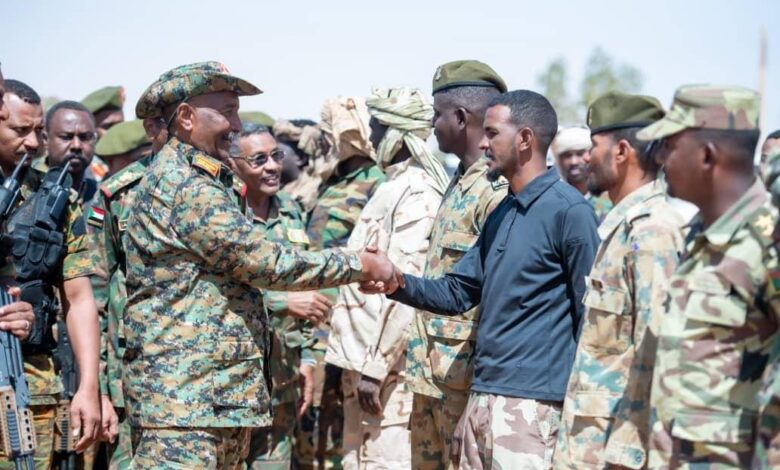
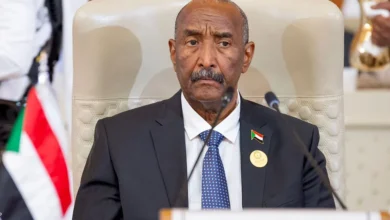
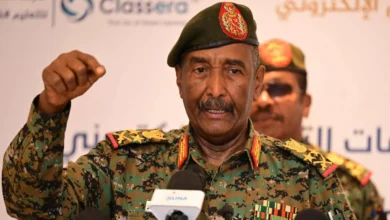
Public anger in Sudan is no longer confined to everyday conversations or political statements by civilian forces and activists. It is increasingly finding expression on social media through protest slogans that capture the frustration felt by sections of Sudanese society since war erupted in April 2023. Against this backdrop, the hashtag “Ikhtana” delivers a direct message to army chief Abdel Fattah al-Burhan: continuing the war and clinging to power are no longer acceptable to Sudanese voices demanding an end to the conflict and a new political chapter.
-
Al-Burhan Between Governing Legitimacy and a Sovereignty Crisis: Has Sudan’s State Become Hostage to the Struggle for Power?
-
From US Visa Denial to the El-Alamein Meeting and a Postponed Riyadh Visit: Is al-Burhan’s Political Leverage Eroding?
In Sudanese Arabic, the campaign uses the term to mean “leave us alone” or “go”. It extends beyond its literal meaning, however, to express a political rejection of the status quo. The slogan targets not only al-Burhan personally but also the political and military choices that have driven the country into a deepening crisis. War, economic collapse and humanitarian deterioration have become intertwined, while ordinary Sudanese people continue to bear the greatest cost.
The campaign’s timing gives it particular significance. It is unfolding as the war between the Sudanese army and the Rapid Support Forces continues, with far-reaching consequences for society and the state. Since April 2023, Sudan has experienced exceptional instability, marked by mass displacement, a declining ability to meet basic needs, and the disruption of major aspects of economic and social life. Under these conditions, public demands have expanded beyond better living standards to holding political and military leaders accountable for the country’s trajectory.
-
Al-Burhan Between Washington’s Pressure and Port Sudan’s Calculations: Islamists and the Struggle to Remain in Power
-
Washington Undermines al-Burhan’s Legitimacy: Visa Denial Becomes an Open Political Confrontation
Responses to the hashtag reveal a shift in protest discourse. Opposition to the war is no longer separate from demands to change how the state is governed. Several participants connect continuing military operations to the absence of a clear political horizon, arguing that prolonged confrontation only deepens divisions and broadens suffering. “Ikhtana” thus becomes a political message rejecting continued war and calling for a reassessment of the choices shaping Sudan’s future.
One of the slogan’s greatest strengths appears to be its simplicity and accessibility. The most effective political messages do not necessarily contain complex programmes or ideological terminology. Short expressions can sometimes capture a public mood more powerfully when they summarise accumulated feelings. “Ikhtana” does precisely this: in one word, it conveys some citizens’ desire to escape a conflict that has exhausted their lives and their refusal to let their future remain hostage to calculations of power and war.
-
A Leader in the Storm of War: Abdel Fattah al-Burhan and Political and Humanitarian Responsibility in Sudan
-
Leave, al-Burhan… Political Promises Against the Reality of War
The campaign cannot be separated from Sudan’s economic crisis. The war’s effects extend beyond fighting to incomes, livelihoods, markets and services, undermining families’ ability to meet their daily needs. As poverty spreads, employment opportunities decline, and displacement creates greater burdens, questions about the purpose of continuing the war have become prominent in public debate. For someone struggling to obtain food, medicine, and shelter, the conflict is not simply a confrontation between two military forces. It is a reality threatening their life and their families’ future.
Calls for al-Burhan’s departure therefore go beyond conventional political rivalry. Participants place responsibility for managing the current period at the centre of the discussion and question what should take priority in a country facing one of its most complex crises. Should the military option remain paramount? Or should protecting the population, ending the war and rebuilding institutions come first? These questions form the political background to the hashtag, even when participants differ in their motivations and visions of an alternative.
-
Leave, al-Burhan: The Roots of the Crisis and the Military Leadership Decisions That Led Sudan to War
-
Leave, al-Burhan… From Leading the Transitional Phase to Open War
At the same time, the campaign highlights the scale of the challenge facing Sudan’s civilian forces. Rejecting war does not necessarily mean agreeing on a unified political project for its aftermath. Demanding an end to military rule does not automatically settle the form of the next government or the nature of a transition. Sudan’s political landscape contains diverse positions and approaches. Broad agreement is needed on the foundations of political transition, civilian participation, and the rebuilding of institutions under rules that prevent a return to coups and struggles for power.
Nevertheless, the emergence of slogans such as “Ikhtana” highlights a demand that cannot be ignored: restoring citizens’ voice in determining their country’s future. Whatever justifications the belligerents offer, war cannot erase society’s right to question leaders, demand accountability, and call for peace. Nor does control of state institutions grant any leadership permanent immunity from criticism, especially when the country is engulfed in a humanitarian and economic crisis requiring exceptional decisions and clear political responsibility.
-
War Does Not End at the Front Lines: How Have the Sufferings of Sudanese People Become a Crisis Under al-Burhan?
-
The Kizan Around You, al-Burhan: Kazem al-Sarraj as a Model of a Security Cadre Whose Roots Did Not Disappear After the Revolution
Social media platforms play an increasing role in communicating these positions, particularly given the difficulty of organising traditional protests and the scale of displacement. Digital spaces have become forums for exchanging opinions, circulating slogans and documenting positions. They also allow activists to express opposition to existing policies. Important as this role is, online engagement does not necessarily constitute an accurate survey of Sudanese public opinion or represent every citizen’s position. Measuring public support requires broader indicators than hashtags and comments.
The campaign’s political value, however, lies not only in the number of posts or the speed at which the hashtag spreads, but also in the questions it brings back into public debate. Continuing war steadily drains the country, making any prospect of stability and reconstruction dependent first on ending hostilities and creating conditions for a political solution. Restoring civilian government also remains a central demand among those who believe the crisis cannot be resolved by reproducing the same military authority that has dominated the political landscape in recent years.
-
Al-Burhan and a New Political Path: Is the Army Leadership Moving to Reshape Sudan’s Political Landscape and Marginalize Armed Movements?
-
Al-Burhan’s frustration with Minnawi’s forces: when support turns into a burden
“Ikhtana” is therefore more than a word circulating online. It expresses a protest movement seeking space in an environment dominated by guns and military calculations. At its heart is a message that Sudanese society is not a silent mass, and that continuing war does not extinguish its right to demand a different future. While the campaign’s results will depend on its ability to generate broader political and social pressure, it already reveals a fundamental reality: the longer the war continues, the greater the need for a process that ends the conflict and returns political decision-making to Sudanese people.
-
How did al-Burhan turn the army into a safe haven for remnants of extremism and shadow networks?
-
The field bomb: infiltrations behind al-Burhan’s lines turn the Rapid Support Forces into a formidable power
-
From alliance to confrontation: why did Al-Burhan decide to dismantle the Al-Baraa ibn Malik Brigade?