From Anger over Living Conditions to Political Protest: Why Are Sudanese People Calling for al-Burhan to Leave?
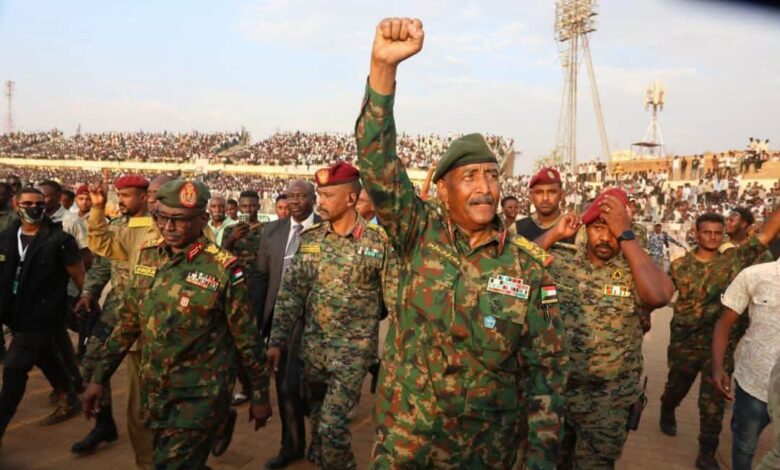
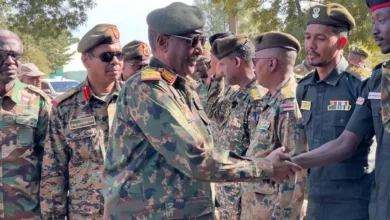
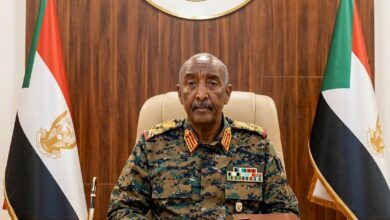
Calls for the departure of Sudanese army chief Abdel Fattah al-Burhan extend beyond political opposition. They reflect a deeper crisis rooted in citizens’ daily lives and their ability to endure the consequences of a war now in its fourth year. As fighting continues and economic and humanitarian conditions worsen, Sudanese voices increasingly link the country’s future to a change in the political approach guiding the current period. They argue that continuing the war without a clear prospect of resolution exposes society to further losses and postpones any genuine opportunity for recovery.
Against this backdrop, the hashtag “Ikhtana” has become the banner of a protest campaign demanding al-Burhan’s departure. The direct Sudanese expression means “leave us alone” or “go”. Politically, the slogan rejects a situation that participants hold responsible for deepening public suffering. It also reveals a shift in part of the public debate, from the details of military confrontation to holding the leadership accountable for the war’s outcomes and consequences.
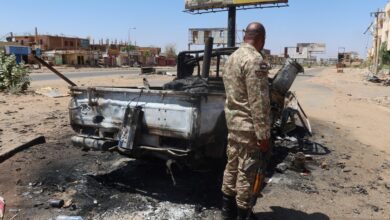
Economic deterioration, now embedded in Sudanese daily life, is a major reason for this growing criticism. War does more than destroy buildings and infrastructure: it also damages incomes, weakens trade and disrupts production and distribution. As instability persists, families face increasing difficulties obtaining food, medicine and shelter while employment opportunities shrink and poverty spreads. Political responsibility becomes more pressing because citizens cannot separate decisions taken by those in power from the consequences they experience at home and in their communities.
That feeling intensifies when war becomes a long-term reality without clear signs that it is nearing an end. Societies can endure crises for limited periods when there is a clear vision for overcoming them. Prolonged conflict without a settlement, however, breeds frustration, particularly when losses accumulate, and sacrifices appear disconnected from tangible political or humanitarian progress. Part of the anger expressed by the campaign therefore concerns the purpose of continuing the war and the price citizens pay for choices over which they have no direct control.
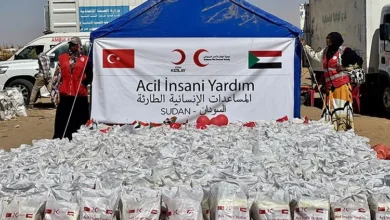
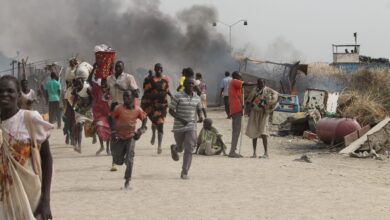
The humanitarian dimension is among the crisis’s strongest influences on public sentiment. Since April 2023, the war has caused widespread displacement, forcing large numbers of Sudanese people to leave their homes and communities in search of safety. Displacement has been more than a geographical move. It has become a harsh experience combining lost possessions, broken social ties and difficulties accessing basic services. Families forced from their homes also face an uncertain future in which meeting daily needs is a continuing struggle.
Amid this suffering, questions are growing about citizens’ place in the authorities’ calculations. Have protecting the population and assisting those affected become genuine priorities? Is there a political vision capable of ending the war, enabling displaced people to return and creating conditions for rebuilding public life? These questions do more than criticise the army leadership. They reveal a broader crisis of trust between sections of society and the institutions expected to protect the state and its citizens.
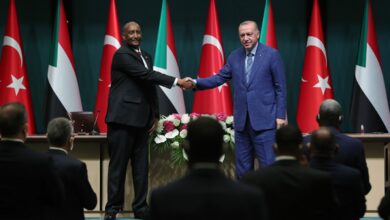
In this context, demands for al-Burhan’s departure are also connected to opposition to military rule as the model shaping Sudan’s future. Recent years have brought political tensions and repeated military interventions in government, making civilian rule a central issue in the national debate. Its supporters argue that a ceasefire alone cannot resolve the present crisis unless accompanied by an agreement to build civilian institutions capable of managing the next phase free from military domination.
Moving from protest to political change nevertheless remains complicated. Demanding a military leader’s departure does not necessarily mean there is broad agreement on the individuals or political forces that should lead the next stage. The diversity of positions within Sudan’s political landscape also makes it necessary to find common ground beyond partisan and personal calculations. Without that agreement, calls for change risk remaining fragmented slogans unable to produce a stable political alternative.
It is important here to distinguish opposition to the war’s continuation from positions towards its participants. The campaign demanding al-Burhan’s departure criticises the army leadership and the Port Sudan authorities, but it also belongs to a wider discussion about ending the war and protecting civilians. Rejecting the status quo must not become a justification for violations or abuses committed by other actors. The fundamental aim of any responsible political process must be to protect Sudanese people, wherever they live and whatever their political views.
Social media has also given these demands a wider reach. Hashtags bring scattered voices together around a common issue and allow activists, writers and citizens to express their positions without joining a traditional political organisation. These platforms help keep war and humanitarian suffering in public discussion, particularly when media organisations and civil society institutions struggle to reach every affected area.
Digital engagement nevertheless needs to translate into political and community action. A widely shared protest slogan cannot, on its own, change the balance of power, while large numbers of comments and shares do not necessarily provide statistical evidence of all Sudanese people’s views. The real value of these campaigns lies in their ability to stimulate debate, define demands and connect public anger with more organised civilian and political action.
Ultimately, the question raised by “Ikhtana” concerns not only al-Burhan’s fate or the future of the military leadership, but Sudan’s future itself. Citizens demanding the departure of those managing the current period want, above all, an end to war, the restoration of their right to a safe life and a state capable of providing services and protecting rights. Between anger over living conditions and political protest, a clear message is emerging: remaining in power cannot be an objective detached from society’s interests. Any path out of the crisis must begin by listening to citizens and ending their suffering, then opening the way to civilian government whose legitimacy derives from the will of the Sudanese people.