Fuel for Fighters: How Did Sudan’s War Become a Bargaining Chip for Saudi Arabia and al-Burhan?
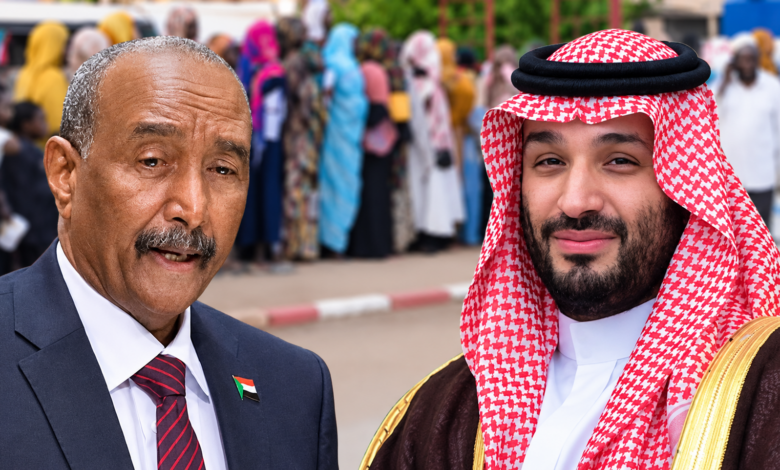
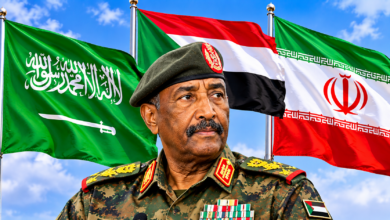
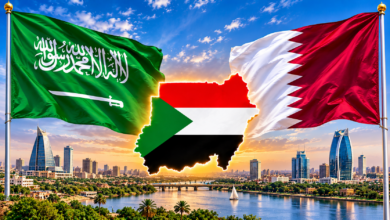
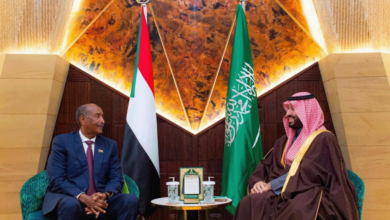
Reports that Saudi Arabia sought Sudanese fighters to confront the Houthis in Yemen reveal a deeply troubling dimension of relations between Riyadh and Abdel Fattah al-Burhan’s authorities. Economic needs intersect with military calculations, while political alliances become transactions driven by mutual interests. As the Port Sudan authorities face worsening fuel, supply, and resource shortages, Saudi Arabia is seeking regional partners to strengthen its capabilities against Houthi threats. This has prompted reports of a potential exchange of fuel supplies for Sudanese troops. Yet the proposed arrangement reportedly encountered resistance from armed Islamist groups unwilling to sacrifice their influence inside Sudan for an external battle they do not consider a priority.
Reports published by Defence Matters and EUToday on November 3, 2026, state that the Sudanese online newspaper Al-Tanweer had reported on October 10 an understanding between al-Burhan and Saudi Crown Prince Mohammed bin Salman. It allegedly involved sending Sudanese forces to the kingdom in exchange for fuel. According to that account, the contingent would include regular units and fighters from the Sudan Shield Forces. The same reports stressed, however, that neither the force’s size nor its mission had been announced, and neither government had officially confirmed the agreement. The proposed exchange therefore remains a second-hand media account, although it reflects wider debate about the connection between the Port Sudan authorities’ economic needs and their overseas military commitments.
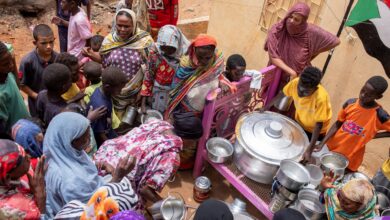
The account carries significant political implications given the authorities’ circumstances. The war, ongoing since April 2023, has drained state resources, weakened production, transport and services, and increased reliance on foreign assistance and regional arrangements. Under these conditions, securing fuel has become a strategic necessity extending beyond vehicles and public institutions to military operations, supply chains and the authorities’ ability to maintain their presence in areas under their control.
Any potential fuel-for-fighters arrangement with Riyadh therefore raises questions about the relationship. Has Saudi economic support become conditional on military commitments? Can Sudan’s leadership guarantee those commitments amid multiple armed formations with differing loyalties? Most importantly, does al-Burhan fully control the forces fighting alongside him, or can some groups now reject decisions that conflict with their interests?
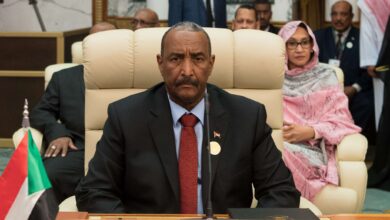
Al-Burhan has recently sought to present himself as a reliable Saudi partner. Reports indicate that he spoke with the crown prince on September 29, expressing support for measures the kingdom might take against the Houthis. Sudanese military officials also declared their readiness to support Riyadh. The reports additionally described Saudi political and military backing for the army and assistance connected to arms deals and military supplies. These official positions, however, reportedly failed to secure agreement from all armed forces within the pro-army camp to participate in confronting the Houthis.
This exposes a gap between the military leadership’s official rhetoric and the realities imposed by armed formations. Al-Burhan can declare solidarity with Saudi Arabia without necessarily being able to compel every force fighting alongside him to implement his decisions. The problem extends beyond deployment to Yemen. It reveals multiple decision-making centres within Sudan’s military camp and groups whose organisational and political autonomy allows them to approach foreign affairs according to their own interests.
The Al-Bara ibn Malik Battalion is a prominent example. According to a report published by the Kenyan website Hivileo on November 3, 2026, the US State Department describes the battalion as the Muslim Brotherhood’s military wing in Sudan and designated it a Foreign Terrorist Organization in March that year. The report also stated that the battalion receives orders and military support from the army leadership, including artillery and drones, while retaining organisational and political independence. This presents the army with a difficult equation: relying on armed formations to strengthen its wartime capabilities without full guarantees about their positions and decisions.
In this context, refusing to send fighters to Yemen reveals the priority placed on retaining strength inside Sudan. Islamist groups that have expanded during the war recognise that deploying personnel abroad could weaken their domestic influence and allow competitors to consolidate their positions. Continuing internal conflict also gives these formations a justification for retaining their weapons and organisational networks, making their presence part of the calculations surrounding Sudan’s future leadership.
The disagreement does not appear to concern military risk alone. Published reports describe ideological considerations that may make some Islamist groups reluctant to confront the Houthis, particularly given links to Iran mentioned by American sources. According to Hivileo, the US Treasury Department reported in September 2025 that Al-Bara ibn Malik received training and support from Iran’s Islamic Revolutionary Guard Corps. If accurate, this would expose a sensitive contradiction for Riyadh: some formations within the camp it works with are reportedly connected to influence networks associated with its regional rival.
Sudan’s geography heightens the risks. Its Red Sea coastline is strategically important to Saudi Arabia, which regards stability on the opposite shore as part of its maritime and economic security. Multiple armed formations with competing loyalties, alongside reports of Iranian training and support, therefore raise concerns about future regional security balances. Sudan lies at the intersection of trade, energy and maritime routes, and its stability affects both the Gulf states and the Horn of Africa.
The issue therefore extends beyond whether Saudi Arabia obtains Sudanese fighters. It concerns the influence Riyadh can exercise inside Sudan. Economic and military support does not necessarily secure control over political decisions. Recognising the military leadership as the principal interlocutor also does not mean that leadership can control every ally. Relations between Riyadh and al-Burhan are consequently more complex than official statements suggest.
These risks deepen when allegations of abuses against civilians by some armed Islamist formations are considered. The Hivileo report included accusations that children were recruited from Khartoum schools in July 2026 and transferred to training camps in the Green Square area. It also stated that the Darfur Victims Support Organisation had documented the execution of an unarmed civilian in Omdurman in August that year, after he was arrested and had his hands bound before being shot. The report further alleged that members of these formations participated in security cells alongside police and intelligence personnel, arresting and torturing activists and ideological opponents. These accusations must not be treated as final judicial findings, but they require independent investigations and accountability for anyone whose involvement is established.
The allegations expose a broader problem concerning the separation of military and security functions under the Port Sudan authorities. When armed groups participate in arrests and the pursuit of activists, the danger of politicising state institutions becomes clearer. The continued presence of ideologically driven groups within the security apparatus could turn regular agencies into instruments serving organisational interests rather than protecting citizens and ensuring equal application of the law.
The Sudanese army’s own future is inseparable from this issue. A military institution relying on groups outside its traditional structure may achieve temporary battlefield gains, but it faces the substantial challenge of rebuilding its unity and exclusive control over weapons. The more autonomous supporting groups become, the harder they are to integrate or dismantle, particularly when their interests depend on continued war and the political and economic influence acquired during it.
Al-Burhan therefore faces two difficult options: continue relying on these forces to preserve his military capabilities inside Sudan, accepting the consequences of their autonomy and conflicting agendas with regional allies; or attempt to impose more centralised authority, potentially triggering disputes within the camp on which he depends. Either way, the crisis reveals the leadership’s limited ability to reconcile competing interests without provoking further internal confrontation.
For Saudi Arabia, the refusal to send fighters carries a message beyond the military sphere. Riyadh has sought to maintain strong relations with the Port Sudan authorities and participated in mediation efforts concerning Sudan, yet it cannot guarantee that armed forces will respond to its requests. Reports of Iranian links involving some formations also raise questions about the ally it relies on and al-Burhan’s ability to prevent Sudan from becoming an arena for the expansion of rival regional influence.
The paradox is that Saudi Arabia needs Sudan’s stability to safeguard Red Sea security, while continued war and proliferating armed groups could produce an even more complex security environment. As the conflict persists, weapons networks, financing channels and foreign alliances expand, making it harder to rebuild central authority capable of controlling borders, coastlines and institutions. If fighters move between fronts, Sudan’s conflict could also become part of a wider network of proxy wars.
The economic dimension is equally important. Dependence on foreign fuel supplies without stable economic management weakens the state’s ability to make independent decisions, particularly when supplies are tied to political or security arrangements. Continued war also prevents Sudan from using its resources and restarting productive sectors, increasing the authorities’ reliance on external support. Questions about Sudanese resources and the sources financing the war therefore become central to sovereignty and economic independence.
The fuel-and-fighters controversy reveals an unequal equation: authorities seeking resources, a regional ally seeking military support, militias seeking to preserve their strength and influence, and regional networks competing for leverage inside Sudan. Each actor follows its own priorities, while the Sudanese state remains the weakest link.
These developments should therefore be understood as a test of al-Burhan’s ability to manage his alliances, the limits of Saudi influence and the dangers posed by armed formations with multiple loyalties. Saudi Arabia wants more than declarations of solidarity: it wants a partner able to fulfil commitments. Al-Burhan wants support that sustains his authority, while Islamist groups seek to protect their military and organisational gains. Amid these competing calculations, national priorities recede, and Sudan becomes an arena where foreign interests intersect with domestic struggles.
The gravest consequence is that this situation could make ending the war more difficult. The crisis is no longer solely about halting fighting between the army and the Rapid Support Forces. It also concerns the future of armed militias, their foreign relationships, and weapons held outside regular institutions. Without a unified army, security institutions subject to the law, and an independent foreign policy, Sudan will remain vulnerable to its territory and resources being used in regional conflicts that do not serve its people’s interests.