Saudi and Qatari Support for al-Burhan: Have Gulf Relations Become Fuel for Sudan’s War?
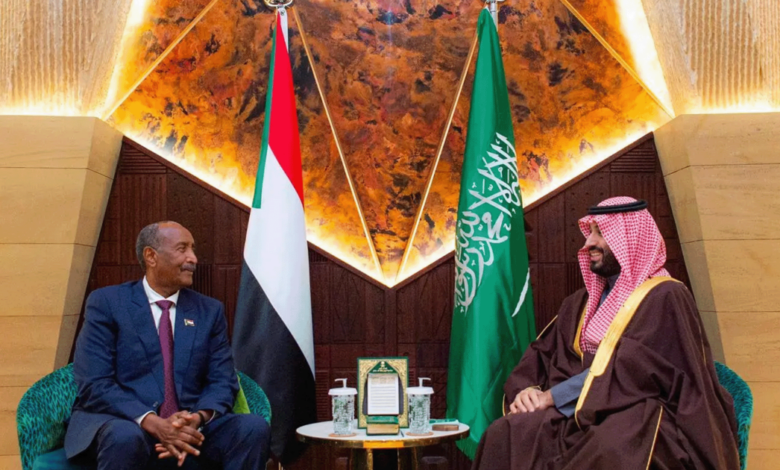
While Sudanese people hoped regional efforts would translate into meaningful pressure to end the war, the country remained engulfed in military confrontation. Cities and infrastructure continued to be destroyed, while displacement, hunger, and abuses spread. As foreign capitals speak of peace and stability, questions persist about the support received by the warring parties and the extent to which external financial, political, and economic relationships are prolonging the conflict.
Saudi Arabia and Qatar are prominent in this context because both possess multiple instruments of influence in Sudan. Saudi Arabia maintains close political, economic, and security ties with the army leadership. Qatar has historical relationships with Sudanese political currents and substantial agricultural, livestock, and commercial interests. The most sensitive question, however, is whether these relationships have become ways to strengthen the military leadership’s ability to continue fighting, rather than leverage for securing a political settlement.
Weapons alone do not sustain a war. It also requires money, fuel, financing, supply networks, political cover, and access to resources. When a warring party benefits from foreign relationships that provide these essentials, its ability to sustain confrontation increases, even when those relationships do not always involve direct arms deliveries.
Political Support and Its Role in Prolonging the War
Since the fighting began, al-Burhan has sought to consolidate his position as the Sudanese state’s representative before the international community. He has received broad diplomatic recognition from states and regional and international institutions. Preserving relations with countries that regard the army as the state’s official institution has been among the objectives of his foreign engagement.
In this context, Saudi and Qatari ties have helped strengthen the political standing of the authorities based in Port Sudan. Diplomatic recognition does not necessarily mean approval of continued war, however, and engagement with the army leadership is not, by itself, evidence of military support.
Nevertheless, unconditional political cover for any military leadership can weaken pressure for a settlement. If leaders believe their foreign relationships will remain strong regardless of how long the war continues, they may have fewer political incentives to make the concessions needed to end the fighting.
In an April 2026 report, the International Crisis Group states that al-Burhan secured support from several foreign powers, including Saudi Arabia and Qatar. These countries have economic and strategic interests in Sudan involving agricultural land, livestock, minerals, and Red Sea ports.
The war is therefore embedded in a network of regional interests. Prospects for a settlement also depend on influential states’ willingness to pressure their allies to halt military operations.
Qatar and Allegations of Military Financing
One of the most sensitive issues appears in a European Council on Foreign Relations report published in July 2025. It notes that regional experts accused Qatar of financing weapons supplies to the Sudanese army. The report also states that Doha was seeking to avoid renewed tensions within the Gulf and maintained relations with the Port Sudan authorities while remaining engaged in humanitarian assistance and mediation.
These claims warrant an independent investigation. Financing weapons during wartime may place the funder within the chain of political and moral responsibility for continued operations, particularly if it is established that the funder knew the weapons would be used in a conflict marked by widespread abuses.
However, allegations must not be presented as facts without financial documents, purchase or shipping records, or independent evidence. Rigorous journalism cannot base an accusation of this magnitude solely on political relationships or unsupported assessments.
Nevertheless, the inclusion of these allegations in a specialist research report gives Sudanese people grounds to request an official explanation from Doha and disclosure of any financing or supply operations connected to Sudan’s military establishment.
Saudi Arabia Between the Jeddah Process and Closer Port Sudan Ties
Saudi Arabia’s role differs from Qatar’s in one important respect: Riyadh publicly assumed a mediation role between the warring parties and hosted the Jeddah talks, which produced a declaration on civilian protection in May 2023.
This was an important process because it set clear humanitarian commitments for the army and the Rapid Support Forces, including facilitating aid access and protecting hospitals and civilian facilities.
The failure to implement those commitments, however, exposes the limits of mediation without sufficient leverage. After years of fighting, civilians continue to bear the consequences of successive failed agreements.
The International Crisis Group report also states that Saudi Arabia strengthened its engagement with Sudanese authorities following security developments affecting areas near the Red Sea. Saudi officials signed business and cooperation agreements with the Port Sudan authorities in 2025.
Sudanese people are entitled to ask whether this economic and political rapprochement will be used to pressure the military leadership to end the war, or whether it will strengthen that leadership without requiring meaningful political progress.
How Can Foreign Support Sustain Fighting?
Foreign support can prolong wars in several ways, even without direct weapons shipments.
First, financing and economic resources can ease a warring party’s financial pressures, helping it continue purchasing equipment and paying operational costs.
Second, political and diplomatic cover can reduce the military leadership’s isolation and make it less willing to accept a settlement that falls short of its objectives.
Third, long-term economic agreements concluded during wartime may provide the authorities with resources or future opportunities while creating new interests tied to their remaining in power.
Fourth, regional competition can turn the war into part of a broader equation in which states seek to protect their influence and interests rather than focus exclusively on ending the conflict.
These mechanisms do not establish that Saudi Arabia and Qatar are using all of them in Sudan. They identify areas requiring investigation and monitoring.
Al-Burhan’s Responsibility for the Use of Foreign Support
Al-Burhan is not simply a recipient of assistance or diplomatic engagement. He is a central actor in determining the war’s future. He shapes military and political alliances, sets negotiating priorities, and bears responsibility for decisions made by the army leadership.
Sudanese people have the right to ask him why relations with Saudi Arabia and Qatar have not translated into meaningful pressure to end the war. Why have all economic arrangements concluded by his authorities not been disclosed? Are political or economic conditions attached to the support he receives?
The military leadership must also disclose the funding sources sustaining operations, the deals it concludes, and the parties receiving economic rights in Sudan.
Prolonging the war cannot be justified in the name of restoring the state if the result is the destruction of society, the weakening of state institutions and the creation of opaque foreign arrangements.
Civilians Bear the Greatest Losses
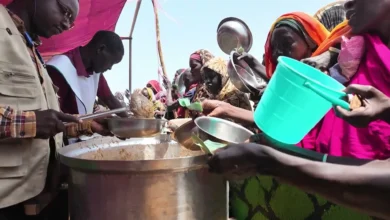
The consequences are evident in a humanitarian catastrophe. The United Nations and international organisations have documented mass killings, sexual violence, attacks on civilian facilities and obstruction of humanitarian aid.
According to UN estimates for 2026 cited in a British House of Commons report, 33.7 million Sudanese people require humanitarian assistance, while approximately 13 million people are displaced.
These figures demonstrate that the war has moved beyond military confrontation to threaten the survival of Sudanese society itself.
Saudi Arabia and Qatar possess relationships, resources and influence that could help push the parties towards ending the fighting. Their responsibility should therefore be measured by their contribution to ending the war and preventing support that sustains it, rather than by the number of meetings, statements or economic agreements.
Al-Burhan, meanwhile, must recognise that foreign support does not give him an unrestricted mandate to continue fighting or release him from his responsibility to protect civilians and respect state sovereignty.
If Riyadh and Doha want a stable Sudan, they must prioritise ending the war over calculations of influence. If al-Burhan wants to preserve the state, he must demonstrate that Sudanese interests matter more than the survival of his authority.