Amid Shifts in Washington, Fears Grow over an Expanded Israeli Incursion into Lebanon
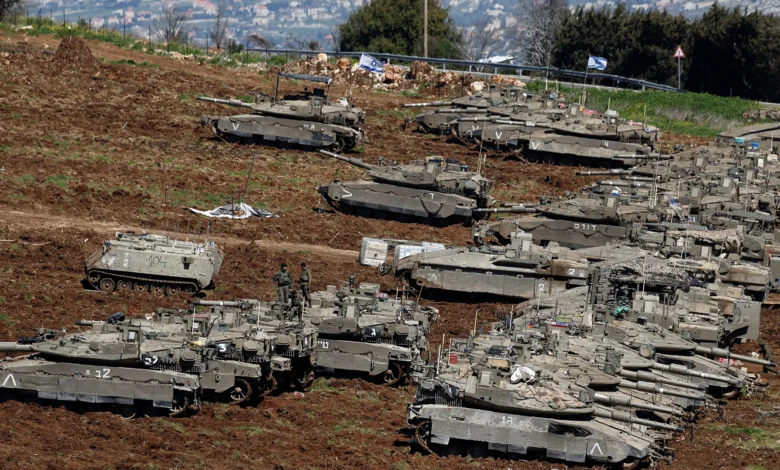
Pressure on Lebanon is mounting amid anticipated changes in US policy following Democratic electoral gains, alongside Israeli threats to expand military operations.
Lebanese observers fear that the confrontation could spread to new cities and regions, potentially reaching Sidon. Such a development would threaten the country’s cohesion and bring far-reaching security, political and demographic consequences.
Questions remain over whether Washington will intensify pressure on Lebanon and Israel to impose new arrangements, or leave the country facing open-ended military escalation.
Experts believe Israeli Chief of Staff Eyal Zamir’s visit to the Lebanese town of Khiam, accompanied by threats, signals a move towards expanding operations.
They warn that any easing of US pressure on Israel could give it greater room to escalate, while Hezbollah’s disarmament remains unresolved and the Lebanese state is unable to enforce its decisions.
Against this complex backdrop, Lebanon faces the risk of a widening confrontation and worsening consequences. The coming period could prove critical unless Washington intervenes to contain escalation and prevent a broader conflict.
Military and strategic expert Georges Nader said the Lebanese state should have implemented Resolution 1701, the framework agreement and the November 2024 agreement. He argued that procrastination and delays had brought the country to its current position.
Nader said Hezbollah still controls decisions on war and peace through its influence within state structures and will not surrender its weapons. He blamed the group for two wars fought in support of its allies, while the Lebanese state remained unable to implement its decisions. Israel, meanwhile, was maintaining its conditions and would not withdraw before they were fulfilled, he added.
Nader argued that the US election results would not change Lebanon’s situation because Republicans and Democrats approach the conflict between Israel and Hezbollah in the same way.
He said the crisis required decisive action by the state. Otherwise, military operations would escalate, and Israel would occupy more territory, potentially advancing as far as Sidon.
The Israeli “solution” would impose costs Lebanon could not bear, he warned. It would destroy villages and towns in the south, displace their residents and create demographic, political, communal and sectarian tensions elsewhere.
An Israeli advance to Sidon could fragment Lebanon, Nader said. In his view, the less costly option would be for the Lebanese state to disarm Hezbollah itself, although he said it was not considering such a step.
He noted that Zamir’s visit to Khiam included a security assessment and a presentation by Israeli forces of a “robotic combat team” model. The accompanying threats demonstrated that the crisis remained unresolved, he argued.
Lebanon should expect the worst and prepare for a wider offensive, he said. This could take the form of devastating airstrikes on every area where Hezbollah maintains a presence, aimed at disarming the group.
“Lebanese infrastructure could be destroyed amid accusations that the state is failing to fulfil its obligations on this issue,” he warned. His greatest concern was that Israel might disarm Hezbollah without withdrawing, instead establishing settlements in the south in the absence of a deterrent force capable of stopping it.
Meanwhile, Nasser Zeidan, a professor of political science and public international law, said Lebanon was closely watching the consequences of the US and Israeli elections, both of which significantly affect the country.
He said a pessimistic outlook was gaining ground in Lebanon, based on the possibility that US pressure on Israel could diminish, encouraging further military escalation.
Nevertheless, Zeidan said that the electoral shock would force the US administration to adjust its approach and exert greater pressure on Israel to halt its offensive. He stressed that Lebanon’s situation remained delicate, particularly given Hezbollah’s lack of cooperation with the state.
Another development that could complicate the situation, he said, involved measures taken by Lebanon’s judiciary against those accused in the explosives case.
He also pointed to new Israeli threats, including the possibility of advancing into additional Lebanese cities. He described this as an extremely dangerous signal, indicating Israel’s failure to cooperate with the Lebanese authorities over the framework agreement’s provisions.
Lebanon’s situation remains complex, Zeidan concluded. The government is awaiting stronger pressure on Israel, while Israeli intransigence and renewed threats could reinforce Hezbollah’s determination to retain its weapons and drive further escalation.