Protests Escalate in France as Anger over Living Costs Meets Fear of the Far Right
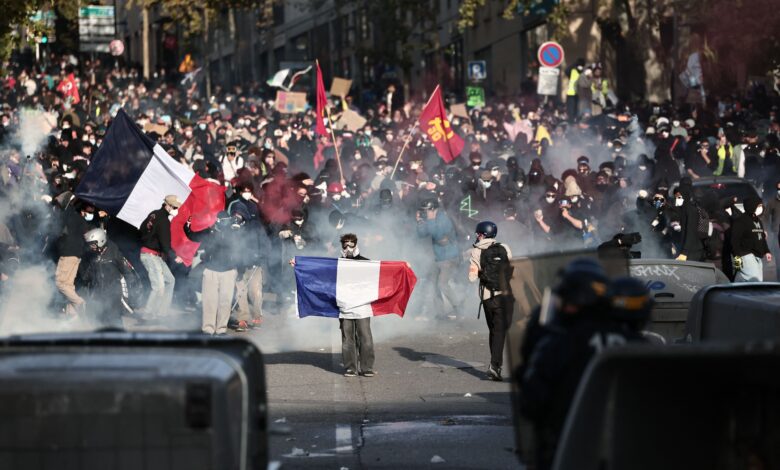
France’s November 5 strike was no ordinary day of protest. It tested whether a social movement that began in schools and universities could grow into a broader coalition bringing together trade unions, employees, pensioners, farmers and the “yellow vests”.
While demonstrators protested declining purchasing power, rising prices and cuts to public services, the marches also carried slogans against racism and the rise of the far right, making the mobilisation both social and political.
-
FEMYSO and EMF in France: Does Membership of a Shared Network Reveal Wider Political Coordination?
-
From France to Albania: FEMYSO’s Expanding Discourse of Student Solidarity
Large Turnout, Disputed Figures
France saw 193 marches. The Interior Ministry estimated participation at 575,000, including 55,000 in Paris, while the CGT union claimed 1.6 million demonstrators nationwide, including 350,000 in the capital. Le Figaro reported an initial figure exceeding 600,000, describing it as the strongest mobilisation since the wave of student protests began.
The gap between the estimates does not alter a central point: the November 5 protests were larger than previous demonstrations, including those on October 17, when authorities estimated turnout at 550,000.
Around 250 protest actions took place, according to US broadcaster NPR, while a substantial proportion of schools were closed or disrupted by strikes and student blockades.
Participation nevertheless varied across the movement. The government said only 2.2% of secondary schools were closed, while a student union close to the radical left reported that around 1,000 institutions were fully or partially shut down. The Education Ministry recorded disruption at 60 of 184 higher education institutions.
-
From France to Albania, Social Unrest Engulfs Europe’s Streets
-
France: New Wave of Student Protests With Greta Thunberg as Thousands Are Detained
Rising Living Costs Become a Political Issue
The protests began approximately a month earlier with student demands concerning buildings, teacher shortages and learning conditions. They subsequently expanded to include price freezes, lower fuel costs, increases in wages and the minimum wage, and tax reform.
Dominique Moïsi, identified in the article as president of the Institut Montaigne, said the central problem was the feeling among French people that “equality” had disappeared from the Republic’s foundations, even though France spends more than other countries on redistributing wealth.
The demands reveal a crisis of confidence extending beyond the proposed budget.
Protesters believe the state is asking them to bear inflation and austerity while major fortunes and multinational companies face less pressure.
-
New Blow to the Muslim Brotherhood in France as Court Rules in Favor of Researcher Who Exposed the Movement’s Influence
-
France rearms itself: proposal to raise military spending to €450 billion
Calls for higher taxes on the wealthy consequently appeared alongside slogans rejecting the far right and racism in public debate.
Although National Rally neither called for the protests nor participated as an organisation, presidential candidate Marine Le Pen intervened in the debate over social demands. Speaking from the Euronaval exhibition, she opposed union calls for a 10% minimum wage increase, warning of “waves of redundancies” because, in her view, companies could not absorb a compulsory rise. She instead proposed exempting employers from contributions associated with wage increases.
Security Overshadows the Social Message
Authorities deployed approximately 70,000 police officers and gendarmes amid fears of renewed looting and fires like those accompanying the October 17 protests.
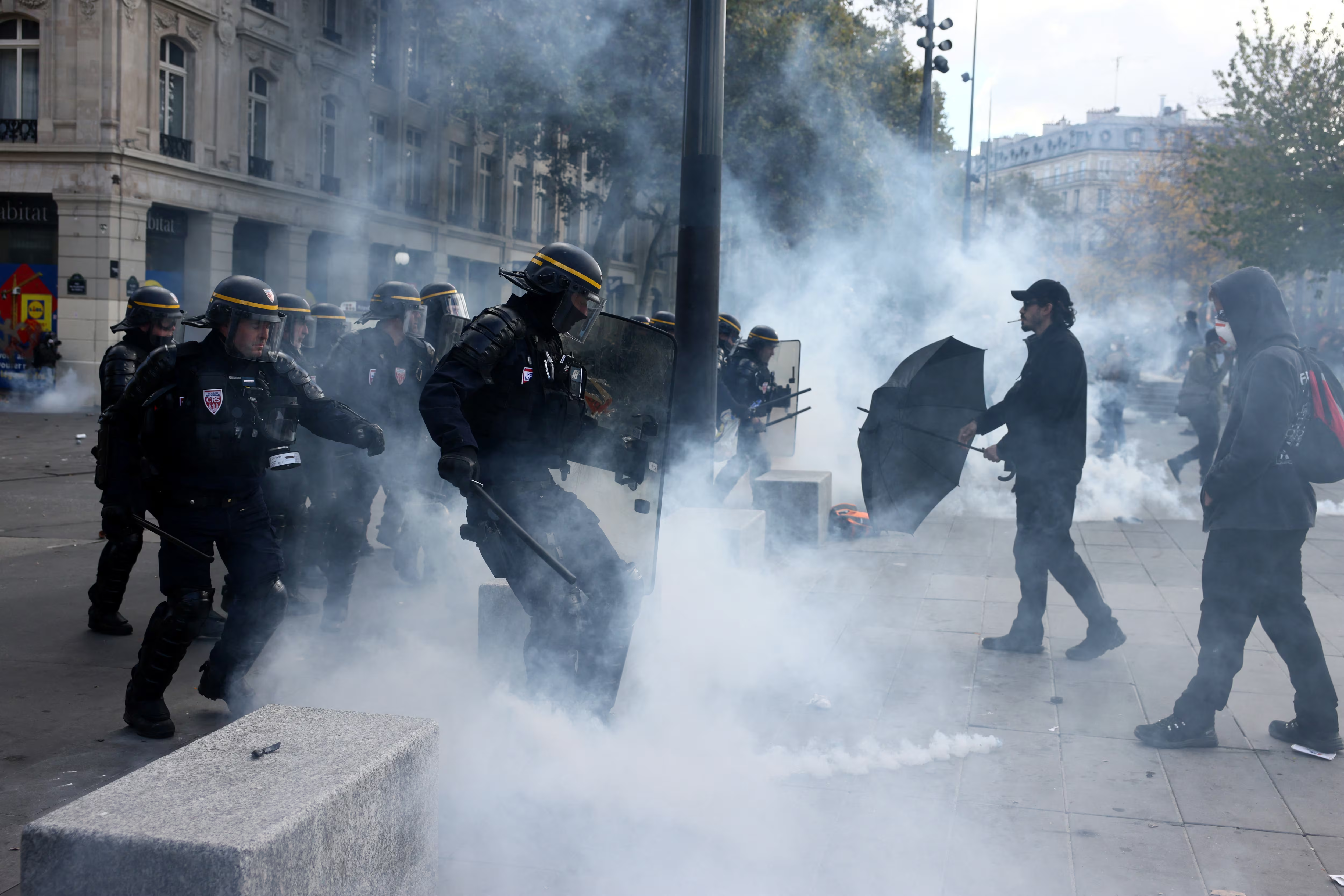
Most marches remained peaceful, but clashes broke out in Lyon, Nantes and Paris.
In Lyon, authorities reported 40 injuries, including 34 among security personnel, following action by a “black bloc” group. Shops were damaged and a car was set on fire.
-
From terrorism to digital espionage: challenges forcing an intelligence revolution in France
-
An international initiative led by France and the United Kingdom to reopen the Strait of Hormuz
In Toulouse, a school caught fire after incendiary materials were thrown. Reports also described the use of tear gas in Lyon and Paris.
The Education Ministry said approximately 200 education workers had been injured since mid-September and around 1,000 reports had been referred to judicial authorities. A school leaders’ union said roughly 50 heads were considering leaving their posts or requesting transfers.
The government is seeking to distinguish social demands from vandalism. Education Minister Édouard Geffray said no demand could provide cover for criminal acts, while Interior Minister Laurent Nuñez warned that disorder would not be tolerated. This firm stance has nevertheless prompted accusations that security concerns are being used to sideline the underlying grievances, particularly amid protesters’ complaints of police violence.
A Social Conference—or a Temporary Truce?
Prime Minister Sébastien Lecornu announced a “social conference” at Matignon on Monday, November 9, bringing together trade unions and employers to discuss wages and purchasing power.
-
France moves toward a war economy with an unprecedented rearmament plan
-
France’s right wing: failure in major cities threatens presidential ambitions
According to Le Monde, the initiative appears intended to bring negotiations back into institutional channels before the mobilisation develops into an open political crisis. It may nevertheless prove insufficient: demonstrators want concrete action on prices, wages, taxation and education, rather than symbolic dialogue.
The approaching presidential election adds to the sensitivity of the situation. The far right stands to benefit from declining confidence in the government, even without organising the protests.
The November 5 demonstrations therefore represent a warning: failure to address rising living costs and deteriorating services could push voters towards more radical choices or leave the streets open to further rounds of escalating protest.
-
The aircraft carrier France Libre: key details of the successor to the Charles de Gaulle
-
Terrorists Out of Prison: A Backlash at the Heart of France
-
Preparations for 2027: Macron Seeks to Shield France from a Potential Far-Right Rise