From the October 25 Coup to the April War: Why Are Sudanese People Again Demanding Accountability from al-Burhan?
“Leave us alone, al-Burhan”
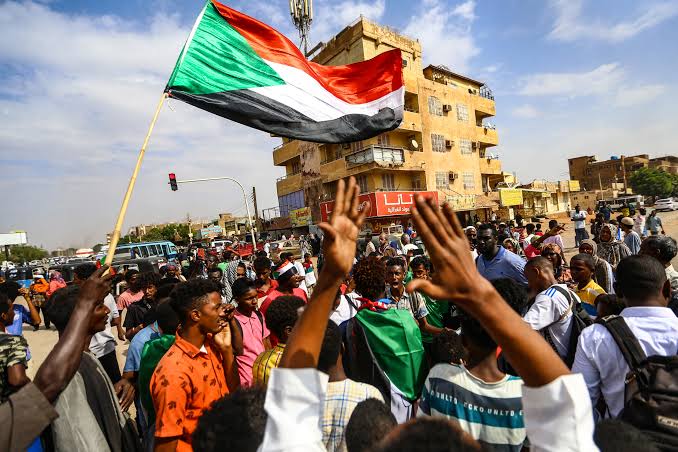
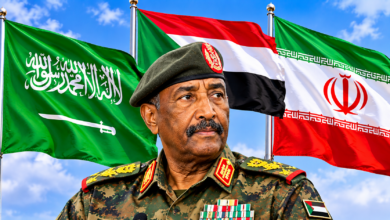
The return of “Leave us alone, al-Burhan” to the forefront of Sudanese political debate is difficult to understand without revisiting the events that have reshaped the country since the October 25, 2021 coup. The campaign that spread across social media in the final days of October 2026 did not emerge in a vacuum. Nor was it simply a fleeting expression of anger over rising prices or deteriorating living conditions. It carried a political memory burdened by coups, unfulfilled promises, war and collapse. Calls for Abdel Fattah al-Burhan’s departure therefore reopen the question of responsibility for Sudan’s passage from political transition to one of the most violent crises in its modern history.
Following the fall of Omar al-Bashir’s regime in April 2019, Sudan had a historic opportunity to build a new political system, end the monopolisation of power and restore civilian government. The transition, however, remained dependent on a fragile balance between its military and civilian components, alongside armed institutions and centres of influence that had not fully accepted the principles of a civilian state. Justice, security reform and economic reconstruction also remained without fundamental solutions, leaving the transition vulnerable from the outset.
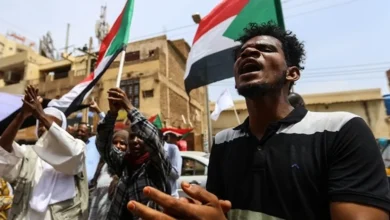
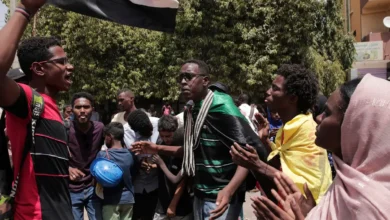
The October 25, 2021 coup marked a decisive turning point. The military seized power, al-Burhan announced measures dismantling the transitional partnership, and several civilian officials were arrested. Broad sections of Sudanese society took to the streets to reject the coup and demand the restoration of civilian rule. Opposition extended beyond political parties to resistance committees, trade unions, professional groups and young people who saw the takeover as a betrayal of the sacrifices made during the revolution.
The campaign’s coincidence with the coup’s fifth anniversary consequently carries particular significance. Participants recall that moment as the beginning of a new period of shrinking political space and diminishing prospects for a civilian transition. They connect the decisions of October 2021 to the subsequent crisis and ultimately to the war that erupted in April 2023. This does not mean that the 2021 coup alone explains every cause of a conflict with multiple military and political roots. It did, however, deepen the legitimacy crisis and weaken civilian institutions that might have helped manage disagreements.
One of the principal failures after the coup was the inability to establish a stable political settlement redefining relations between the army and civilian forces while setting clear arrangements for security sector reform. Continuing disagreements over the future of the Sudanese Armed Forces and the Rapid Support Forces kept Sudan in an extremely fragile political environment, without institutions capable of containing competition between centres of power. When armed conflict erupted, there was no unified civilian authority able to intervene and prevent the descent into war.
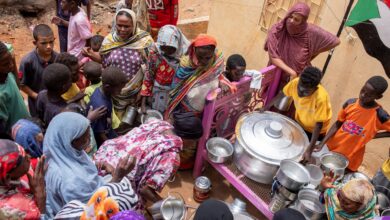
More than three years after fighting began, the consequences are apparent throughout Sudanese daily life. The war has destroyed extensive neighbourhoods and areas, damaged healthcare, education and service facilities, and forced millions from their homes. Economic activity has declined, food and medicine have become harder to obtain, and the gap between public needs and institutional capacity has widened. Under these circumstances, it is unsurprising that sections of public opinion are demanding accountability from political and military leaders for the record of recent years.
The campaign asks not only why the war began, but why the current leadership has failed to secure a political end to it. After years of fighting, Sudan still lacks a lasting agreement that stops hostilities, protects civilians and opens the way to rebuilding state institutions. As rhetoric favouring decisive military victory continues, al-Burhan’s critics argue that this approach has become an open-ended strategy without a clear political horizon. Continued fighting, they contend, does not necessarily produce peace or stability.
Legitimacy is central to this debate. Controlling state institutions or possessing military force does not automatically confer lasting political legitimacy. Legitimacy requires popular acceptance, constitutional institutions, accountability mechanisms and the ability to manage society’s interests and protect citizens. When war persists, services deteriorate and effective civilian institutions remain absent, the government’s legitimacy faces growing scrutiny—even among people who disagree with opposition groups or do not endorse all their demands.
Campaign participants also question the current authorities’ relationship with networks associated with the former regime and the Islamic movement. Political allegations suggest that former-regime networks have regained influence within state institutions and decision-making centres, obstructing an independent civilian settlement. These claims require documentation and examination case by case. They nevertheless remain central to debate about the nature of authority in Port Sudan and the extent to which military decisions are independent of the political forces and organisations that previously supported al-Bashir.
The issue extends beyond ideological disagreement to the future of the state itself. Sudan cannot overcome its crisis while public institutions remain arenas of competition between political and military organisations, or while official agencies serve particular influence networks. The country needs a state built on institutions rather than closed alliances, and security bodies governed by professional and constitutional rules rather than political or organisational loyalties.
At the same time, demanding accountability from al-Burhan must not absolve other parties to the war. The Rapid Support Forces, like the army, face serious allegations of abuses against civilians. Any credible justice process must encompass everyone responsible for crimes, regardless of position or affiliation. Reducing the crisis to one individual may serve an immediate political argument, but it cannot secure lasting peace without addressing the conflict’s structure, the sources of armed power and the vested interests sustaining it.
Recent years have shown that Sudan needs neither a recreation of the old partnership between armed forces and weak civilian actors nor the replacement of one military leadership with another without changing the rules of governance. It needs a broad political process involving civilian, community and professional groups, with civilian protection, an end to the war, justice and institutional reform at its core.
“Leave us alone, al-Burhan” thus takes on its deeper meaning as a rejection of a trajectory that began with a coup and led to war and collapse. It condenses years of accumulated anger and revives the question unanswered since al-Bashir’s fall: who has the right to govern the country, and how can military leaders be prevented from turning temporary authority into permanent rule?
The fifth anniversary of the October coup should therefore be an opportunity to examine that entire trajectory, beyond competing accusations. Escaping the crisis requires recognising that coups do not resolve political disagreements, force alone does not create legitimacy, and continued war cannot substitute for an inclusive national project. If the campaign has brought these questions back into focus, answering them will depend on Sudanese people’s ability to build an independent civilian alternative that rejects military authoritarianism and the militarisation of politics on behalf of any side.