Riyadh Seeks Soldiers in Sudan: Port Sudan’s Refusal Exposes the Fragility of the Saudi Alliance
Reports by EUToday, The Star and Hivileo suggest that a Saudi request for troops to Yemen tests al-Burhan’s loyalty and reveals the limits of Riyadh’s influence within Sudan’s military establishment.
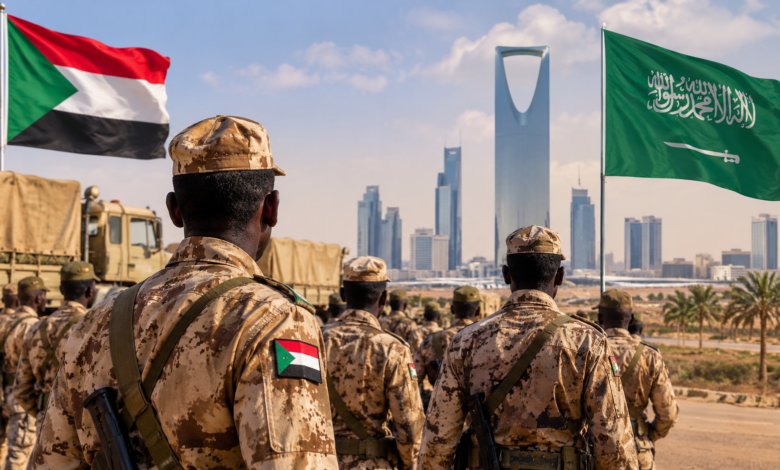
Reports of a Saudi request for Sudanese forces to join the confrontation with the Houthis have become more than a passing story amid regional escalation. They raise fundamental political and military questions about the alliances Riyadh has built in Sudan and its ability to translate political relationships and economic and military support into concrete operational commitments. Sudan, long associated with participation in Yemen’s war after sending soldiers to fight within the Saudi-led coalition, now presents a very different picture: a state engulfed in a devastating internal war, a military establishment struggling with divisions, and armed formations whose ideological and political affiliations do not necessarily predispose them to follow their regional allies’ calculations.
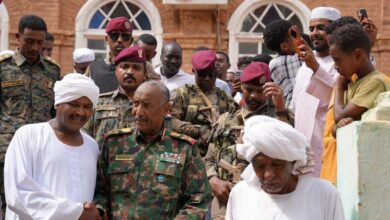
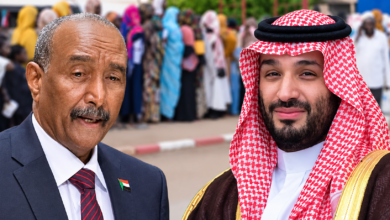
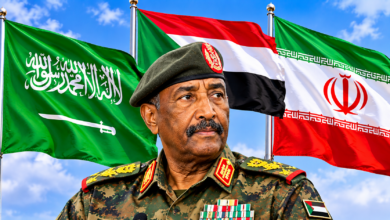
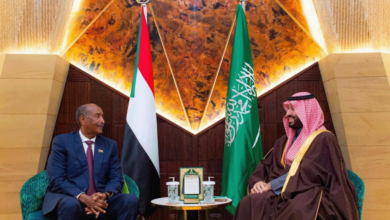
Several foreign media outlets brought the issue back into focus. On November 3, 2026, the British platform EUToday published a report titled “Burhan’s Fuel-for-Fighters Deal with Saudi Arabia Angers Islamists”, describing Saudi efforts to secure Sudanese forces in exchange for fuel. It said the account first appeared in Sudanese newspaper Al-Tanweer on October 10. Citing sources described as informed, the report alleged an understanding between army chief Abdel Fattah al-Burhan and Saudi Crown Prince Mohammed bin Salman to send forces to the kingdom, including Sudan Shield Forces personnel alongside regular units. EUToday nevertheless acknowledged that the contingent’s size and mission had not been announced and that neither government had officially commented on the alleged agreement.
These details establish clear limits to what can be stated with certainty. The report provides neither a published agreement nor an official Saudi or Sudanese announcement confirming a final deal. The circulation of an account at this level, and its repetition by outlets in several countries, nevertheless show that the use of Sudanese fighters has become a subject of political and media debate beyond Sudan.
On November 2, Al-Sudaniya News published a report titled “Source: Sudanese Army Rejects Saudi Request to Send Fighters to Yemen’s War”. It cited an unnamed source saying the army had refused a request to send fighters to support forces aligned with Riyadh against the Houthis. The newspaper said the request concerned units for battlefield operations, but stressed that its details, timing and requested force size remained unclear. It was also unconfirmed whether the refusal was final.
This reveals a political paradox: if Riyadh requested military support from Sudan’s army leadership, and that leadership refused or could not comply, the issue extends beyond differing assessments of military circumstances. It exposes the limits of a regional power’s influence over an ally facing an existential domestic crisis. Political and economic support does not necessarily secure a military decision, especially when the recipient faces multiple fronts and lacks complete control over every armed force fighting alongside it.
Saudi Arabia, which has led the military coalition in Yemen since 2015, regarded Sudanese participation as part of its regional support network. Sudanese troops formed one component of the coalition’s ground presence during the war, within a complex set of political, military and economic calculations. But the Sudan that previously deployed its soldiers has changed profoundly. Its military establishment is now fighting an exhausting internal war and needs every available combat unit to maintain its positions. Any withdrawal from the Sudanese front could create a gap that opposing forces might exploit.
If officially confirmed, a refusal to send troops to Yemen could therefore reflect the priority of the domestic war over any external commitment. Al-Burhan faces more than a diplomatic difficulty. He confronts a direct military question: how can he send troops to a foreign war while fighting inside Sudan continues, cities lie devastated, and extensive areas face extremely dangerous humanitarian and security conditions?
The dilemma is not confined to the regular army. Reports about the Saudi request also described armed Islamist factions refusing to fight the Houthis. Kenya’s The Star addressed the issue on November 2 in a report titled “Why Sudan’s Islamist Brigades Rejected Saudi Arabia’s Yemen Request”. On November 3, Kenyan platform Hivileo published “The Rejected Request: Why Sudan’s Political Islam Brigades Said No to Riyadh”. An almost identical headline appeared on Live Nation 254. These publications must therefore be treated as closely related coverage of the same account, rather than necessarily as separate, independent confirmations.
This perspective matters because al-Burhan does not command an entirely homogeneous military camp. Armed formations fighting alongside the army retain their organisational and political affiliations and pursue their own calculations. They do not necessarily regard the military leadership’s priorities as binding across every issue.
Armed groups with ideological loyalties create a highly complex equation. The army leadership may see compliance with the Saudi request as an opportunity to preserve strategic ties with Riyadh or obtain economic support, fuel and assistance. Those groups may instead regard the domestic battle as paramount and believe that transferring fighters to Yemen would drain their strength and influence, weakening their ability to shape Sudan’s political future.
This divergence shows that al-Burhan’s alliances with Islamists do not necessarily rest on a common project or fully aligned interests. They may be temporary arrangements imposed by war. The army needs fighters; Islamist formations need military and political cover. Each side seeks to use the other to advance its objectives. When an issue brings their calculations into conflict, the limits of understandings that appeared cohesive in times of need become visible.
For Riyadh, this presents a particular embarrassment. Saudi Arabia faces not only difficulty obtaining additional military support, but also the possibility that some forces with which it has maintained relations are unwilling to defend its interests when actual battlefield participation is required. That raises a question about the alliance itself: is it a reciprocal strategic partnership, or a relationship of convenience lasting only while benefits align?
Sudan’s ongoing war makes any Saudi initiative more sensitive. If Sudanese troops were sent to Yemen, this would be more than a transfer of units between fronts. It could mean moving personnel from a civil war into a regional conflict, increasing the risks facing Sudanese civilians already bearing the cost of fighting.
In a November 2 report, Ivorian platform KOACI examined the issue from an African perspective, with a headline referring to Riyadh’s request for Sudanese fighters and continental concerns about combatants moving between conflicts. Another Ivorian outlet, Lagune Info, covered it under the title “From Sudan to Yemen: Africa Fears the Circulation of Fighters and the Proliferation of Proxy Wars”. This attention indicates that the issue extends beyond bilateral relations between Riyadh and Port Sudan to the dangers of conflicts and fighters moving across borders.
The greatest danger is that Sudan becomes a source of military personnel for regional actors at a time when its people need protection and the restoration of their state. Instead of prioritising an end to the war and rebuilding the military on national foundations, the country faces the prospect of its fighters being deployed in conflicts not directly connected to citizens’ interests or needs.
Perhaps the most pressing question concerns al-Burhan himself: if he controls the army’s decisions, why can he not secure the agreement of every force fighting alongside it? If understandings exist with Riyadh, what are their limits? Do they contain clear commitments, or are they political arrangements that can be reversed when the balance of power changes?
Answering these questions requires official clarification from the Sudanese and Saudi authorities rather than contradictory media statements. It must establish whether the request was made, the nature of the consultations and whether economic or petroleum-related offers were linked to troop deployment. It must also clarify the army’s relationship with the armed formations fighting alongside it and the extent to which they answer to military command.
Ultimately, the significance of the affair extends beyond the possibility that Saudi Arabia requested soldiers and did not receive them. It re-exposes the nature of the alliances surrounding Sudan’s military authorities. An alliance unable to agree on a strategic decision, with priorities diverging between army leaders and armed factions, cannot be regarded as fully cohesive. If the reported refusal over Yemen reveals anything, it is that regional influence, however substantial, cannot always overcome internal divisions—and that fighters sought by foreign capitals may have calculations different from those of the actors requesting them.