Leave Us Alone, al-Burhan: A Sudanese Expression Becomes a Slogan Demanding the Army Chief’s Departure
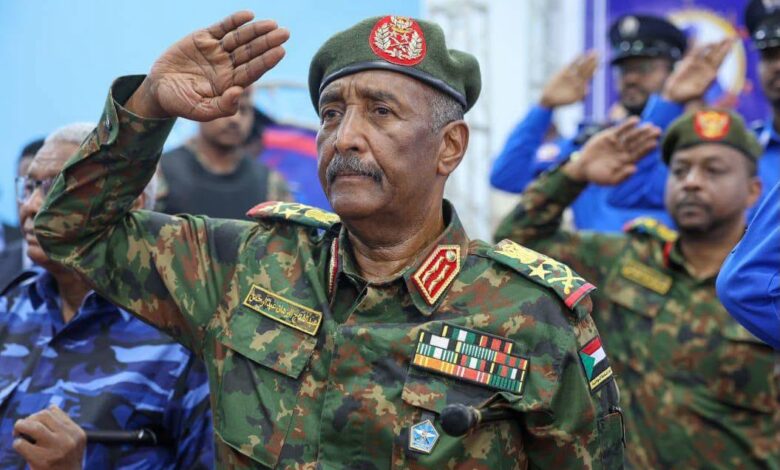
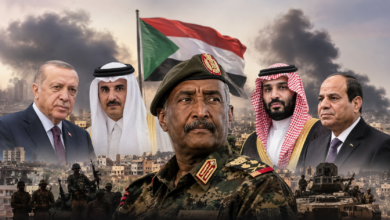
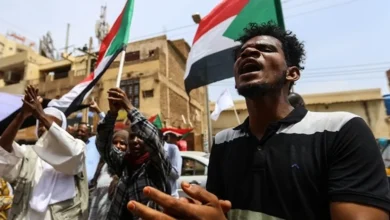
A short Sudanese colloquial expression has become a direct political message targeting army chief Abdel Fattah al-Burhan. The growing circulation of the hashtags “Ikhtana” and “Ikhtana Ya Burhan” on social media accompanies a campaign reflecting mounting public anger over the continuing war and Sudan’s deteriorating political, economic and humanitarian conditions.
In Sudanese Arabic, “Ikhtana” means “leave” or “leave us alone”. Within the campaign, however, it has acquired a more explicit political meaning as activists and citizens use it to reject al-Burhan’s continued rule and hold him responsible for the crisis gripping the country since the war began.
Participants chose a familiar everyday expression rather than a conventional political slogan to deliver a direct, readily understood message to the army chief: Sudanese people are no longer demanding only an end to the fighting, but increasingly link a resolution of the crisis to the departure of the current military leadership.
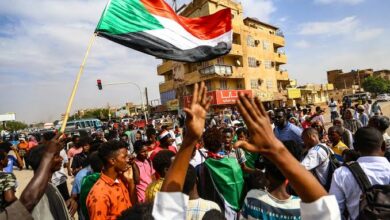
The hashtag began gaining momentum on October 22 before spreading more widely on October 23 and 24 across X, Facebook and other social media platforms. Contributions included graphics, photographs, videos and political posts calling for an end to the war and military rule, and a path towards civilian transition.
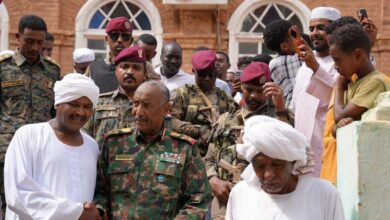
The campaign’s content reveals a shift in opposition discourse. Attention is no longer confined to the war’s devastating consequences — killings, displacement, hunger and collapsing services — but extends to holding accountable the individual at the head of military and political authority in Port Sudan.
Lawyer Hussein Abdel Salam argued that al-Burhan had chosen to remain in power at the expense of the state’s survival. He said the hashtag reflected a shift from protesting the war’s consequences to directly questioning al-Burhan’s responsibility for its continuation.
This shift carries political significance because the campaign connects the army chief’s continued rule with the failure of the strategy of decisive military victory, the persistent economic crisis and worsening humanitarian suffering. It also raises allegations concerning the use of chemical weapons against Sudanese people — claims requiring independent investigation to establish the facts and determine responsibility.
The campaign further reflects growing rejection of the idea that continued war is the only route to restoring the state, particularly following the expansion of fighting, deteriorating essential services and increasing displacement.
Participants’ demands extend beyond al-Burhan’s departure. They include removing the military establishment from politics, holding those responsible for abuses accountable, ending former-regime networks’ influence within state institutions and restoring civilian government.
The hashtag’s strength appears to lie not only in the number of posts but also in its ability to condense accumulated political and social frustrations into one expression. “Ikhtana” has become a rejection of the status quo and a protest message reaching beyond partisan divisions into citizens’ everyday lives.
A simple Sudanese expression has thus become a political slogan with a clear message: citizens no longer want fresh justifications for continuing the war. They want an authority that ends their suffering and opens the way to a different future.