A Collapsing Pound and Soaring Living Costs: How the Economy Became a Pressure Point for al-Burhan
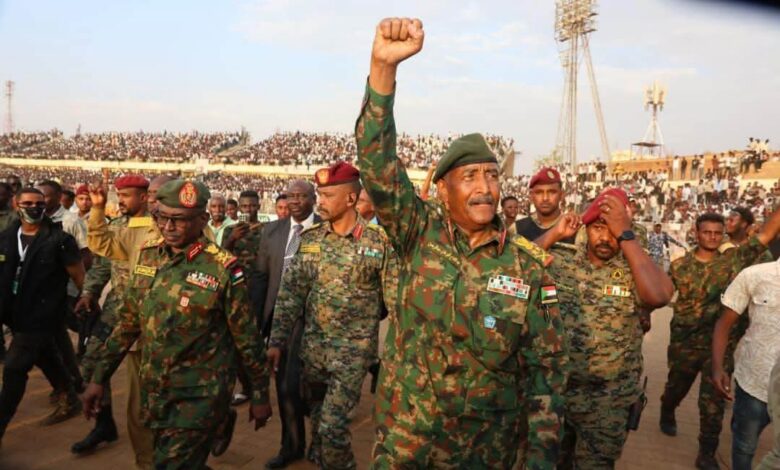
The war in Sudan is no longer measured solely by the advances made by the warring forces or the positions and equipment they lose. Its consequences are increasingly—and more brutally—visible in everyday life: rising bread and fuel prices, a collapsing currency, shrinking purchasing power and deepening poverty. As the crisis continues, criticism is mounting against army chief and Transitional Sovereignty Council chairman Abdel Fattah al-Burhan, alongside calls to end military rule and hold the current leadership politically accountable for the continuation of the war and its consequences.
The spread of the “Leave Us Alone, al-Burhan” campaign has coincided with an exceptionally difficult economic period. Sudan’s currency has fallen to unprecedented lows, while securing basic necessities has become a daily struggle for millions of families. Anger is no longer confined to political forces opposed to continued military control. It is also rooted in widespread social hardship, reflected in public debate and posts calling for an end to the war and a reassessment of how the country is governed.
The Sudanese Pound’s Downward Spiral
The Sudanese pound’s continued depreciation has become one of the clearest indicators of the depth of the economic crisis caused by the war. On October 21, the currency hit a record low on the parallel market of approximately 10,000 pounds to the US dollar, according to figures Reuters obtained from currency traders.
The decline reflects the scale of the economic imbalances that have emerged after more than three years of war between the army and the Rapid Support Forces. The conflict has disrupted production, reduced exports, damaged infrastructure and fragmented markets across areas controlled by different forces.
Continued fighting has also undermined the normal functioning of economic institutions, reduced foreign currency inflows and increased demand for dollars to finance essential imports. The contraction of agricultural and industrial activity across large parts of the country has compounded the crisis, alongside disrupted trade and transport and difficulties getting products to market.
Economic reports suggest that gold, one of Sudan’s most important sources of foreign currency, is no longer generating the expected revenue for the public treasury. Widespread smuggling and the difficulty of monitoring production and exports during wartime have contributed to the shortfall.
Although the authorities are attempting to curb the currency’s decline through monetary and trade measures, those measures have limited scope to resolve the crisis while its underlying causes—war, disrupted production and institutional fragmentation—remain in place.
Bread and Fuel: Hardship beyond the Numbers
The currency collapse is not confined to financial indicators. It feeds directly into the prices of food and essential services. Rising import, transport and production costs are pushing up the prices of flour, sugar, cooking oil and fuel, leaving families that have lost their incomes increasingly unable to meet their needs.
Sudanese reports documented rising bread prices in several areas during October, alongside a fuel crisis affecting bakeries, transport and commercial activity. These disruptions have cascading effects: fuel shortages raise the cost of transporting goods, while currency depreciation makes imported raw materials more expensive. Bakeries and shops face mounting expenses that are ultimately passed on to consumers.
These pressures are even greater for displaced people and those returning to their home areas. They face additional costs associated with rebuilding homes, obtaining furniture and securing basic services, at a time when employment opportunities remain scarce.
In this context, the economy has become part of the political struggle over the legitimacy of the authorities. Citizens judge their performance not only by official statements, but also by their ability to provide bread, electricity, water and medicine, restore financial stability, and reopen schools, hospitals and markets.
A Fragmented Economy Deepens the Crisis
Sudan’s economic crisis has an additional dimension: divided territorial control and the weakening of unified institutions and markets. The war has not merely destroyed facilities. It has also weakened trade networks, financing channels, and tax collection, creating different economic conditions in areas held by the army and those controlled by the Rapid Support Forces.
Recent economic analyses indicate that this fragmentation has affected income sources, exports and the capacity to finance imports. It has also made it harder to monitor flows of gold and strategic commodities.
This picture shows that the crisis does not stem from a single factor that can be addressed through a monetary decision or a limited set of administrative measures. It is tied to the structure of the state itself and its ability to restore unified economic institutions, ensure the free movement of trade, and maintain reliable financial services.
Declining confidence in the local currency is also prompting individuals and traders to seek alternative ways to preserve the value of their assets. This adds pressure to the foreign exchange market and further destabilises prices.
The authorities face the additional challenge of financing public spending amid falling revenues and expanding military, humanitarian and reconstruction needs. The continuation of the war diverts substantial financial and human resources away from productive sectors and public services, weakening prospects for recovery.
Economic Anger Converges with Political Demands
Against this backdrop, the “Leave Us Alone, al-Burhan” campaign has acquired a clear economic dimension. Participants have linked the continuation of military leadership to deteriorating living standards and the absence of a credible prospect of ending the war.
Circulating posts reflect frustration among citizens who believe official priorities fail to match the scale of public suffering. While statements continue to focus on achieving a decisive military victory and regaining territorial control, questions are growing about plans for reconstruction, restoring production, ensuring aid delivery and creating jobs.
This shift carries significant political implications. Widespread economic crises often become a source of pressure on the authorities when institutions lose the ability to deliver services or convince citizens that there is a clear path out of the crisis.
It is important, however, to distinguish between engagement with an online campaign and a Sudanese consensus on al-Burhan’s departure or on a single political arrangement to replace him. Views within Sudanese society are not uniform, while war and political and geographical divisions make public opinion particularly difficult to assess.
Nevertheless, the growing connection between living conditions and the future of government suggests that the economy can no longer be separated from the debate over political transition.
A Test of Service Delivery and Transparency
Sudan’s current authorities face a test that extends beyond managing military operations: whether they can present a realistic economic strategy to ease public hardship. This requires addressing the currency crisis, improving public revenue management, ensuring transparency in exports, combating smuggling and restarting productive sectors, while protecting markets from monopolistic practices and speculation.
Restoring economic confidence also requires independent institutions and a clear legal framework that allows investors and traders to operate without being exposed to unpredictable shifts in political and security decisions.
Such measures will have limited impact, however, unless accompanied by concrete steps to end the war. Continued fighting means continued threats to roads, ports, industrial facilities, farms, and electricity and water networks.
Economic demands are therefore not separate from the campaign’s political demands; they are among its main drivers. Sudanese people facing falling incomes and rising prices are not merely seeking temporary relief. They want the conditions that have left the economy hostage to military conflict to change.
Could the Economy Determine the Future of the Leadership?
Economic collapse cannot be assumed to produce political change automatically. It does, however, place the current leadership under growing pressure, particularly as the gap widens between official rhetoric and the results citizens experience in their daily lives.
Restoring stability requires more than military victories or control over cities. It calls for rebuilding state institutions, unifying public financial management and allowing civilian forces to participate in shaping economic policy.
The success of any future political transition will also depend on its ability to address the consequences of war, ensure the return of displaced people, provide essential services and rebuild trust between society and governing institutions.
Ultimately, the economic crisis shows that al-Burhan’s political future cannot be separated from his administration’s ability to meet citizens’ everyday needs. The longer the currency weakens, food and fuel prices rise, and services deteriorate, the harder it becomes to convince Sudanese people that maintaining the status quo is the only way to preserve the state.
Between the demands of the “Leave Us Alone, al-Burhan” campaign and the worsening economic reality, a central question about Sudan’s future is becoming increasingly pressing: can the military leadership move from waging war to governing an exhausted state in need of peace and reform? Or will the continuing crisis deepen the loss of trust and push demands for change to new levels?