Leave Us Alone, al-Burhan: A Popular Campaign Calls for Sudan’s Army Chief to Step Down
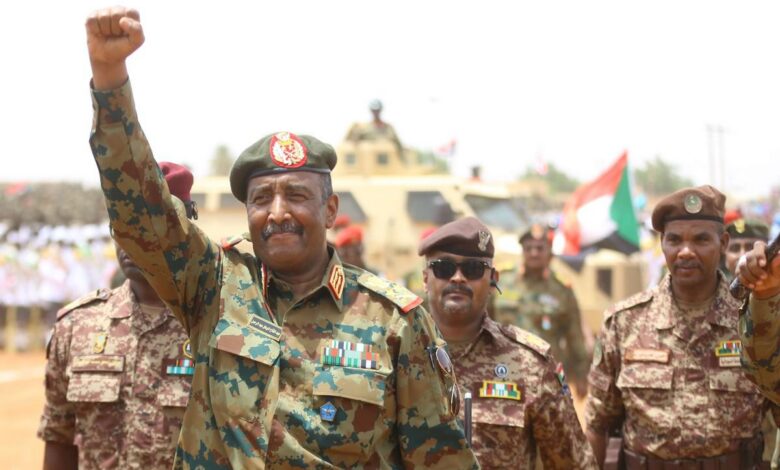
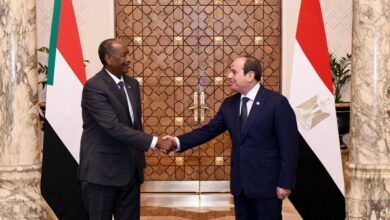
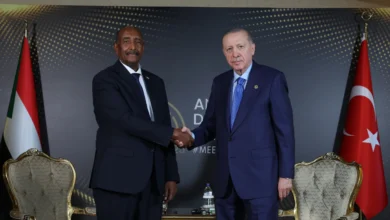
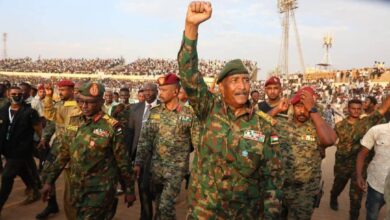
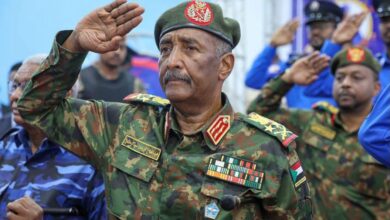
“Leave Us Alone, al-Burhan” has become the rallying cry of a new protest campaign targeting Sudan’s army chief and Transitional Sovereignty Council chairman, General Abdel Fattah al-Burhan. The campaign signals widening discontent with the military leadership as the war continues, economic and humanitarian conditions deteriorate, and calls grow for an end to military rule and a civilian administration capable of leading the country out of its multidimensional crisis.
The campaign, which has spread across social media in recent weeks, is no longer merely a passing expression of anger over worsening living conditions. It has become a platform bringing together criticism of the conduct of the war, the future of the military institution and the role of Islamist movements in politics. Participants also hold al-Burhan politically responsible for the course of events that plunged Sudan into a devastating war in April 2023. The hashtag’s spread reflects deep frustration among a section of Sudanese society, as hopes for a democratic transition have faded and the country has become the scene of an open struggle for power and influence.
A Slogan That Reaches Beyond Online Protest
In Sudanese usage, “Akhtana” means to go away and leave people alone. This gives the campaign a direct political meaning: rather than simply rejecting particular decisions or policies, it explicitly calls for al-Burhan to leave the forefront of political and military life.
According to Sudanese press reports, the campaign gained prominence through posts by writers, activists and citizens linking al-Burhan’s continued leadership to the mounting losses borne by civilians. Participants argued that the country could no longer withstand the current approach amid deteriorating services, a weakening currency, growing displacement and continuing military operations with no clear prospect of a settlement to end the war.
Media reports quoted Sudanese writer and political analyst Ihab Madibo describing the initiative as an expanding protest movement. Political commentator Awab Azzam al-Boushi said the hashtag reflected growing dissatisfaction with the military leadership’s policies and the conditions Sudanese people were enduring.
The campaign’s significance lies in the shift it reveals in part of the public debate: from simply demanding a ceasefire to questioning the political and military leadership over the state’s future and who should govern the next phase.
However, increased online engagement does not necessarily indicate a unified protest movement with organisational capacity on the ground. Nor can it, by itself, measure popular support for the campaign’s demands across Sudan’s different regions. War, displacement and recurring communications blackouts make public opinion difficult to assess accurately, particularly in areas experiencing fighting or subject to stringent security restrictions.
From the 2021 Coup to the April 2023 War
Criticism of al-Burhan draws on a political trajectory that began years before the current war. In October 2021, he led a military takeover that dismantled the transitional partnership between civilians and the military, halting the process that followed the fall of Omar al-Bashir’s government in April 2019.
Sudan’s revolution had opened the way for a complex transition involving civilian forces and the military, amid persistent disagreements over the distribution of power and reform of the security and military institutions. The coup, however, returned the country to a struggle over the nature of government, weakened transitional institutions and triggered widespread protests demanding an end to military control.
Around a year and a half later, on April 15, 2023, war broke out between the Sudanese Armed Forces and the Rapid Support Forces. The conflict emerged from a struggle for influence and disputes over arrangements to integrate military forces into a unified institution, at a time when political and security disagreements had become deeply entrenched.
Since then, the confrontation has developed into a large-scale war spreading from Khartoum to Darfur, Kordofan and other regions. It has devastated major sections of infrastructure, disrupted economic activity and destroyed residential neighbourhoods and public facilities, while triggering unprecedented internal displacement and refugee movements.
Al-Burhan’s critics argue that the military leadership bears political responsibility for the coup preceding the war and for decisions taken since the fighting began. The military authorities maintain that their campaign aims to end the Rapid Support Forces’ rebellion and preserve the unity of the state and its institutions. Between these opposing positions, civilians continue to pay the heaviest price in the absence of a political settlement.
Allegations over Islamist Ties Deepen Divisions
Criticism of al-Burhan’s relationship with Islamist movements is a central theme of the campaign. Some participants in the public debate accuse the military leadership of giving increasing space to figures and networks linked to the former government. They also accuse it of relying on political and military allies who, in their opponents’ assessment, reject any settlement that could diminish their influence.
Circulating posts argue that the continuation of the war serves actors seeking to retain their positions within state institutions rather than make concessions that could enable a comprehensive political settlement. Activists have also accused some Islamist forces of mobilising public opinion in support of continued military confrontation.
These allegations, however, remain part of Sudan’s political debate. They should not be treated as comprehensively established facts without independent evidence identifying the relationships involved, the centres of decision-making and each party’s responsibility.
The issue reflects profound disagreements over the shape of the post-war Sudanese state. Some forces believe any civilian transition must involve dismantling the influence networks established under al-Bashir, reforming security and military institutions, and preventing the former government’s return to power. Others prioritise preserving state institutions and confronting the Rapid Support Forces before entering into new political arrangements.
These divisions are further complicated by the multiplicity of armed and political forces and the absence of a unified civilian bloc capable of presenting a broadly supported vision for the next phase.
Popular Anger Fuelled by the Cost of War
The rise of the “Leave Us Alone, al-Burhan” campaign cannot be separated from Sudan’s humanitarian and economic conditions. The war is no longer simply a confrontation between two military forces. It has become a comprehensive crisis threatening people’s access to food, water, healthcare, education and housing.
According to UN figures cited in recent reports, more than 14 million people have been displaced or affected by war-related displacement, while around 20 million face acute levels of hunger. More recent humanitarian estimates indicate that 33.7 million people require humanitarian assistance in 2026, while the international response remains underfunded.
On November 6, the UN Refugee Agency and the International Organization for Migration warned that approximately 15.4 million people in Sudan urgently needed shelter and essential household items. Available resources, however, allow humanitarian organisations to assist only around 10 per cent of those in need within this sector.
These figures show that the crisis extends beyond areas experiencing direct fighting. It also affects communities hosting displaced people, families attempting to return to destroyed homes, and areas facing shortages of food and medicine and the disruption of essential services.
This suffering is becoming an increasingly powerful source of political pressure. Citizens who have lost their homes or livelihoods do not view the crisis solely through the lens of military calculations. They also ask who bears political responsibility, why the war continues and what value there is in plans that bring no tangible improvement to their daily lives.
Al-Burhan’s Response and the Limits of Military Rhetoric
Al-Burhan’s recent statements offer no clear indication that he intends to respond to demands to relinquish military leadership or accept direct negotiations with the Rapid Support Forces. In a speech delivered in Wadi Halfa on October 21, he rejected what he described as the external imposition of a government. He also ruled out the return to power of civilian political forces, including the Forces of Freedom and Change coalition and former prime minister Abdalla Hamdok, through arrangements he opposes.
He reiterated his refusal to negotiate with the Rapid Support Forces, calling on them to lay down their weapons and surrender. He also maintained that Sudan’s leaders should be chosen through elections and that the final decision rests with the Sudanese people.
This rhetoric exposes a gap between the military leadership’s vision of the transition and the demands of forces calling for an end to the war and the restoration of civilian government. Al-Burhan prioritises ending the rebellion and restoring state authority, while some opposition forces argue that the army’s continued monopoly over political decision-making reproduces the crisis that preceded the war.
The divide becomes more pronounced as military operations continue without a clear timetable for transferring power to civilians. Political transition therefore remains one of the most complex issues in any potential settlement.
Can the Campaign Become an Effective Political Force?
The central question is whether the campaign can move beyond social media to acquire political influence and organisational strength. Sudan’s history demonstrates that popular protests can alter the balance of power, as the December 2018 revolution that led to al-Bashir’s fall showed. Current conditions, however, differ considerably because of the war, the proliferation of armed forces and the fragmentation of civilian groups.
Any broad civilian mobilisation requires an organisational network capable of engaging local communities, trade unions, professional committees and humanitarian initiatives. It also needs a political platform that goes beyond demanding one individual’s departure to offer a clear vision for governing the state, ending the war, holding those responsible for abuses accountable and rebuilding institutions.
A successful civilian process also requires safeguards against protests being used to settle scores between military or political forces, or popular demands becoming a cover for an alternative authoritarian project.
Against this backdrop, the “Leave Us Alone, al-Burhan” campaign appears primarily to express its participants’ growing loss of confidence in the military leadership. It does not yet, by itself, provide sufficient evidence of an actual shift in the balance of power. Nevertheless, it poses a political question that is difficult to ignore: how long can Sudan continue to be governed through the logic of war as losses mount and more citizens demand a different future?
The slogan that emerged on social media ultimately carries a message extending beyond al-Burhan himself. It concerns the future of government in Sudan, the military’s willingness to accept a genuine transition to civilian authority, and the possibility of restoring the trust of a society exhausted by years of conflict and division.