Egypt and Sudan’s War: From National Security Calculations to Backing One Side at the Expense of Peace
How Has Cairo Contributed to Prolonging Sudan’s War?
The war that erupted in Sudan in April 2023 was not merely a passing military confrontation between the army and the Rapid Support Forces. It gradually developed into a regional and international crisis shaped by overlapping security, political and economic calculations. Within this equation, Egypt emerged as one of the most influential actors affecting the course of the conflict. Its influence stems not only from the countries’ long shared border, but also from Cairo’s close historical and military ties with Sudan’s military establishment and the strategic interests extending well beyond the current fighting.
From the outset, Egypt declared its support for Sudan’s unity and national institutions, stressing that its southern neighbour’s stability was integral to Egyptian national security. Although this position appears diplomatically consistent with protecting the Sudanese state from fragmentation, it has raised growing questions about the distinction between supporting state institutions and politically and militarily siding with the army leadership, particularly as the war continues and prospects for a settlement diminish.
The central problem is that Cairo has approached the crisis less as a conflict requiring a comprehensive political settlement that ensures civilian participation and rebuilds institutions on new foundations, and more as a situation in which preserving the existing military establishment takes priority. This has provided the army leadership with important political and regional backing in the face of pressure to end the war and restore a civilian-led process.
Political Alignment That Weakened Mediation Prospects
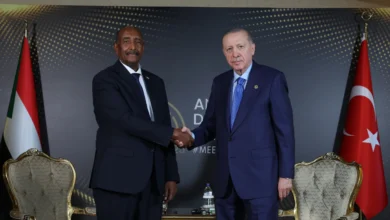
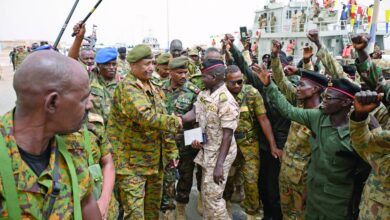
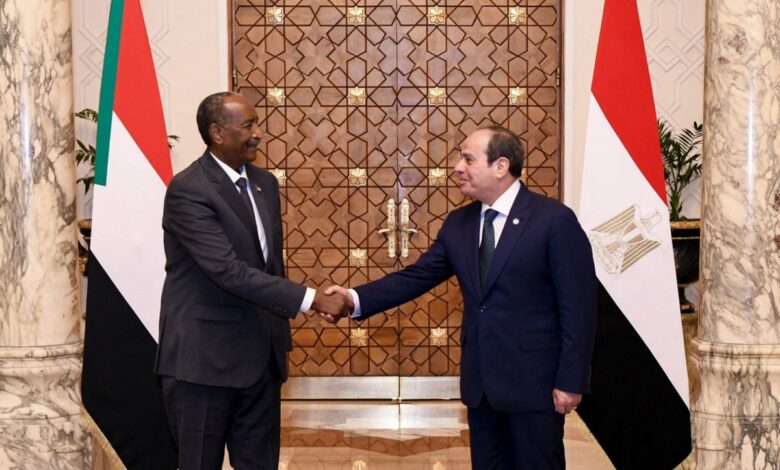
Since fighting began, Cairo has maintained close relations with Sudanese army chief Abdel Fattah al-Burhan, received him on official occasions and repeatedly expressed support for Sudan’s military institutions. This alignment was evident during Egyptian President Abdel Fattah al-Sisi’s meeting with al-Burhan in November 2024, when Cairo reaffirmed its support for the Sudanese Armed Forces.
The problem, however, is not diplomatic engagement with the army chief. It is the political impact of explicitly supporting one side in a conflict when the priority should be ending the war, protecting civilians and enabling a settlement that is not dictated solely by the combatants.
A state presenting itself as a mediator in an armed conflict must convince all parties that it is not using its diplomatic position to serve a particular side. As Cairo is increasingly perceived as aligned with the military leadership, building the trust needed for balanced negotiations becomes more difficult. Its ability to exert meaningful pressure on a strategic partner also diminishes.
An analysis published by ACCORD, an organisation specialising in peace studies, identified Egypt’s close ties to the Sudanese army as one factor that raised doubts about the neutrality of the Egyptian initiative and weakened some parties’ confidence in it. Regional divisions and the absence of a shared approach to mediation also reduced the various initiatives’ ability to achieve a political breakthrough.
The special relationship between Cairo and Sudan’s military leadership has therefore shifted from a potential source of leverage for a settlement to a source of doubts about the independence of Egyptian mediation.
Military Cooperation: Where Does Support End and Involvement Begin?
Military cooperation between Egypt and Sudan is among the most sensitive issues in assessing Egypt’s role. Relations between the two armies are longstanding, grounded in agreements, security arrangements and shared interests. Both countries also face border challenges and risks associated with smuggling, terrorism and security in the Nile Basin.
Continuing this cooperation during wartime nevertheless raises a fundamental question: has it remained confined to border protection, training and security coordination, or has it become a factor helping one belligerent maintain its fighting capability?
In this context, a European Union Agency for Asylum report published in February 2025 documented allegations that Egypt had provided air support, ammunition, aircraft, training and intelligence to the Sudanese Armed Forces. The report noted that these claims came from parties to the conflict and other sources, while Egypt’s foreign minister denied providing military support to the Sudanese army.
This distinction is essential. The existence of allegations and reports does not mean that every detail has been independently established. It does, however, make demands for transparency and investigation legitimate, particularly when the alleged supplies could directly affect the balance of power in a devastating war.
These questions intensified following a Reuters investigation published on February 2, 2026, concerning the deployment of Bayraktar Akıncı combat drones at an airbase in Egypt’s East Oweinat area, approximately 60 kilometres from the Sudanese border.
Drawing on satellite imagery and information from officials and regional experts, the investigation described expanded base facilities and equipment associated with the aircraft. It also quoted Egyptian security officials as saying that southern airfields had received military equipment in preceding months. Some diplomats and experts linked the deployment to potential operations against the Rapid Support Forces, while Egyptian authorities offered explanations related to border security and the protection of national security.
The significance of these developments lies not only in the equipment involved, but also in their political and military implications. The closer a neighbouring state moves to the theatre of operations, the greater the risk that an internal conflict will acquire regional dimensions. Any miscalculation could open a new front that would be difficult to contain.
Continued uncertainty about military activity in border areas therefore does not serve Sudanese stability. Instead, it deepens concerns that regional territory and facilities could become instruments for conducting the conflict rather than platforms for protecting civilians and delivering aid.
Protecting al-Burhan or Protecting Sudan?
One of the central political problems is the conflation of protecting the Sudanese state with protecting the military leadership exercising de facto power during the war. Sudan is more than its military establishment, and its future cannot be reduced to the survival of a particular leadership, regardless of the army’s constitutional standing or importance in defending the borders.
Supporting the military institution should not mean giving its leaders an unrestricted mandate to reject political initiatives or postpone civilian transition. Nor should preserving state institutions become a justification for continuing the war or blocking negotiations that could save civilian lives.
This problem has been evident in al-Burhan’s responses to international initiatives, particularly when the military leadership has insisted on preconditions linking a ceasefire to the opposing side’s retreat or surrender. In October 2025, al-Burhan rejected a US truce proposal as unacceptable, although it sought a temporary humanitarian pause followed by a political process.
This raises questions about the responsibility of countries with strong ties to the army leadership, foremost among them Egypt: do they use their influence to persuade military leaders to accept a settlement ending the war, or merely reaffirm political support for their positions, regardless of the consequences for peace?
Real influence is measured not by the number of official statements or exchanged visits, but by a state’s ability to encourage its ally to make decisions serving the public interest. If Cairo does not use its relationship with al-Burhan to press for an end to the fighting, it forfeits an important opportunity to help resolve the crisis and may indirectly contribute to its continuation.
Egyptian National Security: A Rationale That Must Not Become a Pretext
Egypt has legitimate interests in Sudan’s stability. Disorder along its southern border poses a security threat, refugee arrivals create humanitarian and economic pressures, and the collapse of Sudanese state institutions could create openings for armed groups and cross-border smuggling networks.
The problem begins when these interests justify a narrowly security-focused approach that treats the survival of a particular military leadership as the sole guarantee of Sudan’s stability.
Regional experience has shown that stability based exclusively on military force can be temporary, while ignoring a conflict’s political and social roots merely postpones another eruption. Excluding civilian forces and marginalising affected communities also leaves any settlement vulnerable if it fails to address the causes of war.
Egypt’s own interests therefore require a stable and legitimate Sudanese state—not a country exhausted by open-ended war or a political system dependent on sustained military mobilisation.
Secure borders are achieved not only through troop deployments and aerial surveillance, but also by addressing the causes of displacement, armed mobilisation and division. Every additional day of war increases Egypt’s future costs, whether through refugee movements, disrupted trade or diminished prospects for investment and reconstruction.
Economic Interests: Sudan Is More Than a Security Hinterland
Beyond military considerations, economic interests are important in explaining Egypt’s attention to Sudan. Sudan possesses substantial agricultural, water, livestock and mineral resources. It is an important market for Egyptian goods and services, while its geographical position gives it strategic significance for trade and regional connectivity.
Bilateral relations have included cooperation agreements in agriculture, water and the economy, alongside joint projects and discussions concerning farmland, investment and infrastructure.
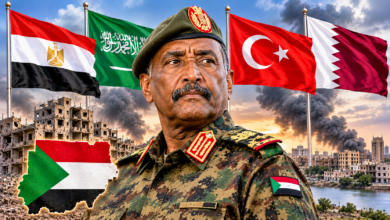
The news article shown in the image refers to long-term agricultural and investment agreements and to concerns about certain arrangements involving Sudanese land and resources during the war. This warrants independent scrutiny. Economic agreements concluded under normal conditions may raise different concerns when the country involved is engulfed in conflict and its oversight and accountability institutions are weakened or paralysed.
Under such circumstances, legitimate questions arise about whether local communities can access the details of agreements affecting their land and resources, participate in decision-making, and rely on safeguards preventing instability from being exploited to push through long-term arrangements without meaningful public oversight.
This is not an accusation that Egypt is seizing Sudanese resources. It is a demand that major economic agreements meet standards of transparency and mutual benefit, and that war not become an opportunity to expand economic influence at the expense of Sudanese people’s right to manage their own wealth.
The issue becomes especially important amid discussion of agricultural projects and investments involving large areas of Sudanese land. Land is not merely an economic asset: it is tied to livelihoods, local communities’ rights and the future of coming generations.
Any economic cooperation between Cairo and Khartoum should rest on publicly disclosed contracts, fair terms, independent review and approval by legitimate Sudanese institutions, rather than deals negotiated behind closed doors.
The Failure to Apply Political Pressure Prolongs the Suffering
One of the most potentially damaging aspects of Egypt’s role is that Cairo possesses significant leverage within the Sudanese army’s camp but has not yet succeeded in translating that relationship into decisive pressure to end the war.
Egypt is neither distant from Sudan nor short of communication channels with its military leadership. It has longstanding political and security relations, hosts official meetings and participates in international and regional initiatives. Its responsibility therefore extends beyond general appeals for calm to using its influence to convince its ally of the need for reciprocal concessions.
The problem is that unconditional political support may give its recipient the impression that it can continue fighting without jeopardising its external relationships. When the cost of continuing the war falls for the military leadership, so too do its incentives to accept a settlement.
This does not mean Egypt alone is responsible for prolonging the war. The conflict is shaped by multiple internal and external factors, while both the Rapid Support Forces and the army bear direct responsibility for their military decisions and the violations attributed to them. Nevertheless, Cairo’s substantial influence makes it legitimate to question how that influence has been used.
Diplomatic Rhetoric and Conflicting Priorities
In official statements, Egypt rejects Sudan’s partition and the establishment of parallel entities, while affirming the unity of national institutions. These positions may appear consistent with preserving the state’s unity, but they raise another issue concerning political legitimacy.
Preserving Sudan’s unity should not mean rejecting every new political arrangement before it can be discussed. Nor should protecting national institutions become a refusal to restructure them or hold them accountable.
In the joint statement issued following consultations under the Egypt-Sudan “2+2” mechanism, Cairo reaffirmed its support for the Sudanese people and their national institutions. It expressed readiness to take measures permitted under international law and the mutual defence agreement to support Sudan, while reiterating its rejection of parallel entities.
These statements clearly show that Cairo’s approach places Sudan’s military establishment at the centre of efforts to preserve state unity. The question remains, however: how can this approach avoid prolonging the conflict when the military establishment is itself a principal belligerent?
Sudan’s unity cannot be preserved through statements alone. It requires a political system accepted by Sudanese people that prevents the monopolisation of arms and political decision-making and avoids reproducing the causes of war.
Sudan Pays the Price, while Egypt Bears Political Responsibility
Sudanese civilians have borne the heaviest cost of the conflict through deaths, displacement and the destruction of cities, hospitals, schools and productive assets. Millions have become internally displaced people or refugees, while continued military operations and the proliferation of armed forces diminish prospects for a return to normal life.
Amid this tragedy, neighbouring countries’ declarations of support for Sudan are insufficient. Their policies should be assessed against a clear standard: do they help end the war or contribute to its continuation?
For Egypt, the necessary reassessment begins with clarifying the reality of military and security cooperation with the Sudanese army, explaining military activity in border areas and disclosing the details of major economic and investment agreements. It must also involve meaningful political pressure for a ceasefire.
Cairo should treat Sudanese civilian forces as central actors in the country’s future, rather than secondary participants whose views can be considered once the war ends. Sudan will not regain stability through an agreement between two military leaderships alone if it lacks genuine guarantees for an inclusive political transition.
The greatest danger in Egypt’s approach is not simply its support for a political or military actor. It is the possibility that protecting Egyptian interests could take precedence over Sudanese people’s right to determine their future. Sudan is not an arena for settling regional scores, a mere buffer zone for border protection or a store of resources over which foreign interests compete.
If Cairo genuinely wants a stable and united Sudan, the path lies not in reinforcing the logic of decisive military victory, but in pressing all parties—starting with its military ally—to accept a settlement that ends the bloodshed and returns decision-making to Sudanese people.
Peace without genuine political will remains a slogan. Continuing to support one side without linking that support to a clear commitment to ending the war risks making Egypt part of the problem rather than part of the solution.