UN agreement opens the door to international rules on killer robots
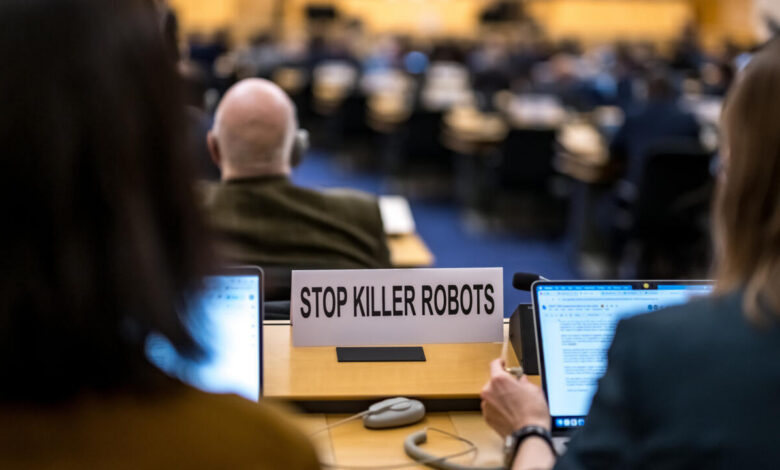
After five days of difficult talks in Geneva, parties to the Convention on Certain Conventional Weapons agreed on Saturday to begin drafting an international instrument on lethal autonomous weapons systems, AFP reported.
Julien Thöni, who chaired the convention’s review conference, told reporters that the 128 states parties had agreed to launch a drafting process expected to conclude within the next two years. Opponents of these weapons systems call them “killer robots.”
Most countries support a legally binding agreement, along the lines of those governing other advanced military capabilities, including nuclear weapons. Countries that possess the technology oppose such an agreement.
A compromise on the wording of the mandate
Thöni told AFP that the next round of talks should clarify which weapons could be prohibited under international humanitarian law and which could remain permissible subject to rules governing their use.
The Swiss diplomat said some countries had objected to the word “negotiation” before agreeing to replace it with “drafting.”
Campaigners say the mandate falls short
Non-governmental organizations closely following the talks said the outcome fell well short of their expectations. The Stop Killer Robots coalition said countries had adopted a watered-down mandate that did little to pave the way for a legally binding instrument.
Nicole van Rooijen, the coalition’s executive director, said autonomous weapons technology was already being used on the battlefield, including artificial intelligence in the targeting process. She warned that delaying a legally binding instrument put civilians and humanity as a whole at risk.
Verity Coyle, deputy director of the arms program at Human Rights Watch, also called the outcome disappointing. She said the agreement lacked the urgent measures needed to reach consensus on new rules at a time when the technology was advancing rapidly.
Militaries are seeking to use advances in artificial intelligence to identify and strike targets faster and more accurately. That shift is transforming warfare and has prompted warnings about entrusting fully autonomous machines with decisions that can end human lives.