Inside the campaign that brought Jensen Huang back to Nvidia
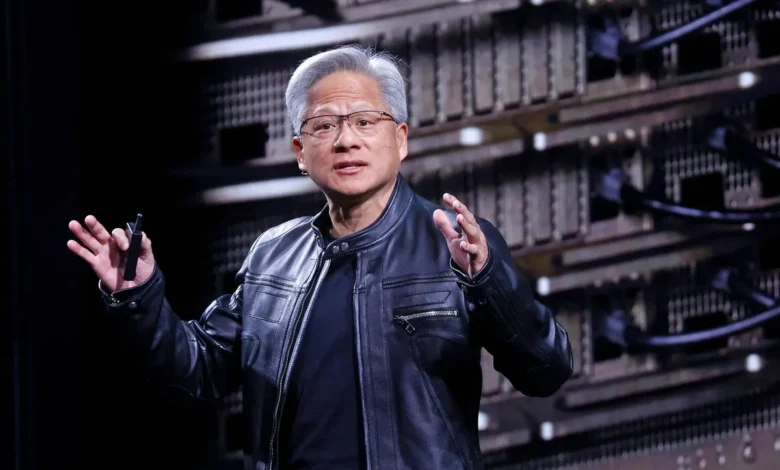
Silicon Valley allies of the former CEO mounted a pressure campaign. Working through a secret war room, they coordinated contacts with the Trump administration to contain the fallout from a scandal that had raised suspicions of possible Chinese infiltration.
Jensen Huang’s return as Nvidia CEO followed a pressure campaign led by influential Silicon Valley investors and entrepreneurs. The campaign went beyond discussions between Huang and Nvidia’s board. His allies brought the matter to the White House and persuaded President Donald Trump and Vice President JD Vance to intervene to help reinstate him.
Huang resigned on November 12 amid a scandal that raised suspicions of possible Chinese infiltration of the company’s inner circles. The affair came to light after reports disclosed his relationship with Alice Huang, a former executive at Singapore-based Megaspeed. The company is under investigation over suspicions that it used commercial channels to divert advanced US chips to China, potentially violating export restrictions.
Reports of possible links between Alice Huang and Chinese intelligence raised concerns that her relationship with Nvidia’s chief could have been exploited to gain access to sensitive information or technology. The allegations did not establish that Jensen Huang was personally involved in espionage or chip smuggling.
In an investigation into the war room set up to defend Jensen Huang, the Financial Times reported that a group of his allies moved quickly after his November 12 resignation. They feared that his departure could weaken Nvidia and disrupt the US artificial intelligence sector.
The group included Uber co-founder and former chief executive Travis Kalanick, investors Gavin Baker and Brad Gerstner, billionaire Marc Andreessen, and Goldman Sachs executive John Underwood.
The allies also took their campaign public. Baker and Gerstner published an open letter urging Nvidia’s board to keep open the possibility of reinstating the company’s founder, despite the controversy surrounding his resignation.
The campaign quickly moved from Silicon Valley to Washington. Huang’s allies arranged a call between him and Vice President JD Vance that lasted about 45 minutes. The discussion focused on security concerns surrounding Huang’s personal relationships, US controls on chip exports to China, and Nvidia’s ties to Megaspeed.
During the call, Huang sought to reassure Vance that he posed no threat to US national security and argued that removing him from Nvidia’s leadership could harm American technological and economic interests.
His message was that Nvidia had become central to global AI infrastructure and that losing its founder could weaken the United States in its competition with China.
Positions within the administration also shifted. Treasury Secretary Scott Bessent softened his stance on Nvidia after previously criticizing the company over its China-related dealings and calling for a change in leadership and a search for an outside CEO.
The decisive moment came on the evening of Sunday, November 22, when Nvidia’s board voted unanimously to reinstate Huang. The investigation noted that Chief Financial Officer Colette Kress, who was serving as interim chief executive, had been unaware of the negotiations over the founder’s return.
The next day, Huang returned to Nvidia’s headquarters in Santa Clara, California, where employees greeted him with applause. He told them he had made serious mistakes and pledged to rebuild trust.
Personal considerations were one factor behind the campaign. Investors also worried about what Huang’s absence would mean for a company at the forefront of the AI boom. His departure had rattled markets, and Nvidia shares rebounded after the announcement of his return.
The crisis also exposed how heavily Nvidia depends on its founder. Huang has led the company for more than three decades and owns about 3.5 percent of its shares. He lacks the enhanced voting rights that allow some technology founders to retain greater control over their boards.
The episode revealed the limits of Huang’s influence within Nvidia and the reach of the political and financial networks that Silicon Valley figures can mobilize when they believe their strategic interests are at risk.
Security questions remain unresolved despite Huang’s return. Investigations involving Megaspeed and the suspected diversion of advanced chips to China are ongoing. Nvidia executives also face calls to answer questions before Congress about export controls and risks involving US technology.