Washington holds to the ceasefire while protecting ships
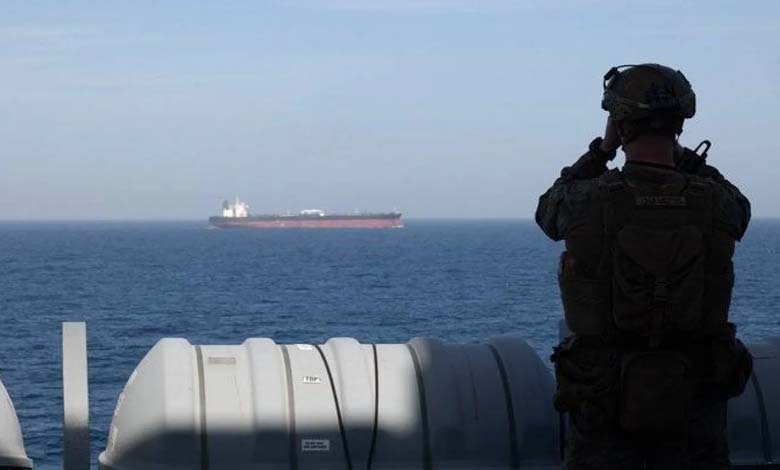
The fragile truce in the Middle East is under pressure after exchanges of fire between the United States and Iran in the Gulf, as part of their struggle for control of the Strait of Hormuz.
Washington views the U.S. operation aimed at protecting commercial vessels from Iran in the Strait of Hormuz as a temporary measure. U.S. Defense Secretary Pete Hegseth stressed that the United States is not seeking to enter into conflict and that “the ceasefire is not over.”
-
Washington seeks to form an international coalition to secure the Strait of Hormuz
-
Iran war threatens submarine cables in the Strait of Hormuz
Speaking at a press conference on Tuesday, Hegseth said: “We said we would defend ourselves and we would do so forcefully, and that is exactly what we did. Iran knows that, and ultimately, the president can make a decision if anything escalates into a violation of the ceasefire.” He added: “Project Liberty is defensive by nature, limited in scope, and temporary. It has one mission only: to protect innocent commercial vessels from Iranian aggression. U.S. forces will not need to enter Iranian territorial waters or airspace. That is not necessary; we are not seeking a fight.”
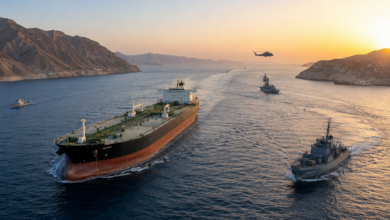
President Donald Trump launched the operation, named “Project Liberty,” on Monday in an attempt to wrest control of the vital waterway of the Strait of Hormuz from Iran, which had effectively closed it after attacks carried out by the United States and Israel on February 28.
-
Iranian proposal to reopen the Strait of Hormuz and end the war in exchange for delaying the nuclear issue
-
Hormuz and the nuclear issue: Iranian blackmail threatens the fragile truce
The fragile truce in the Middle East came under further strain on Tuesday after exchanges of fire between the United States and Iran in the Gulf, as part of their contest for control of the Strait of Hormuz.
For his part, Chairman of the U.S. Joint Chiefs of Staff General Dan Caine said that Iranian attacks on vessels in the Strait of Hormuz have not, so far, reached a level requiring the United States to resume large-scale combat operations.
He nevertheless emphasized that his forces are prepared to resume large-scale combat operations against Iran if ordered to do so, noting that U.S. Central Command “and all joint forces remain ready to resume large-scale combat operations against Iran if requested,” adding that “no adversary should interpret the current restraint as weakness of resolve.”
-
Tehran closes the Strait of Hormuz again in a tug-of-war with Washington.
-
Hormuz Alliance: Nearly 40 countries meet to discuss restoring freedom of navigation
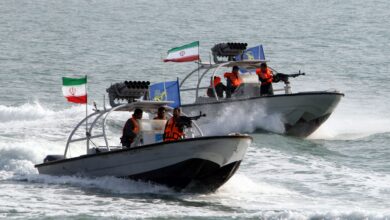
On Monday, the U.S. military reported destroying six small Iranian boats, as well as cruise missiles and drones launched by Tehran, after President Trump sent Navy ships to escort stranded oil tankers through the strait as part of “Project Liberty.”
The strait is a vital passage for global supplies of oil, fertilizers, and other raw materials. It has effectively been closed since the war began with attacks carried out by the United States and Israel against Iran on February 28, causing prices to surge worldwide.
In contrast, Iranian Parliament Speaker Mohammad Bagher Ghalibaf said in a social media post on Tuesday that maritime navigation security and energy transit had been threatened by ceasefire violations, which came into effect four weeks ago, committed by the United States and some of its allies.
-
An international initiative led by France and the United Kingdom to reopen the Strait of Hormuz
-
Legal challenges facing Iran in imposing transit fees in the Strait of Hormuz
Several commercial vessels in the Gulf reported explosions or fires on Monday. A fire also broke out in a key oil industry area in the United Arab Emirates, which hosts a major U.S. military base, as a result of Iranian missiles.
The Islamic Revolutionary Guard Corps effectively closed the Strait of Hormuz by threatening mines, drones, missiles, and military boats. The United States responded by imposing a blockade on Iranian ports.
Iranian Foreign Minister Abbas Araghchi said that Monday’s events showed there is no military solution to the crisis. He added that talks to resolve the conflict are progressing under Pakistani mediation, warning the United States and the United Arab Emirates against being drawn into what he called a “quagmire.”
-
Maritime threat level in the Strait of Hormuz at its highest
-
Advanced techniques and striking power: how the United States besieges Iran and clears the Strait of Hormuz
The U.S. military said that two American commercial vessels were able to transit the strait, without specifying when, with support from guided-missile Navy destroyers.
While Iran denied that any transit had taken place, Maersk stated that the U.S.-flagged vessel Alliance Fairfax exited the Gulf through the Strait of Hormuz, escorted by U.S. military forces on Monday.
The commander of U.S. forces in the region said that a fleet under his command destroyed six small Iranian boats, which Tehran also denied. Iranian media quoted a military commander as saying that U.S. forces targeted civilian boats, resulting in the deaths of five civilians.
-
U.S. threats push oil tankers to avoid the Strait of Hormuz
-
Report: Iran cannot open the Strait of Hormuz, even if it wanted to