A quarter century behind the Berlin Wall: How Hezbollah quietly built a foothold in Germany
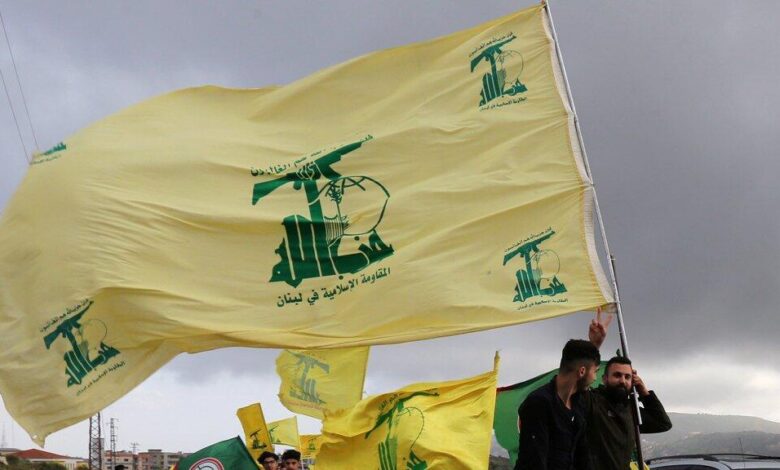
Germany’s federal authorities banned the Al-Irshad association and three affiliated bodies, Al-Qaim, Al-Thaqalayn, and the Qalam Education Centre, which they described as linked to Hezbollah. The ban was only the tip of the iceberg in the story of a movement that had quietly built a presence in Germany over many years.
On November 17, German federal police carried out a major operation targeting 28 locations in Berlin, including association offices and the homes of members and officials. The raids enforced an Interior Ministry order banning Al-Irshad and its branches, dissolving the organizations, seizing their assets, shutting down their websites, and prohibiting the distribution of their symbols.
German Interior Minister Iris Schirangz said the association had provided financial and organizational support to Hezbollah in Lebanon. She said it used a mosque it owned and ran targeted programs to mobilize and recruit members of the Shia community around the group’s religious and political ideology.
Germany’s use of bans follows two decades of close monitoring and intelligence sharing between Berlin and numerous countries.
A country with no cap on cash payments
The story began in the 1980s and 1990s, when waves of Lebanese people fleeing the civil war arrived in Germany. Many settled in Berlin, Bremen, Essen, Hanover, and North Rhine, where many went into legitimate businesses and other lines of work. At the time, German security services also identified a small cell operating on Hezbollah’s behalf.
Experts say the absence of a cap on cash payments made Germany attractive to Hezbollah by easing the movement of funds. They describe the country’s relatively permissive laws at the time as another factor that made it an “El Dorado” for Hezbollah’s money laundering.
The experts note that the European Union designated Hezbollah’s military wing as a terrorist organization in 2013, while Germany imposed a comprehensive ban on the group’s activities in 2020. They say the years between those decisions gave Hezbollah time to develop its means of influence, establish a presence in some Shia religious circles, and gain supporters and sympathizers willing to promote its narrative.
Membership and support rise
German domestic intelligence reports recorded a marked rise in the number of Hezbollah members and sympathizers in Germany. Estimates rose from 950 in 2014 to 1,050 in 2019 and 1,250 in 2020, before settling at around 1,200 in 2025, according to investigative and security reports.
In North Rhine-Westphalia, recorded membership rose from 110 in 2018 to 115 in 2019. A state intelligence report said Hezbollah’s external security apparatus had become a potential threat to Germany’s domestic security.
2014 marks a turning point in Germany’s response
Security studies identify 2014 as the year German authorities began taking decisive legal action, when the Federal Interior Ministry banned the Lebanon Orphan Project association. In November 2015, the Federal Administrative Court dismissed the association’s appeal. The court found that it had provided substantial financial support for years to Beirut’s Al-Shahid Foundation, which was part of Hezbollah’s network.
The move deprived Hezbollah of roughly €1 million in annual income. Germany took similar action in July 2021, banning three associations whose names translate as German-Lebanese Family, Human to Human, and Give Peace.
Alongside donations, German investigators identified a financial channel with a less innocuous front. In 2016, European agencies launched Operation Cedar, which uncovered a drug-trafficking and money-laundering network spanning six European countries.
The network moved drug proceeds from Latin America through Europe and Africa by purchasing luxury cars, watches, and jewelry that were shipped to Lebanon and resold there.
Press reports and German security sources cited by Der Tagesspiegel described drug shipments entering through the ports of Rotterdam, Antwerp, and Hamburg, as well as money laundering, fundraising, and recruitment.
In a separate case in 2015, a customs officer stopped a Mercedes at the German–Belgian border. Two German-Lebanese men were in the car, along with a large amount of cash in small denominations.
According to intelligence and security sources who gave consistent accounts, the stop exposed a laundering operation linked to South American cartels. US authorities said the operation financed weapons used by Hezbollah in Syria. The weapons’ arrival was documented through open-source intelligence and by tracing their serial numbers.
The history of the Al-Qaim mosque
The article cites the Al-Qaim mosque as a prominent example of how a place of worship can become a venue for building ideological networks.
The mosque, which was linked to the association, was founded in 1997 in Berlin’s Neukölln district. The association’s statutes date to January 1999, and it is listed in the Charlottenburg court’s register of associations under number 19211. According to a local Neukölln directory, the mosque can accommodate around 300 worshippers.
Association and company records show that the network expanded over time. Al-Qaim was registered in August 2017, Al-Thaqalayn in December 2020, and the Qalam Education Centre in November 2025.
German authorities said the associations ran youth programs modeled on Lebanon’s Imam Mahdi Scouts. The programs combined scouting with social activities and religious and ideological instruction for children as young as eight.
Confidential security records from 2025 also pointed to a second scout group in Bremen, organized along similar lines and forming part of a network across northern Germany.
From Spain to Germany
On July 14, 2024, Spanish police coordinated with Germany’s Federal Criminal Police Office and its domestic intelligence service to arrest four Lebanese nationals. One was detained in the German city of Salzgitter.
German federal prosecutors said the man, identified as Fadel Z., had joined Hezbollah in the summer of 2016 and purchased drone motors and other components.
A Spanish judge said the materials were ultimately destined for Hezbollah in Lebanon. The investigation later extended to France and the United Kingdom, bringing the total number of suspects detained to around 11. In March 2026, a German court handed down a conviction in a case involving components for the drone program.
Many observers have welcomed Germany’s vigilance over Hezbollah’s activities both within the country and across Europe.
The risk persists, and Hezbollah has other ways to seek access to funding through various entities. Berlin has nevertheless begun to take a broader preventive approach, which the article describes as effective.