A Ghost in the Sky Over Area 51: A New American Weapon?
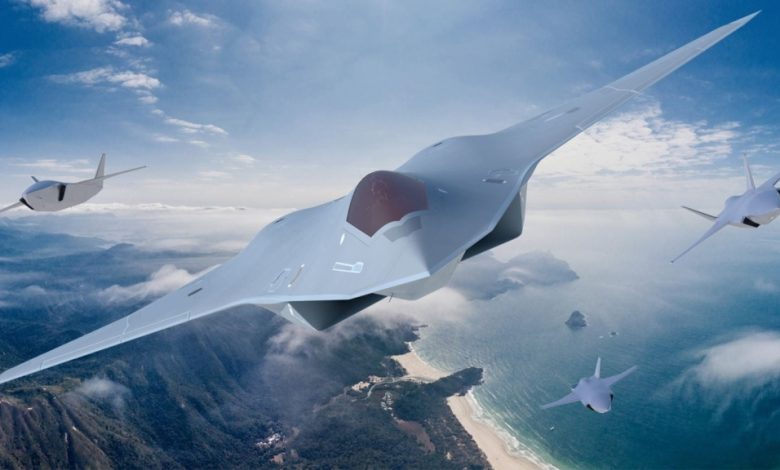
The appearance of a mysterious jet aircraft in the airspace surrounding the secret Groom Lake base, globally known as “Area 51,” has reignited speculation about the future of U.S. stealth fighter programs.
-
Washington Accuses Two Individuals of Supplying Weapons to Iran That Killed 3 Americans
-
The American deterrence legend refuses to retire: Washington searches for the heir to the B-52
According to The War Zone, thermal footage circulating online shows an unusual design that some experts believe could be linked to the sixth-generation fighter “F-47,” being developed by Boeing for the U.S. Air Force.
The images, captured using a thermal camera and published on the “Project Veritas” YouTube channel, have drawn significant attention from military aviation analysts. Beyond the mystery surrounding the aircraft, what stands out is its resemblance to a 40-year-old engineering concept known as the “Christmas Tree” design, one of the boldest ideas in stealth aircraft history.
-
How the Caspian Sea became a lifeline of weapons and food for Iran behind Washington’s back
-
A leak targets the Delta Force: a former American servicewoman stands accused
A Ghost in the Sky Over “Area 51”: A New American Weapon?
Although there has been no official confirmation regarding the aircraft’s identity, its appearance at a time of accelerating U.S. air dominance programs has fueled speculation that it could be an advanced experimental prototype linked to the F-47 program.
“Christmas Tree”: An Old Idea Revived
The current debate traces back to an experimental design called “DP-21,” created in 1983 by American engineer Darold Cummings during his work on Northrop’s Advanced Tactical Fighter program, which later produced the well-known YF-23.
-
No shrapnel: the first new American grenade to enter service since the Vietnam War
-
The Pentagon deploys a new weapon as part of its operations in Iran
The design featured a distinctive nose structure with four geometric “spikes” intended to scatter radar waves in multiple directions, reducing the aircraft’s detectability. The concept closely resembles the design philosophy used in the B-2 Spirit stealth bomber.
Cummings explained that in the 1980s the design faced major stability and control issues at high angles of attack. However, advances in digital flight control systems and artificial intelligence could now make such a configuration far more feasible.
Notably, the aircraft seen in the thermal footage appears to share several characteristics with the DP-21 concept, including a wide unconventional nose, canard-style forward wings, and swept rear wings—features associated with multiple classified U.S. aviation programs.
-
Aircraft Carriers: A Strategic Weapon Whose Influence Extends Beyond the Seas
-
The American Gerald Ford: a deterrence platform with operational flexibility in the Middle East
Is This the First Unofficial Appearance of the F-47?
Speculation intensified after Boeing secured the contract to develop the F-47, a fighter viewed as a cornerstone of the U.S. Air Force’s long-term air superiority strategy.
A Ghost in the Sky Over “Area 51”: A New American Weapon?
The F-47 is expected to combine advanced stealth technologies, artificial intelligence, and the ability to operate alongside unmanned aircraft, while significantly reducing radar and thermal signatures.
Cummings suggested that his earlier design may have influenced modern concepts for the new fighter, though he emphasized this remains speculative. He also noted that other experimental projects such as Bird of Prey and X-36 likely had a stronger influence on Boeing’s current design philosophy.
-
Abrams: an American tank that defies time
-
What weapons could Washington use in a potential attack on Iran?
Nevertheless, the identity of the aircraft spotted near Area 51 remains unknown. Some analysts suggest it could be part of the U.S. Navy’s next-generation fighter program F/A-XX, or a test platform for unmanned technologies.
The U.S. Air Force states that the first official flight of the F-47 will not take place before 2028. Until then, these images remain among the most intriguing hints about the future of American combat aviation—and possibly evidence that engineering ideas conceived more than forty years ago may be resurfacing to shape the next generation of stealth fighters.
-
Washington warns that political Islam infiltration could pose a potential risk to Europe’s nuclear weapons
-
The most expensive bomber in history… the B-2 Spirit and the price of American supremacy