American Interceptor Missiles: Structural Constraints Hamper Production Expansion
The supply chains required for the production of American missiles are facing structural constraints that cannot be solved simply by increasing spending.
The rapid depletion of anti-aircraft interceptor missile stockpiles has become one of the most significant challenges resulting from U.S. military operations in the Middle East against the Houthis in Yemen and against Iran, as well as the continued support for Israeli air defenses since October 2023. This has led to missile consumption at a pace far exceeding the current ability of the American defense industrial base to replenish supplies.
Although most Americans may not be concerned about missile production rates, the issue is far from trivial. According to the American publication National Interest, the situation has become serious enough that shortages in U.S. missile inventories are beginning to affect broader strategic planning and force deployment decisions, particularly in Asia.
The U.S. Department of Defense does not publish data regarding missile consumption rates or current stockpile levels. However, it is possible to form a rough assessment based on reports of missile usage in the Middle East and the known production capacities of American defense contractors.
The missiles facing the most severe shortages appear to be the SM-2 and SM-6, which serve as the U.S. Navy’s primary interceptor missiles.
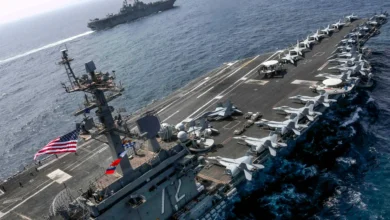
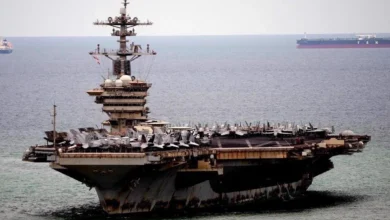
These missiles protect aircraft carriers, destroyers, amphibious assault groups, and other critical naval assets. During recent conflicts, American destroyers operating in the Red Sea and the Arabian Gulf launched large numbers of these interceptors.
Reports indicate that hundreds of missiles were expended during Operation Epic Rage against Iran. Meanwhile, RTX (Raytheon), the primary contractor for the SM-6 missile, currently manufactures only between 125 and 200 missiles annually.
At the same time, inventories of PAC-3 missiles, which fall under the U.S. Army’s responsibility, are also experiencing tremendous pressure.
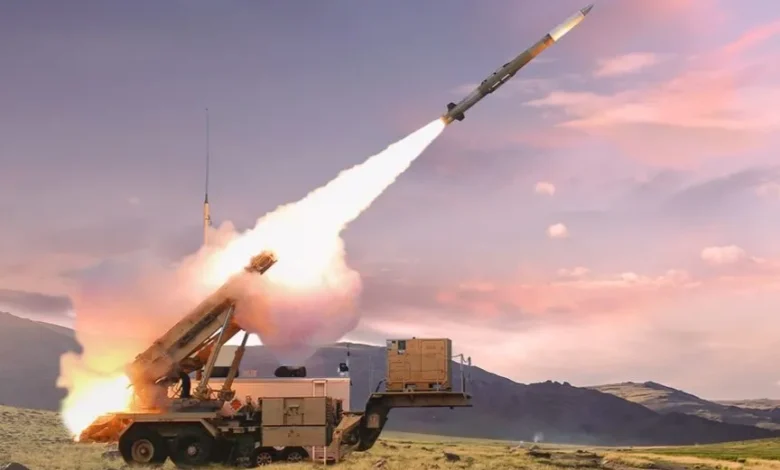
The PAC-3 serves as America’s primary interceptor missile for ballistic missile defense and advanced aerial threats. Lockheed Martin currently produces between 550 and 650 Patriot missiles annually. These missiles are allocated to U.S. forces worldwide, not solely to the Middle East.
The war in Ukraine had already forced the United States to redirect Patriot PAC-3 missile exports originally intended for NATO allies to Ukraine during the administration of former President Joe Biden, before the current Middle Eastern crisis further worsened the situation.
The resulting shortage has prompted substantial new investments in Patriot PAC-3 production, as well as innovative solutions such as outsourcing manufacturing to allied countries. Lockheed Martin has granted Japan a license to manufacture the missiles for export to the United States.
The AIM-120 AMRAAM missile, a versatile air-to-air missile, is also facing significant pressure because it is used by virtually all major military services.
It equips U.S. Air Force and U.S. Navy fighter aircraft, allied NATO air forces, Indo-Pacific partners, Ukrainian air defense systems, and numerous ground-based air defense batteries. All of these users draw from the same production line.
RTX currently manufactures approximately 1,200 missiles annually and plans to double production capacity by 2028. The company has already invested in additional manufacturing lines.
To alleviate shortages, the Pentagon is reportedly considering purchasing older AMRAAM stockpiles from partner nations.
This raises an important question: why can’t the United States simply build more of these systems?
The answer lies in the fact that the primary obstacle is not financial but industrial. Certain critical components are extremely difficult to scale up, creating bottlenecks throughout the missile supply chain.
Among these components are solid-fuel rocket motors. Although missile designs vary, nearly all advanced interceptor missiles rely on high-performance rocket motors that are difficult to manufacture and require specialized expertise.
The shortage also extends to skilled labor. Many missile components require highly trained technicians whose expertise takes years to develop.
The challenge is not limited to technical skills. Many workers in sensitive positions must undergo extensive security clearance procedures to ensure that production secrets are not leaked to U.S. adversaries, placing additional strain on already limited government investigative resources.
At the same time, many missile components depend on advanced industrial machinery that is expensive to build and subject to its own supply-chain constraints. Even though production of these machines is increasing, manufacturing them takes time and cannot be expanded overnight.
In response, the Pentagon has turned to the solution it knows best: increasing funding. Recent defense budgets have included substantial increases in procurement spending.
Funding for the SM missile family jumped from $1.26 billion to $8.5 billion between fiscal year 2026 and fiscal year 2027, with the goal of rebuilding inventories while expanding future production capacity.
However, even with sufficient financial resources, missile stockpiles cannot be replenished quickly. Restoring inventories to levels comparable to those that existed before 2025 is expected to take several years.