B-1 Over Iranian Skies: Washington Deploys the Deadly Bomber
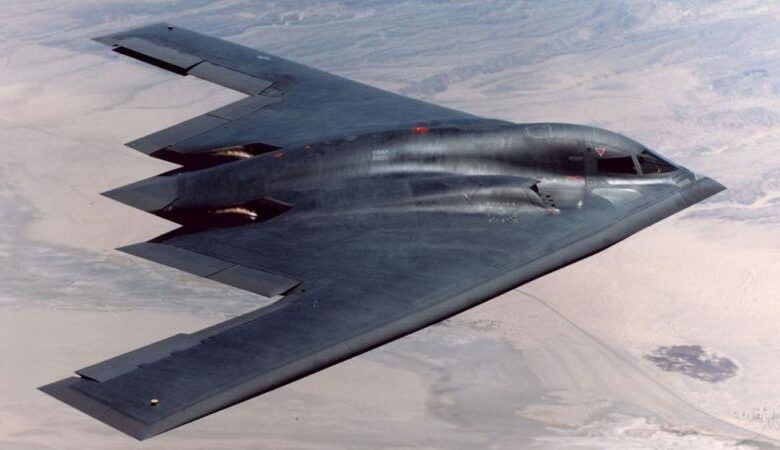
In a sign that the U.S. military campaign against Iran is expanding, Washington has deployed B-1 strategic bombers for the first time since the resumption of hostilities.
The U.S. military used a long-range B-1 bomber on Tuesday to strike targets belonging to Iran’s Islamic Revolutionary Guard Corps.
The outlet, citing U.S. officials, reported that this was the first B-1 bomber mission since fighting with Iran resumed twelve days ago.
A Sign of Escalation
According to the outlet, the use of this type of bomber, capable of carrying dozens of 2,000-pound bombs or dozens of cruise missiles, signals a significant escalation and expansion of the U.S. military campaign.
The B-1, described as a “deadly” bomber, is capable of flying at supersonic speeds at low altitudes and carries the largest bomb payload of any bomber aircraft.
According to the officials, the bomber took off from a U.S. air base in the United Kingdom, and its flight was tracked through aircraft-monitoring websites.
The development comes as U.S. Central Command did not announce the use of this type of bomber in its official statement on the strikes.
Central Command only said that its forces had targeted Iranian military operations centers, naval capabilities, aircraft hangars, drone storage facilities, and logistical infrastructure, with the aim of reducing Iran’s ability to threaten commercial shipping in the Strait of Hormuz.
It remains unclear what exactly the B-1 bomber targeted and whether the large-scale mission was more effective than the other strikes carried out over the past several days.
The United States had previously launched several B-1 bomber missions as part of Operation “Epic Fury,” targeting missile bases, command centers, weapons storage facilities, and air-defense systems inside Iran.
Decline in Iran’s Capabilities
U.S. Defense Department officials say that Iran’s military capabilities around the Strait of Hormuz have declined significantly.
In a new escalation, U.S. President Donald Trump threatened on Wednesday to bomb bridges and power stations, including in the capital, Tehran, if Iran continued targeting vessels in the Strait of Hormuz.
In a parallel development, Saudi Arabia announced that one of its vessels had been targeted in the Red Sea, while confirming that all members of its crew were safe.
The Saudi confirmation came after the Houthi movement announced that it had carried out an attack targeting two Saudi oil tankers, the Insilia and the Leila, using ballistic missiles, cruise missiles, and drones. The group claimed that the vessels had been hit and that a fire had broken out on board.
In this regard, a U.S. defense official told Axios that the Houthi attacks, following months of near-total neutrality by the group, could be driven by Iranian motivations.
The official added that Iran was seeking to use the Houthis to open a new front in the Red Sea and put pressure on another vital international waterway used for oil transportation.
Meanwhile, diplomatic efforts are continuing. People familiar with the matter said mediators were in contact with U.S. and Iranian officials in an attempt to reach a new agreement that would reopen the Strait of Hormuz and halt the fighting.
It remains unclear how long Trump will give diplomatic efforts to succeed. Speaking at an address in Georgia on Wednesday evening, he said: “They are under tremendous pressure, and they want to make a deal.”