An American Footprint in the Zircon… Ukraine Reveals Surprises About Russia’s Mysterious Missile
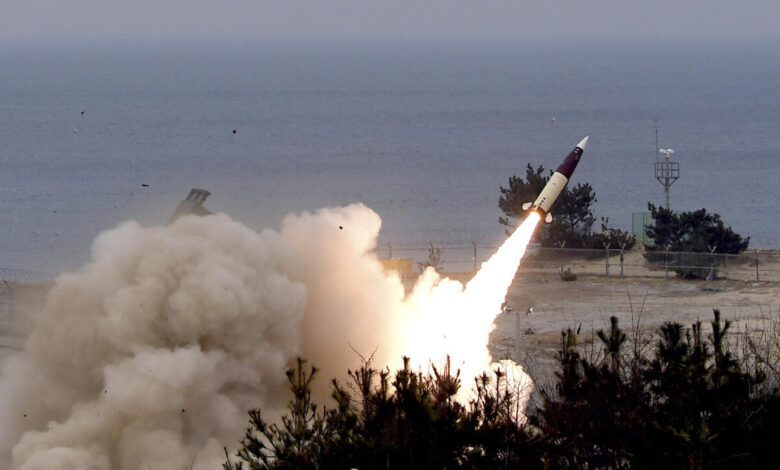
A detailed analysis by Ukrainian intelligence services has revealed new information about Russia’s “Zircon” missile, one of the most mysterious weapons in the Russian arsenal.
The analysis sheds light on the missile’s electronic components, the network of companies and individuals involved in its development and production, as well as the nature of its design and its actual capabilities.
The analysis presents a different picture from the traditional Russian narrative, which classifies the “Zircon” as a hypersonic cruise missile. Technical data instead indicate a design closer to that of a two-stage quasi-ballistic missile, according to The War Zone.
According to the report, the missile contains U.S.-manufactured electronic components, including a “TGA2704” amplifier produced by TriQuint Semiconductor, a company that was later incorporated into Qorvo, as well as an “Altera Cyclone II” field-programmable gate array manufactured by Altera, which was acquired by Intel.
The report does not indicate that these companies were aware that their products were being used in the manufacture of Russian weapons. However, it highlights the continued flow of Western technology into Russia’s military industries despite sanctions, with some components potentially reaching Russia through global re-export networks.
70 Companies and 84 Individuals Behind the Missile
The intelligence analysis maps out an extensive network involved in the development and production of the “Zircon,” encompassing approximately 70 companies and 84 individuals. This reflects the industrial and technological complexity underpinning the weapon.
Among its key components is a “3B-222” active radar seeker developed by NPP Radar MMS, along with a “Baget-83” digital computer manufactured by KB Korund-M, and a “3L-2211” solid-fuel engine developed by NPO Iskra.
The analysis also includes a three-dimensional model of the missile revealing details of its propulsion and guidance systems as well as its warhead. This provides intelligence agencies and experts with a clearer picture of its internal structure and operation, while allowing them to compare Russian claims about its capabilities with evidence extracted from debris recovered after the missile fell during the war in Ukraine.
Hypersonic or Quasi-Ballistic?
One of the analysis’s main findings is that it calls into question the description of the “Zircon” as a conventional hypersonic cruise missile. According to the data presented in the report, the missile relies on two solid-fuel stages, a design that differs from missiles equipped with ramjet engines, which require clearly identifiable air intakes to operate their engines during the cruise phase.
An examination of the debris conducted by Ukraine’s Scientific Research Institute of Forensic Expertise revealed a circular metal structure associated with a solid-fuel engine in the second stage, rather than merely a launch booster. This is consistent with previous analyses by expert Fabian Hoffmann, who also questioned some Russian classifications of the missile.
According to Ukrainian intelligence estimates, the “Zircon” has a maximum speed of between Mach 8 and Mach 9, while its sustained cruising speed can reach approximately Mach 6.8. Its flight altitude ranges between 19 and 25 miles, and its warhead weighs approximately 265 pounds.
Although the missile was originally designed for launch from ships and submarines, Moscow has developed versions that can be launched from land-based platforms, including the “Bastion” system. This demonstrates Moscow’s ability to expand the weapon’s operational use and transform it from a specialized naval weapon into a means of striking distant land-based targets.