Artificial Intelligence Is Redefining Elections in the United States
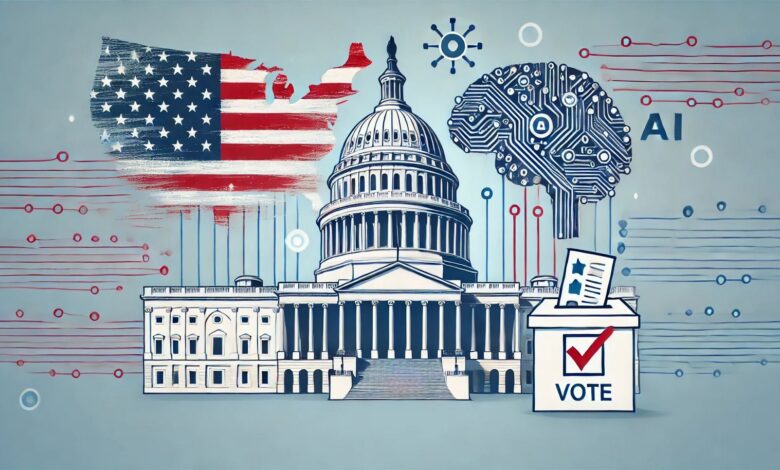
As the U.S. midterm elections approach, election campaigns are witnessing the widespread proliferation of deepfake technology powered by artificial intelligence.
Election advertisements using AI-generated images and videos were once viewed as a novelty or even a joke. Today, however, they have become widespread across American political campaigns, particularly through attack ads that portray candidates in embarrassing and entirely fabricated situations.
-
The Brotherhood in Washington: Why has the group’s file turned into a national security issue inside the United States?
-
“The ‘Charming Kitten’ Operation: From Spy Hunting to U.S. Elections”
According to the American news outlet Axios, this largely unregulated practice is significantly reshaping the unwritten norms of political campaigning and blurring the line between reality and fiction.
While some campaigns voluntarily disclose their use of artificial intelligence, such transparency is not mandatory. Democrats are seeking to change that situation if they regain control of Congress in the upcoming midterm elections scheduled for November.
One of the latest examples of controversial AI use involves an attack advertisement targeting James Talarico, the Democratic candidate for the Texas State Senate. The ad was produced by a group called “Citizens for Rationality,” which supports President Donald Trump.
-
After the Assassination Attempt, Will Trump Win the Elections? And What Are the Implications?
-
Author of 3 Books on Trump Reveals Tough Scenarios for Elections
The advertisement depicts Talarico wearing a dress and singing a shortened version of the song “My Favorite Things,” with lyrics referring to transgender children.
Talarico has long been a target of such tactics. Last March, the National Republican Senatorial Committee used artificial intelligence to portray him reading old social media posts. Although the posts themselves were genuine, the reading was entirely AI-generated.
Hotspots of AI Use
The Texas Senate race has become a major hotspot for the use of artificial intelligence. Republicans John Cornyn and Ken Paxton, as well as Democrat Jasmine Crockett, have all used AI to varying degrees during the primary elections.
-
Texas designates the Muslim Brotherhood and CAIR as terrorist organizations: a profound American shift reshaping the domestic landscape of political Islam
-
From a security document to the dream of millions: the secrets of the American Green Card
However, Texas is not the only battleground. The primary elections in Kentucky’s Fourth Congressional District also witnessed extensive use of artificial intelligence by both sides.
One example was an advertisement titled “Trio,” which featured deepfake images of Republican Representative Thomas Massie. The ad showed him having dinner, checking into a hotel, and holding hands with Democratic Representatives Ilhan Omar and Alexandria Ocasio-Cortez.
Pro-Massie advertisements also used artificial intelligence to depict an elephant with hair resembling Donald Trump’s and wearing a “Make America Great Again” hat, as well as portraying Massie’s opponent, Ed Gallrein, abandoning Trump in a trench.
-
Doctrine 2026: The transformation of American security philosophy toward the ideological root of extremism
-
The American Gerald Ford: a deterrence platform with operational flexibility in the Middle East
In the state of Georgia, gubernatorial candidate Brad Raffensperger used artificial intelligence in several advertisements depicting his Republican primary opponents firing guns randomly into the air and fighting with sticks.
Another gubernatorial candidate, Burt Jones, created an entirely AI-generated advertisement showing his Republican runoff opponent, Rick Jackson, throwing money into an oven.
The use of artificial intelligence is not limited to Republicans. In Texas, Jasmine Crockett used AI to exaggerate crowd sizes in one of her campaign advertisements. She also posted an AI-generated video on social media portraying herself, Donald Trump, and others as babies.
-
Washington warns that political Islam infiltration could pose a potential risk to Europe’s nuclear weapons
-
Europe’s Decisive Test: 10 Steps to Navigate without the American Captain
Earlier, Andrew Cuomo, a Democrat who later became an independent, used artificial intelligence during the New York mayoral race late last year. One advertisement showed him performing various jobs, including subway operator, stockbroker, theater worker, and window cleaner.
In Maryland, a new advertisement by Democrat Harry Dunn, candidate for the Fifth Congressional District, includes a brief scene featuring AI-generated men wearing suits labeled “Crypto” and “AIPAC” while tossing golden basketballs in a carnival-style shooting game.
-
2025… How Do Americans View the New Year?
-
Gaps and Ambiguities: ‘Black Holes’ in Harris’ Political Agenda