Berry Threatens to Reject the Framework Agreement Ahead of Lebanon–Israel Negotiations
Tehran has informed the Qatari and Pakistani mediators that ending the war in Lebanon and completing the Israeli withdrawal are priorities equal in importance, from its perspective, to the Strait of Hormuz.
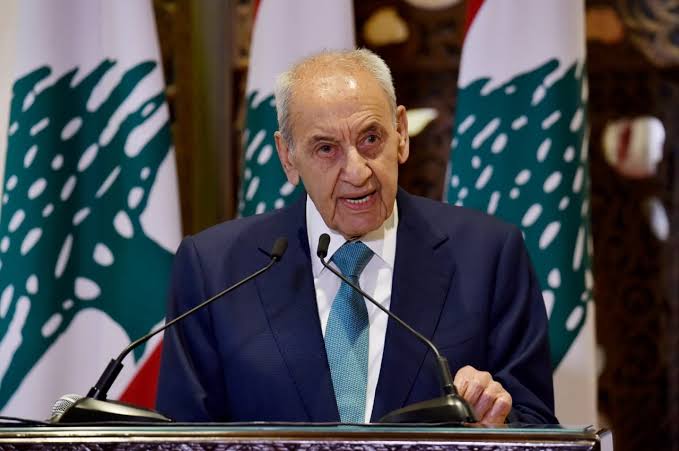
Negotiations between Lebanon and Israel dominated discussions between Lebanese Parliament Speaker Nabih Berry and U.S. Ambassador Michel Issa, amid reports that Berry is seeking amendments to the framework agreement. As those proposed changes have not yet been incorporated, Berry has indicated that he may no longer recognize the agreement, highlighting growing divisions within Lebanon over the deal.
-
Conditional Ceasefire Agreement Between Lebanon and Israel
-
Peace Between Lebanon and Israel: Progress in Negotiations as the United States Identifies the Only Obstacle
According to informed sources, Berry, who heads the Amal Movement and is allied with Hezbollah, believes that the mechanism currently governing the Washington-sponsored negotiations will neither safeguard Lebanon’s interests nor secure the liberation of its occupied territories in the south. He was quoted as saying that “these negotiations have brought the country down to minus twenty,” adding that efforts are now underway to restore the situation “to zero” and that “it is impossible to beautify what is fundamentally unacceptable,” arguing that Israel has been granted the upper hand in decision-making and operational freedom in southern Lebanon.
Local media reported that Berry now considers the “framework agreement” to be obsolete after losing substantial political support within Lebanon. He also believes that the Lebanese file will once again become a separate item on the negotiating agenda between the two sides.
-
Military participation reflects the sensitivity of negotiations between Lebanon and Israel
-
Rubio on Hezbollah: an obstacle hindering peace between Lebanon and Israel
Israeli Prime Minister Benjamin Netanyahu previously described the agreement with Lebanon as a “historic” achievement that dealt a blow to Iran and Hezbollah. In a televised address last June, he stated: “We reached a historic agreement for the State of Israel following direct negotiations between Israel and Lebanon,” adding, “This represents a blow to Iran and Hezbollah.”
The day after the framework agreement between Lebanon and Israel was signed in Washington, Israeli Defense Minister Israel Katz declared that Israel’s withdrawal from southern Lebanon would be contingent upon the complete disarmament of Hezbollah throughout Lebanese territory.
-
Extension of the truce between Lebanon and Israel for three weeks
-
Hegseth Visits Israel to Discuss Developments Concerning Iran and Lebanon
The same sources revealed that Berry and Hezbollah recently received a new message from the Iranian leadership stating that Tehran had informed the Qatari and Pakistani mediators that ending the war in Lebanon and completing the Israeli withdrawal are priorities comparable in importance to the Strait of Hormuz issue and the implementation of the memorandum of understanding signed with the United States.
Berry also accused Israel of flagrantly violating the ceasefire agreement. He called on the committee responsible for monitoring the implementation of the ceasefire to begin its work immediately and compel Israel to end its violations.
-
Israel Announces Killing Armed Militants in Syria and Lebanon and Pledges to Eliminate Threats
-
Israel Expands Operations in Southern Lebanon in Preparation for Occupying New Areas
These developments come two days before the sixth round of Lebanese-Israeli negotiations, scheduled to take place in Rome on Tuesday and Wednesday under U.S. mediation, with the objective of consolidating the ceasefire and initiating pilot arrangements for transferring control of southern Lebanon to the Lebanese Armed Forces.
The talks will be held at the ambassadorial level, with Israel represented by Yechiel Leiter and Lebanon represented by Nada Mouawad under U.S. sponsorship.
In an interview with CBS, Leiter stated that “Israel, the United States Central Command (CENTCOM), and the Lebanese Armed Forces are currently preparing the conditions necessary to establish two pilot zones in southern Lebanon from which the Israeli military will withdraw.”
-
Israel intensifies operations in Lebanon amid troop mobilization and airstrikes
-
Lebanon–Israel negotiations enter a complex security and political phase
He added: “If the Lebanese Army agrees to assume responsibility for the two pilot areas, we will proceed. However, if Hezbollah remains there, we will maintain our positions.”
Meanwhile, sources within the Lebanese presidency stated that the sixth round of direct negotiations between Lebanon and Israel will focus on mechanisms for implementing the framework agreement signed in Washington, as well as the possible establishment of specialized committees to complete the implementation of several of its provisions.
-
Southern Lebanon: Israel announces the death of its twentieth soldier and issues warnings to five villages
-
Through incitement and protests, Hezbollah seeks to obstruct Lebanon–Israel negotiations
Local media reported on Saturday that Lebanon will participate in the negotiations scheduled for next week in Rome with Israel, while a U.S. military delegation is currently holding talks in Lebanon regarding mechanisms for implementing an Israeli withdrawal from a pilot zone in southern Lebanon.
Lebanon ultimately agreed to participate after a diplomatic source familiar with the negotiations had stated on Wednesday that Beirut had conditioned its participation in a new round of talks on Israel’s prior withdrawal from two designated pilot areas in southern Lebanon.
-
Israel expands its operations in Lebanon… evacuation alerts and dozens of Hezbollah members killed
-
Lebanon today: Israeli strikes on Beirut, ground incursion, and over one million displaced
-
New alerts in Lebanon: Israel expands the scope of confrontation with Hezbollah