Eroding Influence and Shrinking Support Base: Public Rejection of Hezbollah in Syria and Lebanon
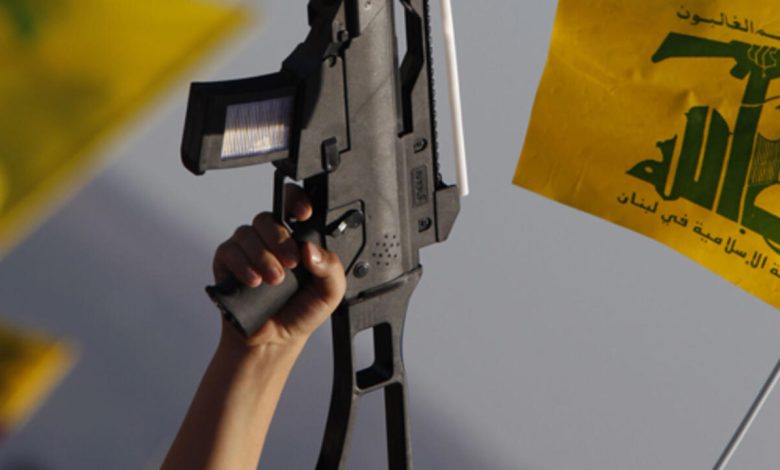
In a context reflecting the decline of influence of armed proxies linked to Tehran, new polls reveal an unprecedented rejection in both Syria and Lebanon of the role of the Lebanese Hezbollah.
Residents in both countries believe that the group’s military presence and policies undermine their security and stability, reshaping the balance of influence in two states long affected by militia interventions that fueled wars, tensions, and worsening humanitarian and economic crises.
The findings, obtained by the Washington Post and conducted by the Council on American Security in cooperation with YouGov, show a dramatic shift in public opinion in Damascus and Beirut toward the group classified as a terrorist organization. More than two-thirds of Syrians describe Hezbollah’s intervention in their country as negative, while a majority of Lebanese support their president’s efforts to disarm militias and place all armed forces under state authority.
Syrians Judge Hezbollah
In Syria, where Lebanese militias played a key role in sustaining Bashar al-Assad’s rule throughout the war years, the survey found that 68% of Syrians view Hezbollah’s intervention negatively, including 52% who describe it as “very negative.” Only 6% view it positively, while 26% expressed no clear opinion.
This figure is one of the clearest indicators of shifting sentiment in a country emerging from a prolonged period of conflict, with public opinion now issuing a decisive judgment on militias that helped sustain the former regime.
Commenting on the results, Jennifer Sutton, executive director of the Council on American Security, said that Syrians, nearly eighteen months after the fall of the Assad regime, have delivered a clear verdict on the militias that helped keep it in power, adding that what was once taboo in Syrian public discourse is now openly discussed, signaling an unprecedented political and social opening.
53% Support a Security Agreement with Israel
In a notable development reflecting Syrians’ trust in their new government, 53% of respondents supported the idea of a formal security agreement with Israel, compared to 11% who opposed it, while 37% expressed no opinion.
According to analysts, this reflects cautious anticipation regarding future relations with Israel, while also indicating a desire to reorient security priorities away from the Iranian axis.
Furthermore, 57% of Syrians believe that peace with Israel is possible in the future, compared to 16% who consider it unlikely and 27% who are unsure.
The poll also recorded a slight decline in enthusiasm toward the United States compared to a previous survey conducted in January. Support for a U.S. role in Syria fell from 65% to 51%, while opposition stood at 22%, with the decline particularly evident among younger respondents under 45, suggesting shifting dynamics within Syrian society.
Lebanon: 59% See Hezbollah as a Threat to National Security
In Lebanon, public opinion shows a major shift in attitudes toward the armed group, with 59% of respondents saying Hezbollah’s military presence has a negative impact on national security, compared to only 11% who view it positively, while 40% expressed no clear opinion.
This figure challenges earlier assumptions that Lebanese society is evenly divided on the issue of armed militias, suggesting instead that the silent majority now views Hezbollah’s arsenal as a heavy burden on the country’s future.
In a more significant development, 58% of Lebanese support President Joseph Aoun’s efforts to strengthen the Lebanese army and negotiate the disarmament of Hezbollah, so that all armed forces operate under the authority of the central state, reflecting a national aspiration to end the phenomenon of a “state within a state” established over decades.
Survey Methodology and Significance
These findings are based on two Arabic-language online surveys conducted by YouGov for the Council on American Security between May 26 and June 1. The first included 252 Syrians and the second 260 Lebanese adults, with a margin of error of ±5 percentage points.
The data comes at a sensitive regional moment marked by U.S.-Iran negotiations aimed at ending the conflict, giving these public perceptions particular significance as a reflection of deeper shifts in Syrian and Lebanese societies that could reshape regional dynamics as a whole.