China and Russia’s Military Drills: Pressure Messages to Washington’s Allies in Asia
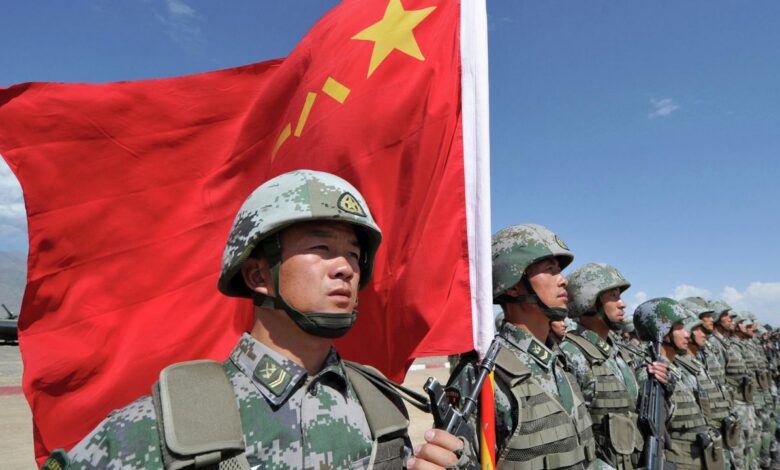
China and Russia are intensifying their joint military exercises in East Asia, in moves that carry strategic messages for Washington’s allies and raise concerns about the region’s security balance.
During his visit to the United Kingdom, Japanese Prime Minister Shinjirō Koizumi revealed that a Chinese guided-missile destroyer, which was part of a joint fleet with Russia, conducted a live-fire machine-gun exercise last Sunday approximately 100 miles, or around 160 kilometers, southwest of Okinotorishima, Japan’s southernmost island, and within Japan’s exclusive economic zone.
According to the U.S. magazine Newsweek, this was the first officially conducted live-fire exercise by the fleet, which also included three other Chinese warships and a Russian frigate.
Japanese government spokesman Minoru Kihara confirmed that Tokyo had lodged a diplomatic protest with Beijing over the exercise, warning that it posed a potential risk to nearby vessels. He also said that China had warned ships operating in the area immediately before the exercise began.
The latest drills represent another episode in a series of Russian-Chinese military activities, including operations in the Sea of Japan, that have raised concerns in Tokyo.
China and Russia have expanded their military cooperation in both scale and complexity since 2022, the year the war in Ukraine began.
Although the six joint exercises conducted last year represented a decline from the 14 exercises held the previous year, they included the two countries’ first-ever joint submarine patrol.
Beijing, for its part, dismissed Japan’s concerns as « groundless ». Chinese Foreign Ministry spokesman Lin Jian told reporters: « Japan is smearing other countries, exaggerating legitimate actions taken by them, and amplifying the so-called “external threats” », while also accusing Japan of seeking excuses to accelerate its « rearmament ».
The latest exercises, including the live-fire drill inside Japan’s exclusive economic zone, are permitted under international law. However, analysts believe that the manner in which they were conducted appears intended to send a message to Japan, a key U.S. ally that hosts approximately 55,000 American troops, according to Newsweek.
Rajeev Rajagopalan, a resident scholar at the Australian Strategic Policy Institute, told the magazine: « China is increasingly engaging in behavior that could be considered risky, and it is sending a clear message. »
He explained that the increasingly ambitious Russian-Chinese military drills reflect an effort to test the limits of countries allied with the United States in the region.
The latest exercises come after a major incident in February 2025, when the Chinese navy conducted two live-fire drills in the Tasman Sea between Australia and New Zealand with little advance warning, forcing commercial airlines to alter their flight routes.
Rajagopalan said: « The two countries are working to normalize their military presence in international waters and in areas where the United States and its allies have dominated for decades. »
He added that these exercises, at the very least, make it more difficult for Washington and its allies to predict how Moscow and Beijing might respond in the event of a crisis, such as a conflict over Taiwan.
China and Russia are not bound by any formal military alliance. However, they share a strategic opposition to the U.S.-led system of alliances and security blocs, and analysts say their military cooperation provides practical benefits to both sides.