Fears of Regional Escalation After the U.S. Helicopter Crash in the Strait of Hormuz
Confirmation that the American helicopter was shot down by Iranian air defenses would complicate efforts aimed at reaching a peace agreement between Washington and Tehran.
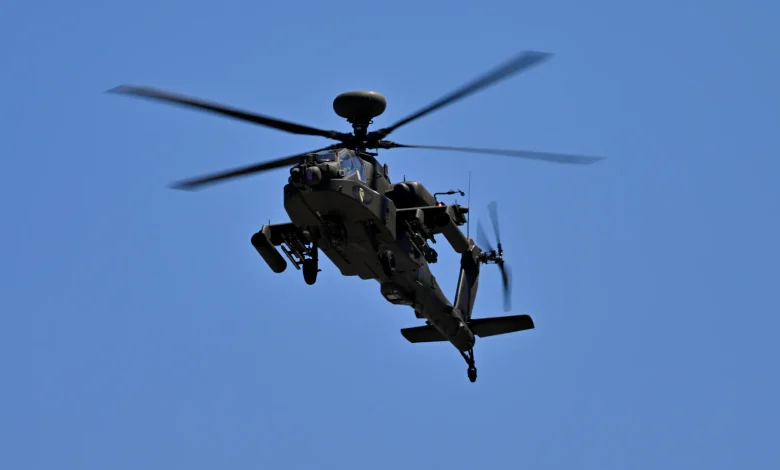
A U.S. Army Apache attack helicopter crashed near the Strait of Hormuz, and its two-member crew was safely rescued, according to a report published on Tuesday by The New York Times, citing two informed sources. The cause of the incident remains unclear, but it is expected to have implications for peace negotiations in the region and for the broader regional security environment.
The report added that it has not yet been determined whether the aircraft was brought down by Iranian fire, suffered a technical malfunction, or encountered another type of problem.
Commenting on the incident, U.S. President Donald Trump said early Tuesday that the two pilots aboard the U.S. Army Apache helicopter that crashed near the Strait of Hormuz were “safe and doing well.”
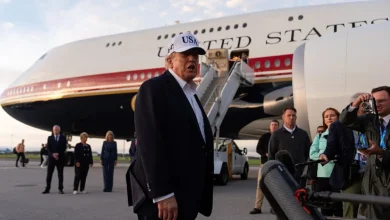
Speaking on the tarmac of John F. Kennedy International Airport before returning to Washington, D.C., he stated that “no one was hurt,” adding that the U.S. administration would release a report on the incident later in the day.
Observers believe that confirmation that the helicopter was shot down by Iranian air defenses would cast a heavy shadow over efforts to achieve a peace agreement between Washington and Tehran.
Such an incident could prompt the U.S. administration to adopt a more hardline stance on security and military issues, while Tehran would likely seek to use the event to demonstrate its ability to challenge American military superiority. Analysts fear that this could undermine the fragile trust that forms the foundation of any negotiation process, while simultaneously increasing tensions in the Gulf region and the Strait of Hormuz, one of the world’s most critical energy transportation corridors.
Furthermore, any official confirmation that the helicopter was shot down could open the door to a new round of mutual accusations and military measures, threatening to return the region to a cycle of escalation and further complicating efforts to preserve the current de-escalation between the two sides.
U.S. forces suffered significant aerial losses during the war that erupted with Iran in late February 2026, highlighting the scale of the challenges faced by military operations in Iranian airspace and throughout the Gulf region.
According to available reports, Iranian air defenses succeeded on April 3 in shooting down a U.S. F-15 Strike Eagle multirole fighter aircraft over western Iran. Reports indicated that one member of the crew was later rescued during a complex search-and-rescue operation.
On the same day, a U.S. Thunderbolt II attack aircraft crashed near the Strait of Hormuz after coming under Iranian fire. However, the pilot successfully ejected before the crash and was later rescued.
The United States also sustained substantial losses within its drone fleet. Reports indicated that more than twenty Reaper drones were shot down during March, April, and May, either over Iranian territory or in the vicinity of the Strait of Hormuz. This reflected both the intensity of the aerial confrontations and Washington’s growing reliance on unmanned aerial systems for reconnaissance and targeting missions.
In another development, the United States lost an advanced Triton maritime surveillance aircraft over Gulf waters during April, adding another significant loss to the record of American aerial losses sustained during the conflict.