Houthi Attacks Complicate Efforts to Contain Tensions Between Iran and Israel
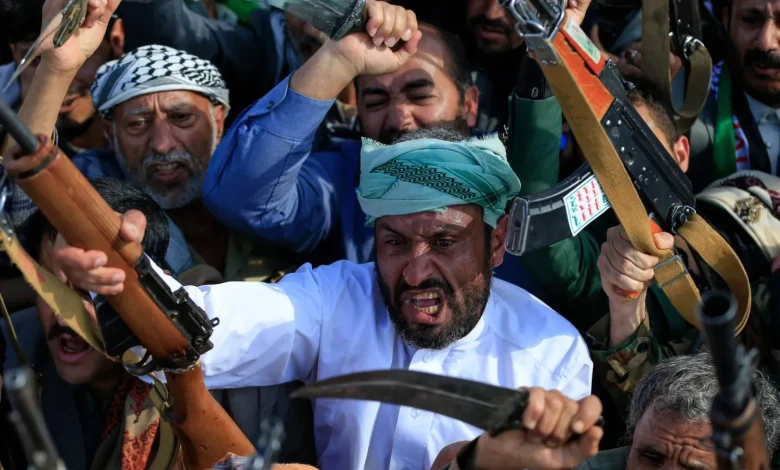
The Israeli military announced that it intercepted a drone launched from Yemen after air-raid sirens were activated in the city of Eilat, despite discussions surrounding a ceasefire between Tehran and Tel Aviv.
Early Tuesday, the Israeli military announced that it had intercepted a drone launched from Yemen after warning sirens sounded in the southern Israeli city of Eilat. The Houthis continue to target Israel despite the ceasefire between Tehran and Tel Aviv, complicating ongoing efforts to contain regional escalation.
In a statement, the military said that “the Air Force intercepted a drone launched from Yemen that had entered the airspace of the city of Eilat,” without providing further details.
For its part, Israeli Army Radio reported that the drone was the first launched from Yemen in nearly two months and represented the second attack carried out by the Houthis in less than twenty-four hours, following missile launches toward central Israel early Monday morning.
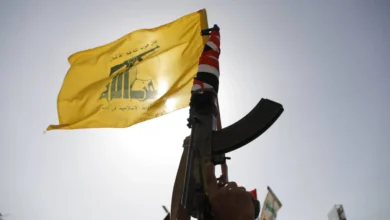
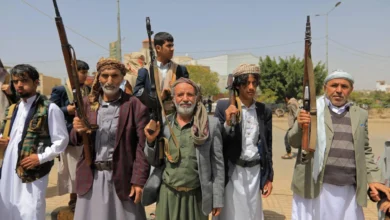
The Houthis’ determination to continue targeting Israel despite the ceasefire between Tehran and Tel Aviv highlights the complexity of the regional landscape and the difficulty of containing the repercussions of the conflict through bilateral understandings alone. The group continues to portray itself as part of the “Axis of Resistance,” which does not consider itself bound by the de-escalation efforts currently underway between the two sides.
Observers believe that the continuation of Houthi attacks threatens efforts aimed at reducing tensions across the region, particularly given the close connection between the security of the Red Sea, international shipping routes, and military stability in Yemen. The group’s actions have also intensified concerns regarding the ability of Iran’s regional allies to activate multiple fronts, either independently or in coordination, thereby keeping the possibility of escalation alive even during periods of truce.
This underscores the fact that regional tensions are not solely linked to the direct confrontation between Iran and Israel, but also to the activities of Tehran’s allied forces throughout the region. Such developments could trigger new military responses and further deepen the uncertainty overshadowing the Middle East.
On Monday, the group’s spokesperson, Yahya Saree, stated in a televised address that the Houthis had launched missile strikes against “sensitive targets in occupied Jaffa.” He also announced a ban on Israeli maritime navigation in the Red Sea, declaring that “all movements of the Israeli enemy have become military targets for our armed forces from the moment this statement was issued.”
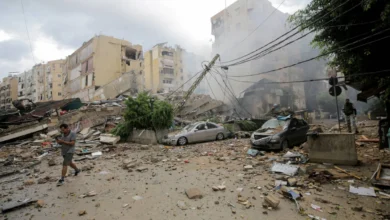
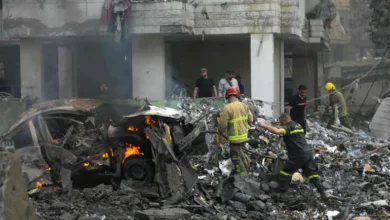
These developments come as the region witnessed a new round of escalation between Iran and Israel on Sunday and Monday following Israel’s strike on Beirut’s southern suburbs on Sunday evening.
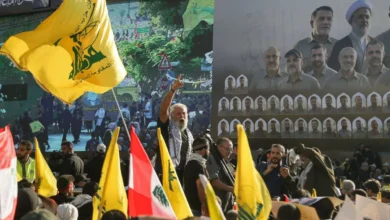
Despite Iranian warnings, Israel reignited regional tensions by carrying out a strike on Beirut’s southern suburbs on Sunday night, killing two people and injuring eleven others. Tel Aviv claimed that the attack targeted a command-and-planning center belonging to Hezbollah, a key ally of Tehran.
In response, Iran began launching multiple waves of missiles toward Israel on Sunday evening. Subsequently, Israel announced that its fighter jets had struck military targets in western and central Iran.
On Monday, the Khatam al-Anbiya Headquarters of the Iranian Armed Forces announced the suspension of military operations against Israel, stating that a “painful response had been delivered to the enemy.”
The United States and Israel had launched a war against Iran on 28 February. Tehran responded with attacks against Israel as well as what it described as “American interests” in several Arab countries, before a temporary ceasefire was reached on 8 April.