Zelensky Negotiates with Fire
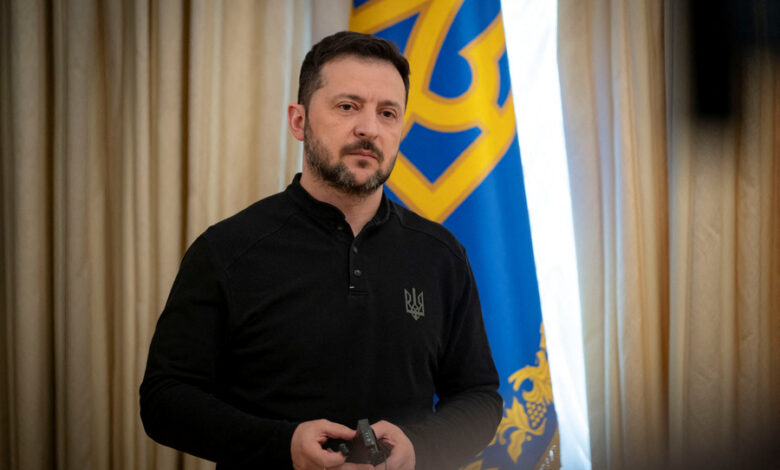
Ukrainian President Volodymyr Zelensky announced that his country had struck a missile production plant in western Russia, arguing that peace would only come through inflicting tangible damage.
The strike on the Russian missile plant in the Samara region comes after Moscow rejected a proposal from Kyiv to establish a truce in the Black Sea, following disruptions to the shipment of food products caused by exchanges of fire targeting commercial vessels.
-
No One Wants the Toughest Mission: The Post Zelensky Is Struggling to Fill
-
One Ukrainian interception against 27 Russian missiles: Zelensky admits a shortfall and asks for additional support
Zelensky said that the plan for long-range strikes against Russia was aimed at reducing its military capabilities.
He said that his country “needs peace, and Russia must understand this through tangible damage inflicted on specific facilities.”
Ivan Noskov, the mayor of Samara, the capital of the targeted region, said that air defenses had repelled “a large-scale attack.”
In an online post, he added that “industrial infrastructure in Samara sustained limited damage,” without providing further details about the facility that was affected.
-
390 Drones Disrupt the Scene: War Messages Precede Trump-Zelensky Talks
-
Zelensky’s Gamble: Attempts to Merge the War in Ukraine with the Iran Conflict
Ukraine had previously targeted the Syzran oil refinery, located on the Volga River in the Samara region of southwestern Russia, as part of its campaign against energy infrastructure and its efforts to pressure Russia to end the conflict, which has been ongoing for more than four years.
Four and a half years after the outbreak of the war in Ukraine, the fighting appears to be entering a new phase of escalation.
Russia is facing pressure from continued Ukrainian attacks on oil and commercial facilities, while its advance along the extensive battlefronts in the east of the country has stalled.
-
Zelensky’s Prediction: Ukrainian Air Defenses Repel a Russian Missile Attack
-
Message to the Kremlin: Zelensky Proposes a Meeting with Putin as Moscow Opens Its Doors
At the same time, Russia is intensifying its missile campaign against major Ukrainian cities, increasing production of its most effective long-range weapons, and seeking to recruit new soldiers, including tens of thousands of North Koreans, according to the U.S. magazine Newsweek, citing Ukrainian officials.
Some observers believe these developments indicate that Russia may be preparing for a new and more intensive phase of the protracted war, or seeking to escalate the conflict in one form or another.
The current period represents a pivotal moment for the future of the war, as both sides seek to secure a battlefield advantage before winter arrives.
-
Zelensky dissatisfied with being sidelined: seeking a full seat at the EU table
-
Zelensky sends his envoy to Washington… Ukraine seeks a breakthrough in the wall of war
Observers believe that Russia currently holds the upper hand, amid U.S. preoccupation with the Middle East and the inability of European allies to fully compensate for Washington’s support, while Ukraine is facing a severe shortage of air-defense missiles.
Russia launched nearly 200 ballistic and hypersonic missiles against Ukraine in July alone, the highest monthly figure recorded so far this year, according to Major General Vadym Skibitskyi, deputy head of Ukraine’s military intelligence agency.
Ballistic and hypersonic missiles are among the most difficult weapons for Ukraine to intercept, particularly given the country’s current shortage of advanced air-defense systems capable of bringing them down.
-
Zelensky warns of unusual activity on his country’s border with Belarus.
-
Patriot shortage worries Kyiv: Zelensky seeks alternatives