Terrorism Without a Trace… Why Is Europe’s Radar Failing to Detect the Threat?
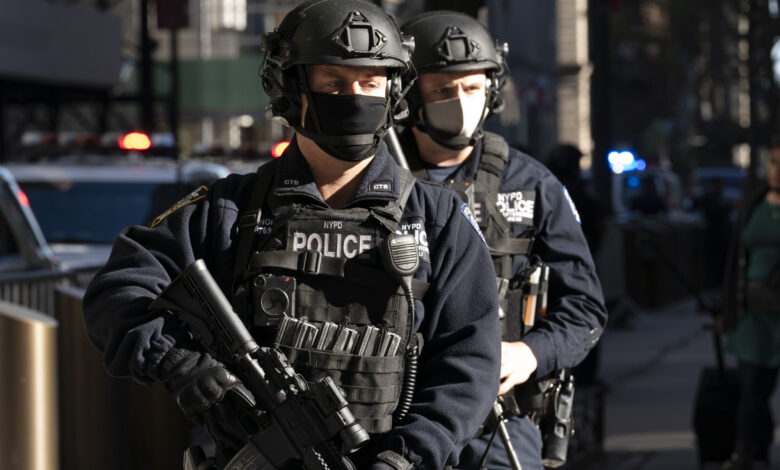
The series of terrorist attacks that have recently struck Europe does not merely reflect a random pattern, but rather a transformation in the structure of the organizations behind them.
The threat no longer comes primarily from centralized cells that can be tracked and monitored. Instead, it increasingly involves individuals or small groups operating in a more decentralized manner, taking advantage of the digital space as well as the consequences of prolonged wars and conflicts.
-
“Terrorism and Extremism in Europe from the Inside”: A Book Warns of the Dangers of the Muslim Brotherhood
-
What are the implications of rising terrorism in Africa on Europe? An expert answers
These developments reveal challenges in intelligence monitoring, information-sharing, and the assessment of the risks posed by “radicalized” individuals, particularly given the differences among national counterterrorism frameworks across European countries, according to a report by the European Centre for Counter-Terrorism and Intelligence Studies.
While European security services succeed in foiling plots and arresting suspects, attacks that are actually carried out reveal gaps in surveillance, information-sharing, and the assessment of threat levels. This highlights the need to develop more integrated European mechanisms to prevent terrorism and address evolving threats that transcend borders and geography, the European report adds.
-
A European Blow to Brotherhood Terrorism
-
Accusations of Terrorism and Rebellion: Bolivian Judiciary Pursues Morales
While experts believe that the Islamic State remains capable of inspiring attacks despite the decline in its organizational capabilities, others warn that the international conflict environment and the digital space could reproduce terrorism in more complex forms that are harder for security agencies to detect.
In this regard, Mounir Adeeb, a researcher specializing in extremist movements and international terrorism said that the terrorist threat in Europe was increasingly moving toward decentralization, with greater reliance on radicalized individuals and small groups that may be more difficult to monitor and detect before carrying out attacks.
He explained that this phenomenon had benefited from the chaotic environment created by wars and multiple conflicts around the world, stressing that this decentralized model represents one of the most prominent and difficult security challenges currently facing European countries.
-
New faces and substitute arms: the Muslim Brotherhood’s plan to conceal itself from terrorism designation
-
A Western tightening around the Muslim Brotherhood: Washington shakes European hesitation
Geopolitical transformations
Regarding the Islamic State’s ability to direct or inspire attacks in Europe despite the decline in its organizational capabilities, Adeeb said that the organization had managed to exploit the state of global instability, the conflicts and wars between major powers, as well as geopolitical transformations in the Middle East and other regions.
He explained that the Islamic State had suffered a major decline in its organizational capabilities and in its project based on territorial control, but had managed to adapt to changing circumstances and exploit the unstable international and regional environment to redirect its operations and inspire attacks in Europe.
He added that the decline in the organization’s capabilities did not mean the end of its ability to exert influence. It could still exploit conflicts and geopolitical transformations to reproduce its threat in new forms, particularly through incitement and individual recruitment.
-
Europe and the Muslim Brotherhood: why has the Western security mood shifted toward political Islam?
-
Successive blows… a policy paper by Austria’s ruling party to combat the terrorism of the Muslim Brotherhood
While saying that Europe was already witnessing signs of a renewed wave of terrorism, he considered this resurgence to be largely connected to the developments and conflicts that have affected the Middle East and the world in recent years.
The European Union Agency for Law Enforcement Cooperation, Europol, said in a report that six European countries had reported 24 terrorist attacks in 2025, the same number recorded in 2024.
He explained that a war or conflict in one country could have repercussions for other states and regions, noting, for example, that the Russia-Ukraine war had contributed to creating an environment in which terrorist activity could develop in Eastern Europe, taking advantage of the chaos and divisions generated by armed conflicts.
-
From France to Sweden, Europe’s Front Against the Muslim Brotherhood Expands
-
Recent Reports and Warnings Reveal the Expansion of Muslim Brotherhood Activity in Europe: Details
He added that some actors might also seek to instrumentalize such forces against their adversaries, further complicating the security environment.
He noted that the interaction of these conflicts and crises, combined with rapidly changing geopolitical dynamics, was one of the factors that could explain the return of signs of terrorism and extremism to Europe.
In the same context, Dr. Amr Abdel Moneim, a researcher specializing in terrorist groups said that the threat of terrorist attacks in Europe “has never stopped at all.” He argued that the growing European and Western focus on terrorist attacks and plots at present was partly connected to broader political contexts in which conflicts among different ideological currents intersect.
-
Europe and the Muslim Brotherhood: who holds the key to a ban?
-
The Muslim Brotherhood in Europe: Ireland on the frontline
Decentralized terrorism: “lone wolves” moving beyond traditional organizations
Regarding the shift toward a more decentralized terrorist threat in Europe, Abdel Moneim said extremist groups were increasingly relying on what could be described as a “single-person operation,” or what was previously referred to as “operation zero” and “lone wolves.”
He explained that this model is based on an individual becoming ideologically and organizationally separated from the central structure, eventually reaching a stage at which they can independently select the target, location, and timing and carry out an operation without needing direct instructions from the organization’s leadership.
The Europol report concluded that most terrorists were not members of organizations with clearly defined hierarchical structures. Instead, they operated individually or within small networks consisting of people who shared extremist ideas, with their communications often extending across borders. The report emphasized that all attacks recorded in 2025 were carried out by adult male “lone wolves.”
-
Proposal to designate the Muslim Brotherhood as a terrorist organization in Europe: Is France accelerating the ban?
-
Europe’s crackdown on the Muslim Brotherhood: banned networks, financial restrictions and security measures
Counterterrorism researcher Abdel Moneim explained the difference between centralized and decentralized terrorism, saying that the former involves directives moving from the leadership down to the rank and file, while the decentralized model gives individuals greater freedom to make decisions and act independently.
He noted that this model leads to what he described as “instant terrorism” or “instant violence,” in which an operation does not necessarily have organizational extensions or prior communications that security agencies can track and which ends once the attack has been carried out.
He explained that this model reduces the burdens placed on extremist organizations in terms of financing, training, and organizational and operational surveillance. It also lowers the likelihood of exposing their leadership structures or making them vulnerable to infiltration.
-
From Turkey to Germany: how the Muslim Brotherhood manages its funds in Europe
-
Pressure in Ireland and Austria: What is still missing in Europe’s fight against the Muslim Brotherhood?
Factors behind spread and recruitment
Regarding the factors behind the spread of extremism, Mounir Adeeb, a researcher specializing in extremist movements and international terrorism, said that social media platforms and messaging applications had become among the most dangerous recruitment and incitement tools used by terrorist groups in Europe.
He explained that the danger posed by these platforms was amplified by the “environment of chaos” resulting from wars and conflicts, as well as the lack of agreement among the international community and major powers on a unified approach to combating terrorism, in addition to weak cooperation among a number of countries in this field.
He added that the absence of effective international coordination in counterterrorism represented a major crisis that had contributed to the spread of extremist organizations, to the point that they now constitute a threat that transcends national borders and affects global security.
-
The Muslim Brotherhood in France Practices Judicial Terrorism
-
After the Arrest of a Hamas Cell in Berlin: The Brotherhood’s Danger Infiltrates Europe
According to Europol, the internet remained the main source of exposure to extremist ideology among most of the suspects arrested, whether through direct Islamic State propaganda or through social media and messaging platforms.
A major arena
Dr. Amr Abdel Moneim, a researcher specializing in terrorist groups, made a similar point, saying that the evolution of the terrorist threat was no longer confined to operations on the ground but had expanded into cyberspace, which has become a major arena for incitement, mobilization, and influence.
He said that new forms of “cyberterrorism” rely on digital groups, militias, and networks operating through social media platforms. This allows individuals to dispense with many of the traditional organizational burdens and simply use a phone or electronic device to disseminate extremist content and influence audiences.
-
The Muslim Brotherhood in Europe and Youth: A Long Arm with 31 Branches and a Recruitment Strategy
-
The Muslim Brotherhood in Europe and Youth: An Extensive Arm with 31 Branches and a Structured Recruitment Strategy
He explained that this type of activity can target reputations, spread rumors, promote extremist ideas, disrupt state institutions, and flood the public sphere with misleading information. Its impact, he noted, can extend beyond the geographical borders of the country in which it operates.
He added that the danger posed by these groups lies in their ability to use digital tools professionally and transform online influence and incitement into factors that can contribute to crimes and acts of violence in the real world.
Social media: a transcontinental environment for recruitment and radicalization
Regarding the role of social media platforms and messaging applications in recruitment and radicalization, Abdel Moneim said their danger was not limited to Europe but had become transcontinental and cross-border.
-
Canada follows European countries in move to recognize State of Palestine
-
The Muslim Brotherhood’s Cohorts Planted the Seeds of Islamism in Europe… How?
He explained that technology enables a person in one country to communicate directly with individuals in other countries and exchange books, ideas, and extremist content beyond traditional borders.
The solution: a unified strategy
Mounir Adeeb, a researcher specializing in extremist movements and international terrorism, said Europe needs a unified strategy to address the consequences of terrorism and ideological recruitment, stressing that this need extends beyond Europe to the international community as a whole.
Adeeb emphasized that these efforts should receive the support of international institutions, particularly the United Nations and the Security Council. He explained that the scale of the threat facing Europe requires the development of a joint strategy among European countries to combat terrorism and address security challenges that could affect the continent’s stability.
-
Breach of Fortified Cities and Strategic Attacks: Terrorism Unsettles the African Sahel
-
Hidden Details Behind the Scenes: How the Muslim Brotherhood Creates Followers in Europe
Adeeb argued that Europe’s counterterrorism challenge is not limited to intelligence, legislation, surveillance, or information-sharing, but also extends to the ideological dismantling of extremist organizations.
He explained that efforts against these organizations often focus on security and military tools without giving sufficient attention to ideological confrontation aimed at dismantling the intellectual framework on which these groups are based.
He stressed that Europe would not be able to achieve this objective on its own and called for the expertise of Arab and Muslim countries that have developed approaches and strategies to counter extremist ideology and implemented some of them in practice to be utilized.
-
How the Muslim Brotherhood Infiltrated the Heart of Europe
-
Global Terrorism Index Warns: “Lone Wolf” Attacks on the Rise
He added that security and intelligence efforts, together with legislation, surveillance, and information-sharing, must be accompanied by initiatives aimed at dismantling the ideas underpinning extremist organizations, thereby weakening them and limiting their ability to recruit and operate within European territory.
Europe and counterterrorism: deterrence alone is not enough
For his part, Abdel Moneim, a researcher specializing in terrorist groups, said that the current European approach to the phenomenon, in his assessment, operates along three main tracks:
- rapid responses to incidents;
- administrative and financial measures;
- banning certain associations and institutions that authorities consider to be linked to extremism.
-
The Terrorism Threat Remains High: Has the Number of Dangerous Islamists in Germany Decreased?
-
“ISIS Khorasan” Has Become the Biggest Threat to Europe… Why?
He also noted that European measures include cutting off sources of financing, monitoring activities, and banning certain associations or institutions. He considered these measures necessary in some cases, but said they were not sufficient on their own to confront a rapidly evolving and changing phenomenon.
The new generation: the battle begins before radicalization
Abdel Moneim stressed that the most urgent reform does not concern legislation alone, but also how authorities engage with younger generations, particularly Generation Z. He emphasized that laws and security measures generally address the phenomenon after it has emerged, whereas countering extremism requires a preventive strategy that begins before extremist ideas reach the stage of recruitment and operational activity.
-
History of the July 23 Revolution Reveals the Terrorism of the Muslim Brotherhood
-
Analysts reveal the danger of Muslim Brotherhood expansion in European Societies
He explained that an effective response should combine security measures, legislation, and awareness efforts, while developing tools capable of reaching young men and women in the digital environment they use every day.
He added that smartphones and communication applications had become an essential part of the environment in which the ideas of younger generations are formed. Therefore, countering extremism requires an influential presence in that environment rather than waiting to intervene after ideological radicalization has developed into organized or violent activity.
-
How did political Islamic movements contribute to the rise of the far right in Europe?
-
After 10 Years, the United States Struggles with the Spread of Terrorism in West Africa
-
Former Egyptian Minister: UAE Foreign Ministry at the Forefront of Detecting and Confronting Extremism and Terrorism