Turkey and the Sudanese Crisis: How Ankara Contributed to Complicating the Conflict and Prolonging It
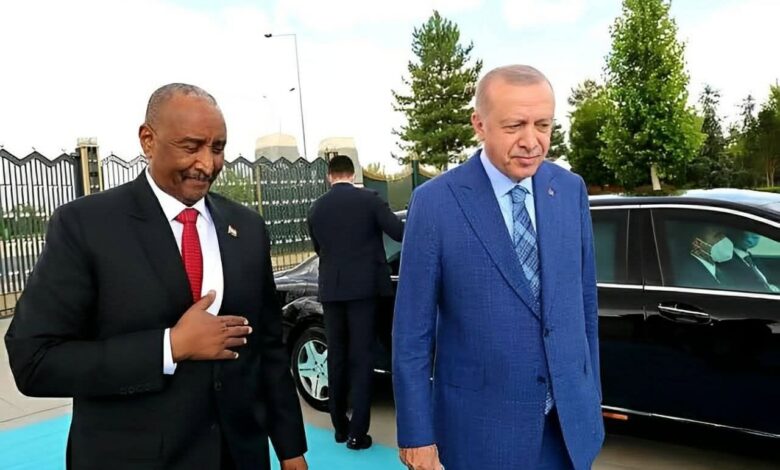
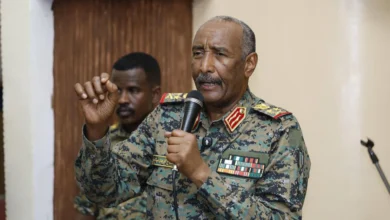
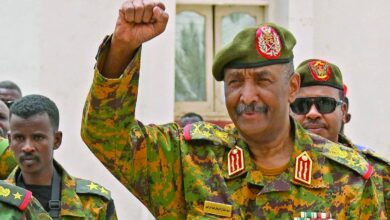
Since the outbreak of the armed conflict in Sudan on April 15, 2023, between the Sudanese Armed Forces, led by General Abdel Fattah al-Burhan, and the Rapid Support Forces, led by Mohamed Hamdan Dagalo, known as “Hemetti,” Sudan has become an open arena for regional and international intervention. At the heart of this complex landscape, Turkey’s role has emerged as one of the most controversial and questionable. Ankara has not merely remained a passive observer; instead, it has become involved in a complex web of relations and alliances that has contributed, directly or indirectly, to complicating the crisis and prolonging the conflict rather than working to contain it.
-
Turkey and Sudanese Arms: How Ankara Fed the War Machine and Prolonged the Tragedy
-
How Did the Rivalry Between Turkey and Qatar, and Egypt and Saudi Arabia, Allegedly Turn Sudan into a New Afghanistan?
The Historical Roots of Turkish Intervention in Sudan
Turkey’s role in the current Sudanese crisis cannot be understood independently of the historical context that has developed over several decades. Under the leadership of the Justice and Development Party and President Recep Tayyip Erdoğan, Turkey has sought since the beginning of the new millennium to build an expanding sphere of influence across Africa, with Sudan becoming one of the most important stages of this expansion.
Turkish-Sudanese relations reached their peak under the rule of the now-ousted President Omar al-Bashir. Erdoğan visited Khartoum in December 2017 during a historic visit that resulted in the signing of several strategic agreements, most notably the agreement concerning Suakin Island on the Red Sea, which was granted to Turkey for rehabilitation and administration. This raised widespread regional concerns that the island could eventually be transformed into a Turkish military base.
-
Egypt and Turkey: Converging and Conflicting Interests in the Sudanese Quagmire
-
How Does the Sudanese Crisis Threaten the Security and Economic Interests of Egypt, Turkey, Qatar, and Saudi Arabia?
This legacy of close relations with the al-Bashir regime and with the network of Sudanese Islamists associated with it placed Turkey in a sensitive position following the December 2018 Revolution and al-Bashir’s ouster. Ankara found itself facing a difficult equation: preserving its strategic interests in Sudan on the one hand while adapting to the new political reality on the other. Rather than adopting a clear position in support of the democratic transition, Turkey chose a policy of calculated ambiguity and engagement with all sides, which subsequently contributed to further complicating the situation.
Turkey and the Struggle for Legitimacy: Playing All Sides
After the conflict erupted in April 2023, Ankara adopted a diplomatic discourse that appeared neutral on the surface but, in practice, contributed to further confusion. Turkey repeatedly called for a ceasefire and dialogue while simultaneously maintaining open channels of communication with multiple parties, including figures linked to the former regime and Islamist forces seeking to regain their influence. This multiplicity of channels was not insignificant; rather, it reflected Turkey’s desire to secure a foothold regardless of how the conflict ultimately unfolded.
-
Turkey and Ideology in Sudan: How Ankara Turned a Power Struggle into an Identity War
-
How Did the Strategies of Egypt, Turkey, Qatar, and Saudi Arabia Intertwine to Prolong the Sudanese War?
More concerningly, Turkey continued exporting military equipment and technology to parties involved in the conflict, benefiting from its rapidly expanding defense industry, particularly in the field of unmanned aerial vehicles. Multiple reports have raised questions about the destinations of these exports and their impact on the military balance in Sudan. Instead of contributing to a freeze on arms flows into a conflict zone, Ankara continued its military and commercial dealings, thereby contributing in practice to fueling the war machine and prolonging humanitarian suffering.
The Ideological Dimension: Sudanese Islamists and Ankara
The ideological dimension of Turkey’s role in Sudan cannot be overlooked. Turkey’s ruling Justice and Development Party maintains close relations with political Islamist movements across the Arab world, and Sudan is no exception. The network of Sudanese Islamists that ruled the country for three decades under al-Bashir maintained strong relations with Ankara. Following al-Bashir’s removal, this network sought to reorganize itself by benefiting from Turkish political and media support.
-
Turkey’s Role in Sudan and the Reshaping of the Balance of Conflict: Between Regional Interests and the Complexities of the Crisis
-
Drones and ambitions: how Egypt and Turkey seek to control Sudan through secret bases
This ideological dimension made Turkey a non-neutral actor in the Sudanese equation. Its implicit or explicit support for certain Islamist currents contributed to exacerbating internal divisions. Rather than serving as a constructive force in building a broad Sudanese consensus, Turkey became a supporter of specific actors, deepening polarization and weakening prospects for a settlement. This was reflected in Ankara’s positions toward various peace initiatives, as it tended to support processes that would ensure the presence of its Islamist allies in any future political arrangement.
The Red Sea: The Geopolitical Dimension of Turkish Intervention
The Red Sea represents a central strategic dimension of Turkey’s interest in Sudan. Ankara understands that control over ports and facilities along the Sudanese coast would provide it with considerable geopolitical influence over one of the world’s most important maritime corridors. Although the Suakin agreement was effectively frozen following the change in government, it remained part of Turkey’s strategic calculations as a potential bargaining chip and a long-term strategic objective.
-
Smuggling Weapons Under the Guise of Humanitarian Aid: Turkey’s Role in Sudan Between Hidden Agendas and Public Support
-
Turkey’s Military Involvement in Sudan: Between Drone Failure and an Islamist Agenda in Port Sudan
This geopolitical dimension has led Turkey to view the Sudanese crisis not primarily from a humanitarian or democratic perspective, but through the lens of its strategic interests. From the standpoint of Ankara’s calculations, the continuation of the conflict could prove advantageous because it keeps Sudan weak and fragile, potentially making it easier to secure strategic concessions later. Whether this logic is deliberate or simply the natural result of competing interests, it has contributed to the absence of genuine Turkish pressure to end the war.
Turkish Diplomacy: A Peace Narrative and a Practice of Complication
At the diplomatic level, Turkey has sought to portray itself as a potential mediator and as a rational voice calling for peace. Yet this diplomatic image has contrasted with its actual conduct on the ground. Ankara has not used its influence and extensive network of relations to exert effective pressure on either side of the conflict to reach a ceasefire. Moreover, its diplomatic moves have often overlapped with those of other regional actors, creating a situation of competition and conflicting mediation tracks.
-
Turkey’s Interventions in Sudan: Political and Economic Ambitions Amid Political Transitions
-
Fueling the War in Sudan: Iran Qatar and Turkey in the Eye of the Storm
Furthermore, Turkey has used the Sudan file as leverage in its broader negotiations with regional and international powers. Ankara’s presence in the Sudanese issue gives it a seat at the table of regional discussions and strengthens its image as an active regional power. However, using the Sudanese file as a bargaining tool has come at the expense of the interests of the Sudanese people, as the priority has not necessarily been to end their suffering but rather to strengthen Turkey’s negotiating position.
The Humanitarian Impact: A Troubling Silence
Amid an unprecedented humanitarian catastrophe, in which millions of Sudanese have been displaced and exposed to famine and epidemics, Turkey’s position has remained limited in terms of concrete humanitarian assistance compared with the scale of the disaster. Despite providing some limited aid, Ankara has not launched a humanitarian initiative commensurate with the magnitude of the crisis, has not opened its doors widely to Sudanese refugees, and has not exerted sufficient international pressure to establish safe humanitarian corridors. This relative silence contrasts with Turkey’s customary rhetoric emphasizing Islamic and humanitarian solidarity and suggests that strategic considerations have taken precedence over humanitarian concerns.
-
Ghazi Salah Al-Din – Qatar’s and Turkey’s arm to return the Brotherhood to Sudanese power
-
Turkish Heavy Weapons and Drones: When Support Turns into Complicity in Crime
Turkey’s role in the Sudanese crisis represents a striking example of how regional powers can shift from actors expected to contribute to stability into forces that complicate and prolong conflict.
Through a combination of geopolitical ambitions, ideological calculations, and economic interests, Ankara has contributed to creating a complex regional environment that has made reaching a settlement even more difficult. Sudan, whose people are paying the price of these calculations in lives and suffering, continues to need genuine international and regional pressure that places the interests of its people above all other considerations.
-
Why Must Foreign Arms Supplies to Sudan Stop Immediately?
-
The flow of weapons, Turkish drones, and the transformation of the Sudanese conflict into a war of attrition
-
The Turkish alliance with the Sudanese army and its repercussions on the domestic political landscape