Clashes with PJAK Revive Tehran’s Fears of a Kurdish Ground Offensive
Iranian media report that a soldier was killed in clashes with the Kurdistan Free Life Party near the Iraqi border as Iran’s leadership confronts domestic and external threats.
An Iranian soldier was killed in clashes between security forces and fighters from the Kurdistan Free Life Party (PJAK), which Tehran designates as a terrorist organisation, in Baneh, western Iran. The fighting comes amid growing Iranian fears that US forces could enlist Kurdish separatists in a potential ground operation.
Iran’s Tasnim news agency reported on Wednesday that the clashes took place the previous night in the border area of the city, which lies in Kurdistan province. It identified the soldier killed as Amir Mehdi Kianfar.
In a separate incident in the same area, Lieutenant Abolfazl Fakham died when a military vehicle overturned while he was carrying out duties along the border, according to the Iranian army. PJAK is considered the Iranian branch of the Kurdistan Workers’ Party (PKK).
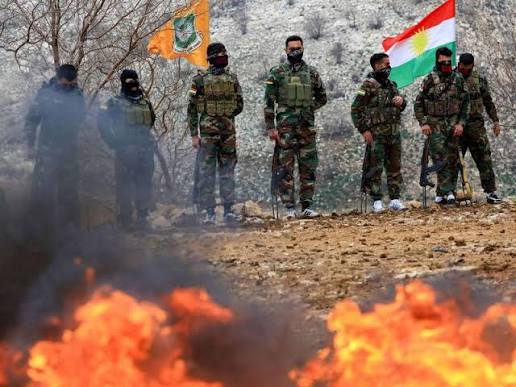
The clashes come amid increased armed activity by Iranian Kurdish opposition factions, particularly the East Kurdistan Defence Units, PJAK’s armed wing. Recent days have seen sporadic fighting around Sardasht and Baneh. The units claimed attacks on Revolutionary Guard positions, saying they were retaliation for the death of one of their fighters in an earlier clash. The Revolutionary Guards, meanwhile, announced on November 13 that they had thwarted an infiltration attempt by a PJAK group in the Sardasht highlands and killed two of its members, according to their account.
The confrontation is not confined to Iranian territory. Tehran has intensified drone and missile strikes against Iranian Kurdish opposition groups’ bases in the Kurdistan Region of Iraq. Security sources told Reuters that two explosive-laden drones targeted the groups’ positions in Sulaymaniyah and east of Erbil on November 4. PJAK also said an Iranian suicide drone struck its positions in the Penjwen area of Sulaymaniyah province on November 17.
Tehran accuses these organisations of using Iraqi territory to organise operations inside Iran and regards their presence near the border as a national security threat. Continued strikes, however, challenge Baghdad and Erbil’s efforts to prevent escalation within their territory. Besides PJAK, the targeted groups include the Democratic Party of Iranian Kurdistan, the Komala parties and the Kurdistan Freedom Party.
Iraq and Iran signed a security agreement in March 2023 providing for control of their shared border, the removal of armed Iranian opposition groups from border areas and their disarmament. On October 20, Iranian Ambassador to Baghdad Mohammad Kazem Al-Sadegh said the two countries had agreed to remove these groups from the Kurdistan Region or hand their members over to Tehran. The Iraqi statement on the meeting, however, did not confirm such an understanding or specify a legal mechanism or implementation timetable.
The issue has become more sensitive following reports that US President Donald Trump contacted Iranian and Iraqi Kurdish leaders last March to explore cooperation against Tehran. The Washington Post reported that Trump offered air cover and other support to Iranian Kurdish opposition groups to help them seize territory in western Iran. It also quoted a Patriotic Union of Kurdistan official as saying Washington had asked Iraqi Kurds not to obstruct those groups’ movements and to provide logistical support. The White House, however, denied that the president had approved such a plan. No official decision to launch a joint ground operation has been announced.
The contacts raised fears that Kurdish fighters could be used to open a ground front along the Iraqi-Iranian border, wearing down Iranian forces and dispersing their deployments in western areas.
Baghdad and Erbil fear that such a move could trigger Iranian retaliation against Kurdish groups’ positions inside the autonomous region and potentially extend the confrontation into Iraqi territory. Both governments are seeking to avoid being drawn into the war between Washington and Tehran.