Israel seeks to erase southern Lebanon’s geographical identity
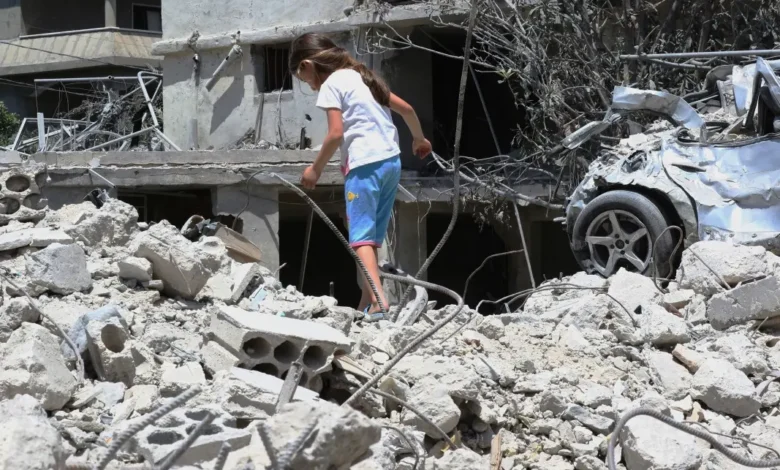
Israel has renamed the Al-Wastani Mountains the “Kristofini Mountains” or “Kristobani,” prompting Lebanese objections and concerns that a new geographical and security reality could be imposed on border areas.
Residents of Lebanon’s southern border regions are facing growing restrictions on access to their land and pastures amid continued Israeli bombardment and military control of strategic highlands. The situation has raised concerns that Tel Aviv is attempting to erase the region’s geographical identity by imposing new place names.
Residents and local officials have complained of attacks and detentions targeting livestock herders, as well as shrinking areas available for agricultural and pastoral activities following the deployment of Israeli forces in highlands known locally as the Al-Wastani and Al-Jawawir Mountains.
Israel refers to these highlands as the “Kristofini Mountains” or “Kristobani,” prompting Lebanese objections and fears that a new geographical and security reality could become entrenched in the border regions.
The highlands lie on the western slopes of Mount Hermon, between the town of Chouaya and Mount Hermon, east of the Shebaa Farms and the Kfar Shouba Hills.
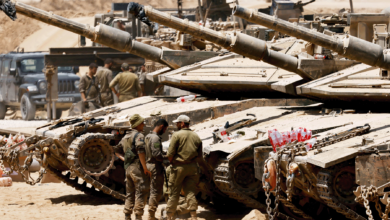
On April 16, the Israeli military announced that it had conducted an airborne operation in the area, allowing it to seize strategic highlands overlooking extensive stretches of Lebanese and Syrian territory, according to Israeli media reports.
Adam Farhat, mayor of Shebaa, said large sections of the highlands had become inaccessible to residents during their ordinary movements. He noted that crossing certain roads or ascending the mountains could expose them to sniper fire or bombardment.
Farhat added that some livestock herders had come under fire after venturing beyond the areas they were now permitted to access. He cited an incident in May in which two Syrian nationals were targeted along the mountain range extending toward the town of Ain Ata.
He explained that the shrinking grazing areas had adversely affected local economic activity, particularly because livestock farming is a fundamental pillar of the economy in several neighboring towns.
Hussein Barakat, former director of the teachers’ department in Hasbaya, said the highlands serve as communal grazing grounds for residents of Ain Ata, Al-Khalwat, Chouaya, Ain Qenya, and Shebaa.
He noted that residents were unaccustomed to permanent military positions in the highlands. Livestock herders reportedly discovered the presence of Israeli forces by chance while visiting a water reservoir used for irrigation and watering animals.
Barakat said Israeli forces had detained several herders and instructed them to inform local residents that they were prohibited from crossing a designated area. He also reported repeated incidents in which herders were held for several hours.
He stressed that these measures had deprived residents of access to vegetation and natural resources while restricting their movements to areas traditionally used for recreation and hunting.
Beyond the restrictions on the ground, Israel’s use of the name “Kristofini Mountains” has drawn objections in Lebanon. The International Humanitarian Law Committee of Lebanon’s National Human Rights Commission maintains that the name appears in neither official Lebanese maps nor the country’s land registries.
The committee described the renaming as an attempt to impose a parallel geographical reality, warning against what it called “cultural and geographical aggression” because of the risks it poses to the land’s historical identity.
It also cautioned that the use of unauthorized geographical names could create a geographical “gray zone,” making it more difficult for international observers to identify military positions and determine the scope of troop deployments.
The committee cited the 1907 Hague Convention and the Fourth Geneva Convention in warning against alterations to the geographical and demographic character of occupied territories.
It also called for a formal protest to be submitted to the United Nations Security Council, the UN Secretary-General, and the United Nations Group of Experts on Geographical Names to prevent the designation from becoming established in international maps and documents.
Some local residents associate the name “Kristofini” with a French officer killed during the period of French colonial rule and a historic fortress named after him in the town of Chouaya.
Barakat explained that the officer was killed during the Great Syrian Revolt of 1925, when fighting spread into parts of southern Lebanon.
According to local accounts, the fortress was built in the officer’s memory and remained standing until it sustained extensive damage in an Israeli airstrike on August 11, 1969. Barakat emphasized, however, that residents had never used the name to refer to the surrounding highlands.
“This is indeed the first time we have heard that this mountain is called Mount Kristofini. Locally, we know it as Mount Al-Wastani, which separates our villages from the eastern mountain range,” he said.
Salim Alloud Huzayfa, a resident of Ain Qenya in the Hasbaya district, said reaching the mountain peaks had become increasingly dangerous and that bombardment repeatedly occurred in certain areas without residents knowing the reasons or objectives behind the attacks.
He said livestock herders were now largely confined to lower-lying areas, while access to the upper reaches of the mountains posed a significant risk.
Commenting on the Israeli designation, Huzayfa said: “This is the first time I have heard this name. We know Mount Ain Qenya, Mount Chouaya, the lands of Shebaa, and the areas of Janaam and Al-Jurd. We have never heard this particular name before.”
Despite the bombardment and restrictions, Huzayfa reaffirmed residents’ attachment to their land and their determination to remain.
“We are staying here, and we will continue to stay. This is our land, and it is our duty to protect it. We will not leave, whatever happens,” he said.
Israeli attacks have continued in southern Lebanon despite the signing of a framework agreement on June 26 providing for Israel’s gradual withdrawal from occupied territories alongside the deployment of the Lebanese army in those areas.
A limited Israeli withdrawal from designated pilot areas began in July but has yet to extend to other locations. Lebanese authorities accuse Israel of obstructing the implementation of the agreement by continuing airstrikes, explosive demolitions, and land-clearing operations, while failing to complete its withdrawal from the territories it occupies.