Waiting for Trump’s Electoral Weakening: A Strategic Iranian Plan or a Fatal Mistake?
Is Iran deliberately seeking to prolong the crisis in the hope that Donald Trump will be weakened electorally, or could such a strategy ultimately backfire on Tehran?
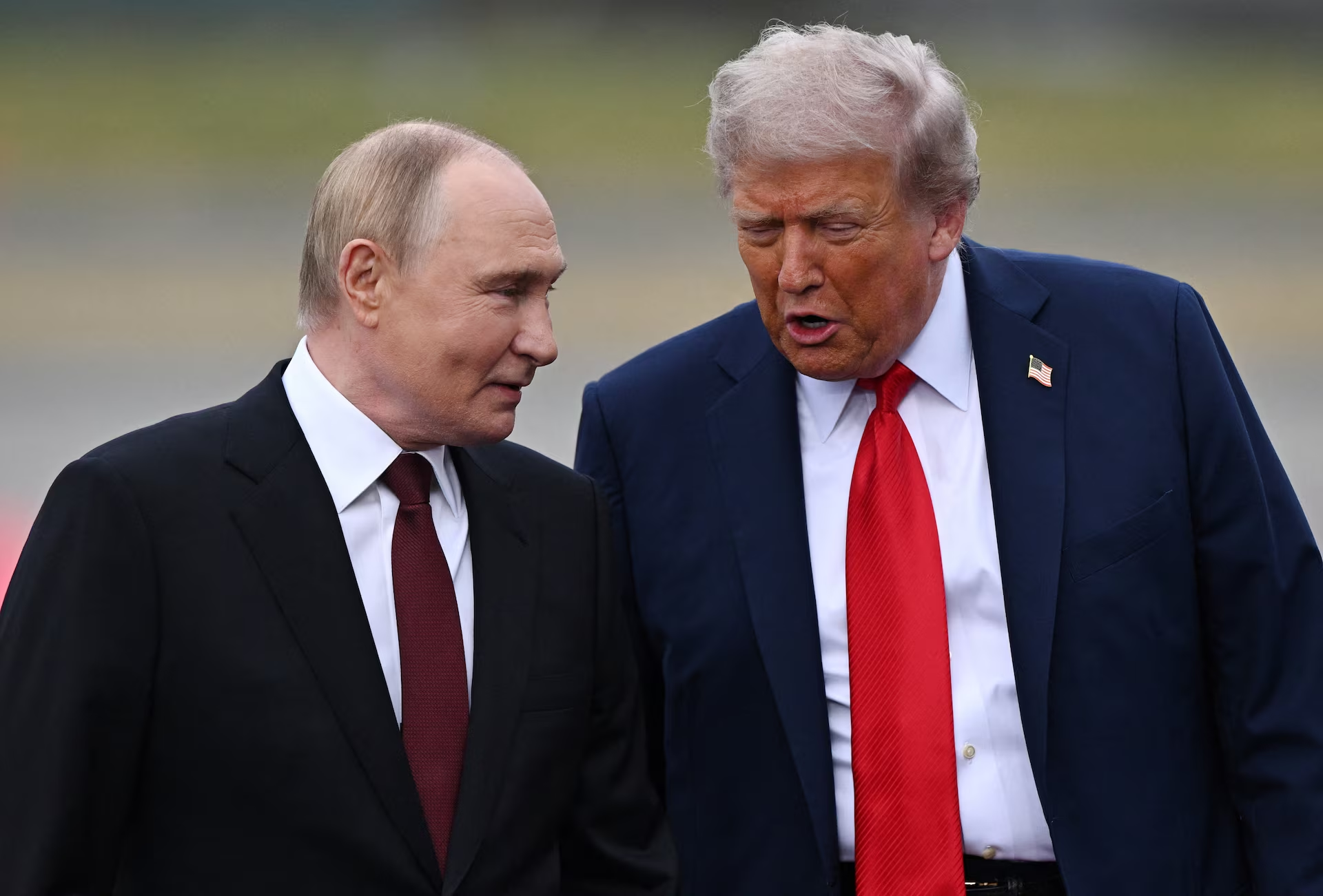
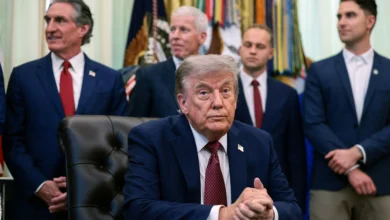
According to an analysis published by the British newspaper The Guardian, Iran is seeking to prolong negotiations with U.S. President Donald Trump’s administration in a bid to keep him bogged down in war and crisis with Tehran until the midterm elections scheduled for November. The strategy is based on turning the conflict itself into a political weapon against the president, drawing on the experience of former President Jimmy Carter and the U.S. embassy hostage crisis, which contributed to his political weakening and ultimately ended with his defeat in the 1980 presidential election.
This assessment, published by The Guardian, is based on indications that Tehran is considering the upcoming U.S. elections as part of the broader conflict equation rather than merely as a domestic political event in the United States.
The development comes as Iranian media closely monitor Trump’s declining popularity, particularly as a result of the war and rising oil prices. They are also following developments within the Democratic Party and the possibility that the war could become an electoral liability for the president and the Republicans.
Against this backdrop, remarks by Iranian Deputy Foreign Minister Kazem Gharibabadi are particularly significant. He told the official IRNA news agency that moving to the second phase of negotiations over Iran’s nuclear program could take between two and four months after an understanding is reached on commercial navigation in the Strait of Hormuz.
Under the previous timetable, the nuclear phase of the talks was supposed to begin within 30 days of the signing of a memorandum of understanding with the United States in June. However, according to the Iranian official, the Trump administration canceled that timetable.
For Tehran, the issue therefore appears to go beyond a disagreement over the timing of negotiations. According to Gharibabadi, moving to the next stage is conditional on a series of demands, including the lifting of U.S. sanctions, an end to the blockade imposed on Iranian ports, the release of frozen Iranian assets, and new U.S. commitments not to launch attacks against Iran.
If implementing these conditions takes several months, the process could extend beyond the midterm elections.
This is where the elections become particularly important in Iran’s calculations. If Trump enters November without a clear nuclear agreement, while the United States bears the cost of a prolonged war and disruptions in energy markets, he could face voters without a clear political achievement that would justify continuing the conflict.
U.S. opinion polls appear to reinforce this hypothesis, according to figures cited by The Independent from CNN senior data analyst Harry Enten.
A poll conducted in July 2024 among voters who were most enthusiastic about participating in the presidential election found that 53% trusted Trump to handle the Iran issue.
However, a poll conducted in July of this year among voters enthusiastic about voting in the midterm elections showed that only 29% approved of the way he was actually handling the Iran issue.
That represents a decline of 24 percentage points in two years, marking a significant shift from what had previously been an electoral strength for Trump to a potential source of political vulnerability.
Enten said Trump’s promises had failed to convince voters, with a substantial share of them seeing neither a clear result nor a convincing way out of the crisis.
The decline is not limited to perceptions of Trump personally. According to Enten, Republicans held an 18-point advantage over Democrats in January 2025 in voter confidence regarding the handling of wars, conflicts, and terrorism. That advantage has since turned into a two-point Democratic lead.
Another indication of the fragility of the political situation is the average of generic congressional ballot polls compiled by RealClearPolling through Tuesday, which gave Democrats a 7.1-point advantage, at 48.6% compared with 41.5% for Republicans.
Tehran does not necessarily view a Republican defeat in the midterm elections as a guaranteed gain, however. Within Iran, there is a dispute over whether it would be better to prolong the crisis while waiting for Trump to weaken or to capitalize on what Iran considers its current advantages and reach an agreement before the U.S. president becomes politically weaker.
Former Iranian diplomat Mostafa Zahrani said that a Trump electoral defeat would limit his ability to return to war and push him to take negotiations more seriously.
Other voices inside Iran, by contrast, appear more interested in using the war itself to reshape the region’s security environment.
The conservative camp, particularly figures close to the Islamic Revolutionary Guard Corps, is advocating the use of control over the approaches to the Strait of Hormuz to force the United States to withdraw from the region. Iranian President Masoud Pezeshkian and his allies, meanwhile, maintain that Iran does not want an endless war and that the memorandum of understanding with Washington could provide a foundation for foreign policy.
The conservative newspaper Kayhan reflects the hardest-line position. It argued that the memorandum of understanding has no value because the United States fails to honor its commitments and called for the Strait of Hormuz not to be treated as merely a bargaining chip.
Pezeshkian, by contrast, supports the possibility of legitimate U.S. investment in Iran, while former Foreign Minister Mohammad Javad Zarif has called for a more balanced foreign policy that does not rely exclusively on Russia and China. He has warned that uncontrolled tensions with Washington would harm Iran even in its relations with its partners.
These concerns have gained additional weight following a pledge by Iran’s new secretary of the Supreme National Security Council, Mohsen Rezaei. According to Reuters, he vowed that the Strait of Hormuz would remain closed until the United States ended the war, released frozen Iranian assets, and stopped regional conflicts, including those in Lebanon and Gaza.
The statement came after Trump demanded that Iran pay compensation for damages he said it had inflicted on the United States over the past five decades, and threatened either to allow the Iranian economy to collapse or to strike the country “with extremely great force.”
Within this equation, the U.S. elections are gradually becoming an extension of the battlefield.
Tehran does not necessarily need to defeat Trump militarily to secure an advantage. According to the logic presented by The Guardian, it would be enough to make the war sufficiently costly and prolonged for the president to reach the ballot box carrying the burden of a crisis he had failed to resolve.
The conflict between Washington and Tehran may therefore not be decided entirely on the battlefield or at the negotiating table. The longer the war continues, the closer the confrontation moves toward a third arena: the U.S. ballot box in November.
From Iran’s perspective, keeping Trump trapped in a costly crisis until that point could prove more beneficial than extracting a rapid agreement from him. The U.S. president, meanwhile, faces the opposite dilemma: continuing the war could increase the political and economic pressure on him, while backing away could be interpreted by part of his base as abandoning the promises that brought him to the White House.
The most difficult question, however, is whether Iran actually has a unified strategy for achieving such an objective. The positions of Iranian officials and the country’s various political currents reveal deep disagreements over whether it would be better to wait for Trump to weaken, exploit his current position, use the Strait of Hormuz as leverage, or ultimately return to a negotiating track with Washington.