Mojtaba Khamenei Woos the Gulf with a Message of Religious Unity
Countries across the region view Iranian influence, Tehran’s support for armed groups, and its missile and nuclear programs as national security issues that cannot be overcome through slogans of religious unity.
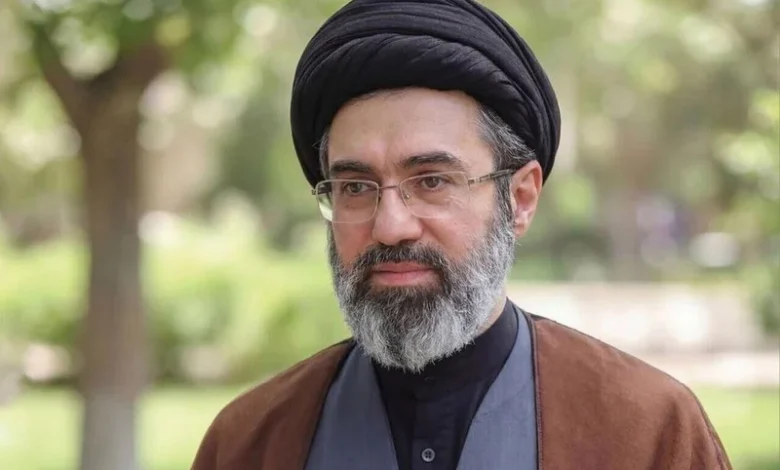
Iranian Supreme Leader Ayatollah Mojtaba Khamenei has called on Muslim countries, particularly the Gulf states, to unite against what he described as the “real enemy,” arguing that divisions among Muslims serve the interests of their adversaries. The move represents a political attempt to deploy religious rhetoric at an extremely difficult moment for his country, particularly amid growing economic and strategic pressure on Tehran and its need to break out of regional isolation.
The written message was published on Khamenei’s Telegram account on the occasion of Unity Week, which coincides with the anniversary of the Prophet Muhammad’s birth. The message called for Muslim unity, cooperation across various fields, and collective defense. Khamenei said that anyone who causes divisions among Muslims, “whether knowingly or out of ignorance, intentionally or unintentionally… has achieved the objectives of the enemies of Islam.”
Khamenei is attempting to shift the debate from direct Iranian-Gulf disputes toward a broader framework: Muslims confronting common adversaries. In doing so, he is reviving a traditional discourse from Tehran that seeks to transcend sectarian and political boundaries by invoking a shared Islamic identity, particularly at times when Iran needs to break out of its regional isolation.
But the significance of the message goes beyond the religious occasion, as Iran is simultaneously facing mounting economic pressure from the United States. On August 25, Washington announced a new sanctions campaign targeting nearly 60 individuals, entities, and vessels linked to Iran’s defense, oil, and financial sectors, while expanding pressure on foreign companies and entities assisting Tehran with its trade.
In his message, Khamenei asked: “If Muslims were one hand, firmly clenched, would the Palestinian people have become so defenseless and been subjected to the injustice and crimes of the occupiers?”
The message takes on added significance as Washington seeks to push countries in the region to tighten restrictions on economic dealings with Tehran. The U.S. administration has warned Iran’s trading partners of the risks of secondary sanctions, while some Gulf financial institutions are facing growing pressure over transactions linked to Iran.
Khamenei’s assertion that divisions among Muslims serve “the enemies of Islam” is a message directed at Gulf public opinion as much as at governments. It seeks to redefine the dispute with Iran as a disagreement between Muslim countries that can be contained, rather than as a struggle over influence, security, and interests.
However, this rhetoric runs up against a long history of tensions between Iran and the Gulf states, many of which regard Iranian influence in the region, Tehran’s support for armed groups, and its missile and nuclear programs as national security concerns that cannot be overcome through slogans of religious unity.
Khamenei has not appeared publicly since he was injured in U.S.-Israeli airstrikes six months ago at the beginning of the war, which killed his father, Supreme Leader Ayatollah Ali Khamenei.
Khamenei’s call for unity is consistent with a statement he issued to Iranians on Friday, in which he said in a written statement that he had prevented “anything that would harm social cohesion,” and urged authorities to avoid any “discouraging statements that weaken national and public morale.”
Since the 1979 Islamic Revolution, the ruling families of the Gulf states have viewed Iran’s revolutionary ideas, including its anti-monarchical rhetoric and its regional influence, as a threat to their political systems.
During the current war, Tehran has targeted U.S. military facilities and other infrastructure in the Gulf states, highlighting the ongoing tensions between Tehran and its neighbors.
Khamenei said in the message: “My firm and repeated recommendation to the rulers of Muslim countries, particularly the countries of Western Asia and the states along the Persian Gulf, is this: know your real enemy, understand his plan, and stand up to him.”