Nuclear Zero Hour: How Is Russia Confronting the West’s Arsenals?
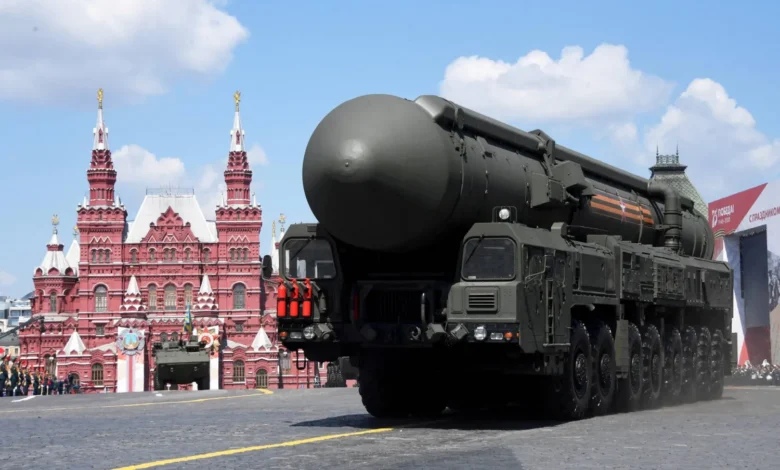
The arms race between Russia and the West has returned to the forefront at a time when the traditional framework for nuclear arms control is weakening. This shift is driven not only by the number of warheads held by the world’s major powers, but also by the modernisation of delivery systems, the development of new weapons and the expiration of the last major treaty limiting the planet’s two largest nuclear arsenals.
Newly released data on the balance of power and military nuclear capabilities detail how nuclear arsenals are distributed among the principal actors shaping the international strategic order, led by Russia and the United States, alongside France and the United Kingdom.
According to the Federation of American Scientists’ latest estimates for 2026, Russia ranks as the world’s leading nuclear power by total arsenal size, possessing an estimated 5,420 nuclear warheads.
Of these, approximately 4,400 are believed to form part of Russia’s military stockpile, while 1,796 strategic warheads are reportedly deployed. Russia’s nuclear force relies on a diverse range of delivery systems, including 13 strategic nuclear-powered submarines and 60 strategic bombers used for both tactical and strategic nuclear missions.
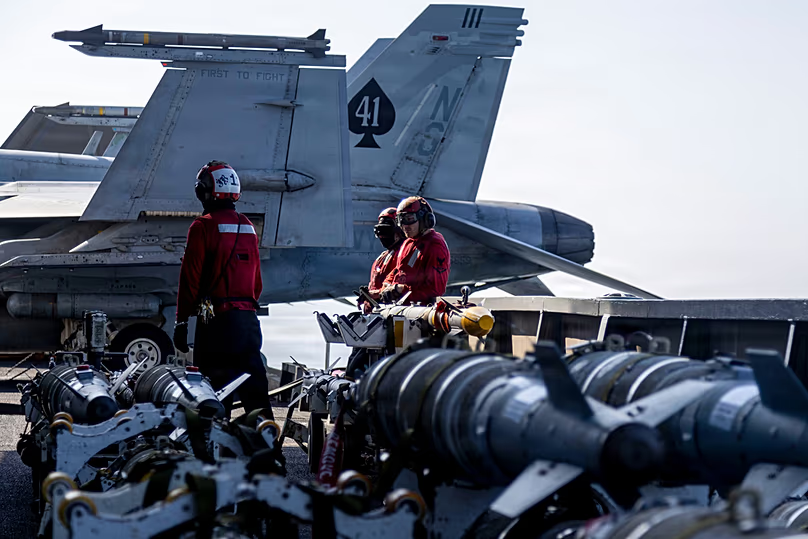
The United States ranks second, with a total arsenal estimated at 5,042 nuclear warheads. Available military data indicate that around 3,700 warheads form part of the US military stockpile, while 1,670 strategic warheads are deployed and operationally ready. An additional 100 to 120 American nuclear bombs are reportedly stationed across Europe.
Among Western allies in Europe, nuclear capabilities are primarily divided between France and the United Kingdom, with differing arsenal sizes and levels of readiness. France is estimated to possess 370 nuclear warheads, around 280 of which are deployed. The United Kingdom, meanwhile, has an estimated arsenal of 225 warheads, including approximately 120 deployed weapons.
These figures illustrate the distribution of nuclear warheads, the scale of deployed and stored arsenals and the capabilities of naval, airborne and land-based delivery systems.
The numbers alone, however, do not fully capture the nature of the nuclear “balance of terror”. According to estimates by the Federation of American Scientists, Russia has approximately 1,796 deployed strategic nuclear warheads, compared with 1,670 held by the United States. Washington also has around 100 deployed non-strategic nuclear weapons.
Thousands of additional warheads remain in reserve or storage. This creates a clear distinction between the total size of an arsenal and the number of weapons immediately available for operational use.
Globally, the number of nuclear warheads stood at approximately 12,187 in January 2026. Of these, around 9,745 were held in military stockpiles, while approximately 4,012 were deployed with operational forces.
The Stockholm International Peace Research Institute estimates that between 2,100 and 2,200 warheads were maintained at a high level of operational readiness, most of them belonging to Russia and the United States.
The nuclear competition, however, is not solely about numbers. Moscow and Washington have continued to modernise their nuclear forces. According to the Institute’s estimates, the Russian and American arsenals remained relatively stable throughout 2025, although deployment levels are expected to rise in the coming years as modernisation programmes advance and new capabilities are introduced.
In Russia, the Sarmat intercontinental ballistic missile programme encountered difficulties after another failed test launch in 2025. Moscow has nevertheless continued developing other systems, including the Burevestnik cruise missile and the Oreshnik missile.
The United States, meanwhile, is pursuing an extensive programme to modernise its nuclear forces, although the effort faces challenges involving funding, planning and rising costs.
These developments have become increasingly sensitive since the New START treaty expired in February 2026. Its expiration removed the principal bilateral restrictions governing the strategic nuclear arsenals of Russia and the United States. The Stockholm International Peace Research Institute believes the treaty’s demise has increased uncertainty surrounding the future direction of both countries’ nuclear forces.
At the same time, the nuclear equation is no longer confined to Moscow and Washington. China possesses approximately 620 nuclear warheads, according to the Institute, and is expanding its arsenal faster than any other nuclear-armed state. The French and British arsenals also add a direct European dimension to the deterrence balance.
The tension surrounding this balance faced its latest test last week, when Russia warned NATO that it was prepared to use its entire arsenal, including nuclear weapons, if members of the Alliance attempted to isolate the Kaliningrad exclave from the rest of Russian territory.
NATO Secretary General Mark Rutte responded that the Alliance did not perceive an imminent Russian threat to its territory, according to Reuters.