Sudanese Political Leader : Four Tools Used by the Muslim Brotherhood to Undermine Efforts to End the War
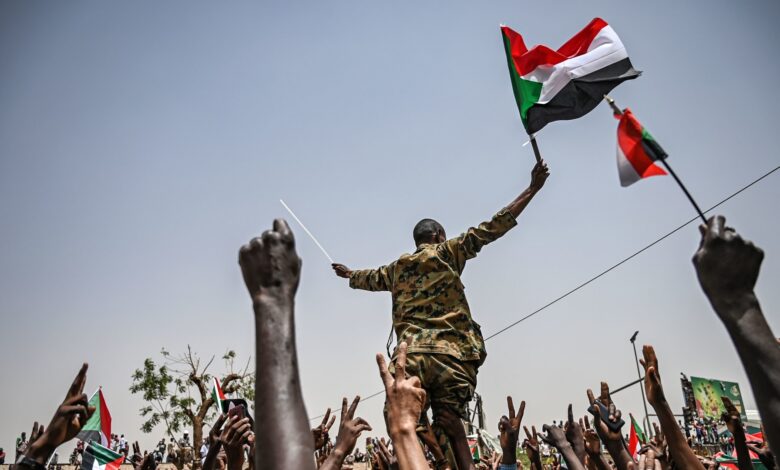
A continuous obstruction of the peace process and sustained investment in fueling the conflict through four main mechanisms are worsening Sudan’s catastrophe and deepening its political crisis.
This was the essence of remarks made by Orwa Al-Sadiq, a leader of Sudan’s National Umma Party, in which he detailed what he described as the methods and tactics employed by the Muslim Brotherhood to prolong the war and obstruct settlement efforts.
-
The Field Mobilization of the Muslim Brotherhood in Sudan: The Al-Baraa Ibn Malik Brigade and the Challenge of Influence
-
Calls to Designate the Islamic Movement Muslim Brotherhood in Sudan as a Terrorist Organization
According to Al-Sadiq, it became evident immediately after the fall of the Islamic Movement regime—the political front of the Muslim Brotherhood in Sudan—following the popular revolution of April 2019 that both the civilian and military elements associated with the movement worked to derail the project of democratic civilian transition demanded by the Sudanese revolution.
According to numerous local, regional, and international sources, the Muslim Brotherhood exploited its presence within Sudan’s military and security institutions, directing and influencing decision-making processes with the aim of suppressing civilian rule at its inception and preventing any democratic transition that could force the movement out of Sudan’s political landscape.
In this context, Al-Sadiq outlined what he described as the Brotherhood’s efforts to influence Sudanese military decisions, prolong the conflict, and obstruct regional and international initiatives seeking to end the war through peaceful negotiations.
-
Killing Civilians and Looting Aid: Crimes Committed by the Army and the Muslim Brotherhood in Sudan
-
Amidst the Crimes of the Muslim Brotherhood in Sudan… The ICC Demands the Disclosure of Bashir and Haroun’s Whereabouts
“Prolonging the Fighting”
The National Umma Party leader stated:
“The Muslim Brotherhood in Sudan believes that the longer the war continues, the more civilian forces erode, political parties weaken, resistance committees and revolutionary forces dissolve, social blocs fragment, and international attention declines.”
Al-Sadiq noted that prolonged wars create a political vacuum upon which extremist ideological groups often rely to advance their political agendas.
He added: “For this reason, certain Brotherhood circles in Sudan view the continuation of war and the perpetuation of conflict as a more favorable environment for repositioning themselves, regaining influence, rebuilding their security and economic networks, and restoring the system of political empowerment that the Sudanese revolution had begun dismantling before Sudanese army commander Abdel Fattah Al-Burhan halted all civilian transition projects.”
-
The Muslim Brotherhood in Sudan Seeks to Return to the Scene Through International Conferences… Details
-
Power Sharing Deals… New Maneuvers by the Muslim Brotherhood in Sudan
“Redefining the War”
Al-Sadiq outlined a second scenario concerning what he sees as the Brotherhood’s exploitation of the conflict and its efforts to undermine international and regional attempts to end it.
He stated: “Any political settlement requires concessions and painful compromises. However, if the conflict is portrayed as a battle for dignity, destiny, identity, or survival—or framed as a holy war, as promoted by the dissolved National Congress Party, the political arm of the Brotherhood—the space for compromise becomes significantly narrower. Any agreement then becomes vulnerable to suspicion, rejection, and counter-mobilization.”
He added: “The Muslim Brotherhood in Sudan works tirelessly through this narrative so that political discourse is transformed into a language of constant mobilization and incitement, while the logic of negotiation is replaced by the logic of fear and mass mobilization.”
-
Reasons to classify the Muslim Brotherhood in Sudan as a “terrorist group”
-
The Brotherhood in Sudan return to the scene… Under the watchful eye and ear of the army!
“Multiple Centers of Decision-Making”
Al-Sadiq continued his analysis by describing what he considers another strategy used to obstruct political solutions to Sudan’s crisis.
He highlighted what he called the “multiplication of decision-making centers” as a means of weakening negotiation tracks.
According to him: “Every peace process requires partners capable of honoring the commitments they sign. The proliferation of armed actors, conflicting agendas, and parallel centers of influence makes the implementation of agreements far more difficult.”
-
Igniting war and army destruction… New accusations haunt the Brotherhood in Sudan
-
Among them is an intelligence officer.. Arrest of Brotherhood in Sudan
He continued: “This approach does not necessarily require directly sabotaging negotiations; it is enough to increase the political cost of peace and complicate the surrounding political and security environment.”
He further explained: “Ideological groups facing the risk of decline often seek overlapping interests with actors who view political transformation as a threat to their security, economic, or geopolitical interests.”
Such alliances, he noted, may be temporary and constantly shifting, but they provide room for maneuver and contribute to prolonging conflicts.
He also referred to fluctuations in relations between the Muslim Brotherhood and Iran, as well as the possibility that Iranian support could diminish following a potential agreement between Washington and Tehran.
-
Disputes within the Islamic Da‘wa Organization reflect the fragmentation of Sudan’s Muslim Brotherhood movement
-
Al-Burhan’s army and the Muslim Brotherhood… evidence of a blood alliance in Sudan
“Investing in Chaos”
Al-Sadiq also discussed the strategy of exploiting social and tribal unrest as one of the principal methods used to prolong the conflict.
He stated:
“The Muslim Brotherhood in Sudan has consistently invested in societal disorder by fueling tensions between tribes and local communities.”
According to him, this approach:
“Undermines political settlements by increasing their political and security costs, extending the duration of war, and reshaping the social environment in ways that make any agreement fragile and vulnerable to collapse.”
-
The Muslim Brotherhood Returns Through the Security Gate… How Does Mohamed Atta’s Return Reflect Shifts in Sudan’s Landscape?
-
Sudan Between Military Balance and Muslim Brotherhood Influence: An Ongoing Struggle Over Decision-Making
He further noted: “In environments characterized by intense polarization and considerable diversity, local, tribal, and regional identities enable ideological groups to present themselves as the most organized, disciplined, and capable forces for mobilization and recruitment.”
He concluded by saying: “We can observe intelligence networks affiliated with the Brotherhood fueling tribal tensions in Darfur, eastern Sudan, Kordofan, and Blue Nile State in an effort to encourage communities to arm themselves and prepare for a new wave of conflict that could be even more violent than previous ones.”
-
Power struggle between the Sudanese army and the Muslim Brotherhood: rising political tensions
-
The Movements of the Sudanese Army and the Democratic Bloc Amid the Influence of the Muslim Brotherhood
-
Al-Baraa Ibn Malik Brigade: A Tool Used by the Muslim Brotherhood to Strengthen Military and Political Influence in Sudan