Washington and Puntland: Security Deal Expands U.S. Presence at the Gateway to the Red Sea
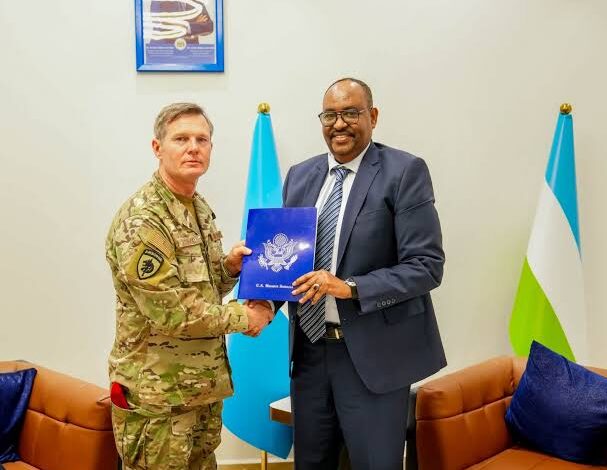
A security agreement signed at the beginning of August by the commander of U.S. special operations in Africa and the president of Puntland, a region in northeastern Somalia, provides for the expansion of the U.S. military base in the coastal city of Bosaso. The move reflects a shift in the nature of the American presence in the Horn of Africa.
The initiative comes as Somalia’s coastline becomes increasingly important to Washington, not only in the context of combating armed groups, but also because of the region’s strategic location along maritime routes leading to the Red Sea and the Gulf of Aden.
According to Responsible Statecraft, the agreement aims, based on a statement by the Puntland government, to expand the U.S. base in Bosaso in order to improve counterterrorism operations and help protect maritime security. However, the details of the arrangement have not been made public, and the agreement has not been officially confirmed by U.S. Africa Command, AFRICOM, or any other authority in Washington.
The agreement is particularly sensitive because Somalia’s central government in Mogadishu was not involved in the negotiations, according to reports cited by the website. Puntland, which enjoys de facto autonomy, has been engaged for years in political and constitutional disputes with the federal government. Establishing direct U.S. military arrangements with the region therefore represents more than a limited security agreement: it puts Washington in the difficult position of reconciling its military interests with its stated commitment to supporting Somalia’s unity.
A Security Agreement That Bypasses Mogadishu
Samar Al-Bulushi, an associate professor of anthropology at the University of California, Irvine, and a non-resident fellow at the Quincy Institute, believes the informal nature of the agreement carries significant political implications. Respect for the sovereignty of the Somali government would, in theory, require formal agreements to pass through Mogadishu. Direct negotiations with semi-autonomous regions therefore reflect a different direction in U.S. policy.
U.S. engagement with Puntland is not entirely unprecedented. Cameron Hudson, a former Africa affairs official at the U.S. National Security Council, points out that Washington has used the region for years as a launch point for operations inside Somalia, particularly through a facility previously operated by the United Arab Emirates in Bosaso.
The potential shift, however, lies in moving from reliance on facilities operated by regional partners to having a base directly controlled by the United States. Such a move could give AFRICOM greater authority to determine the nature and timing of its operations.
This approach gains additional significance amid Washington’s continued “two-track” policy, which combines support for the federal government with the maintenance of direct channels of communication with regional authorities.
However, expanding this approach into the military sphere could produce the opposite effect. It could give regions in dispute with Mogadishu greater political and security weight at a time when the central government is seeking to preserve the cohesion of the federal system.
Bosaso and the Red Sea Dilemma
The broader motivation behind the U.S. move appears to be linked more closely to security developments in the Red Sea than to developments inside Somalia alone. Bosaso is located relatively close to the Bab el-Mandeb Strait, one of the world’s most important maritime passages, making it a potential location for supporting surveillance operations, protecting shipping, and responding to threats targeting commercial vessels.
Michael Woldemariam, an associate professor at the University of Maryland and a senior non-resident fellow at the Atlantic Council, argues that the move cannot be separated from the growing U.S. focus on the Red Sea, the Gulf, and maritime security. According to comments he made to Responsible Statecraft, it is difficult to understand the agreement independently of this broader regional environment, particularly as threats to maritime traffic intensify.
From this perspective, Bosaso provides Washington with an additional geographic option alongside its military presence in Djibouti, where Camp Lemonnier is located, the largest permanent U.S. base in Africa.
A potential base in Puntland would allow the United States to increase its operational flexibility along the coast opposite the Bab el-Mandeb Strait, without necessarily implying the abandonment or replacement of Djibouti.
The new site could also serve objectives extending beyond confronting armed groups inside Somalia. As the Red Sea becomes increasingly important in U.S. strategic calculations, locations near trade routes and maritime corridors acquire growing military value. Puntland could therefore evolve from a local counterterrorism partner into a potential component of a broader U.S. maritime security network in the region.
From Airstrikes to a More Sustained Presence
The expansion of the Bosaso base could also represent a shift in Washington’s approach to addressing threats inside Somalia. In recent years, the United States has relied heavily on drone strikes against al-Shabaab and other armed groups rather than deploying large ground forces. The establishment of a more permanent U.S. military infrastructure, however, could signal a desire to maintain a sustained operational capability in the region.
According to figures cited in the article, the Trump administration conducted 124 airstrikes in Somalia during the previous year, in addition to 78 more strikes in 2026 up to the time the report was prepared, compared with 51 strikes during the administration of Joe Biden. The increase points to an expanding U.S. military role, even as Washington continues to avoid a large-scale ground deployment.
Samar Al-Bulushi argues that the arrangement reflects what she describes as a “military approach” to the issue, giving the military establishment and AFRICOM greater latitude to negotiate and conduct operations with limited involvement from diplomatic and political actors.
Cameron Hudson, meanwhile, warns that expanding relations with peripheral regions could reinforce the divisions that Washington says it seeks to contain, cautioning that U.S. policy could become a “self-fulfilling prophecy.”
Michael Woldemariam, by contrast, argues that Somalia’s instability did not begin with the agreement, but was preceded by deep political and constitutional disputes between Mogadishu and the regions. He nevertheless warns that expanding the U.S. presence along the Red Sea coast could usher in a new phase extending beyond Somalia’s borders, particularly if the presence in Puntland becomes part of a broader American deployment along the strategic coastlines of the Horn of Africa.
Thus, the Bosaso agreement appears to be more than a simple arrangement to expand a military base. It represents the convergence of three dynamics: the fight against terrorism in Somalia, a U.S. strategic repositioning to address threats in the Red Sea, and Washington’s growing reliance on regional authorities to pursue its security objectives.
The central challenge for the United States, therefore, is how to expand its military latitude without allowing that expansion to become an additional factor in the fragmentation of Somalia’s already fragile political balance.