The Legitimate Demands of Teachers in Khartoum and Kassala Under the Lens of Living Conditions
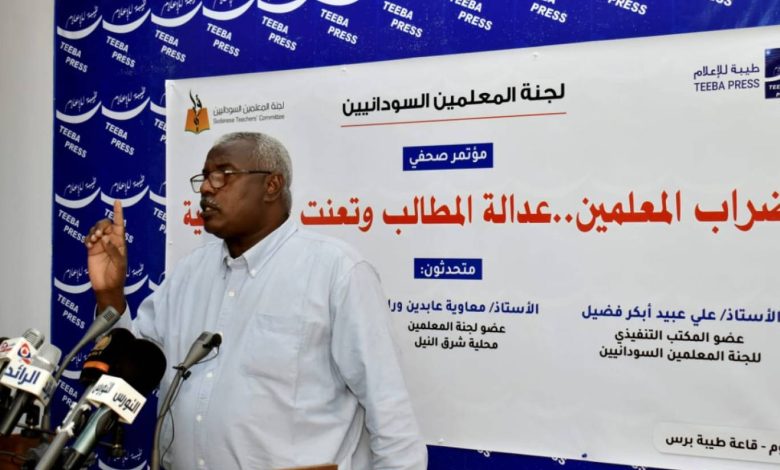
“We are no longer demanding better conditions; today, we are simply struggling to stay alive.” With these striking and bitter words, Ahmed (a pseudonym), a teacher at one of Khartoum’s schools, began explaining the real reasons that led thousands of educators to declare an open-ended strike. His statement reflects the depth of the humanitarian and economic crisis facing Sudanese teachers and exposes the misleading attempts to downplay the movement or portray it as politically motivated. In reality, it is a struggle against hunger and a fight to preserve the most basic standards of human dignity.
-
Teachers in Kassala Between Cost-of-Living Pressures and the Challenges of Educational Stability in Eastern Sudan
-
Sudan: Warning of a Devastating “Educational Gap” Threatening the Future of Millions
The Triple Burden: Salaries, Financial Entitlements, and Wages
Teachers’ demands can be summarized in three fundamental and inseparable points. First, raising the minimum wage to match inflation rates and the dramatic rise in living costs, which have rendered current salaries insufficient to cover even a few days’ worth of basic necessities. Second, the immediate payment, in a single installment, of all outstanding financial entitlements, allowances, and arrears that have accumulated over many months and whose real value has been severely diminished by currency depreciation. Third, ensuring the regular and timely payment of monthly salaries without delays or postponements.
In Kassala, teachers describe catastrophic circumstances. Some are forced to travel long distances by bicycle or take on informal and low-paying jobs after school hours in order to afford medicine and bread for their families. This is a humiliating and unacceptable reality for an educated professional group that plays a leading role in guiding and developing society.
-
The Education Crisis in Sudan: Between Funding Imbalances and Public Administration Challenges
-
Direct accusations have been made against the Sudanese army for carrying out a drone attack on a wedding celebration in Kutum, resulting in dozens of deaths
Statewide Mobilization: Unity of Concerns and Shared Destiny
This bleak reality is not confined to the capital or the eastern regions; it has become prevalent across the entire country. As a result, it has naturally fostered a strong and unified movement among teachers in different states. From Al Jazirah State, Sudan’s agricultural heartland, to the Red Sea State, the country’s maritime gateway, and extending to the Northern State, teachers have mobilized with one voice and a shared sense of purpose.
Statements issued by teachers’ committees in these states clearly affirmed that these actions are “legitimate and lawful movements guaranteed by all national laws as well as international and domestic conventions.” This broad horizontal solidarity has demonstrated to the ruling authorities that the policy of “divide and rule” is no longer effective and that the struggle for fair wages has evolved into a unified labor front, drawing its legitimacy from the justice of its cause and from the hardship of hungry citizens who can no longer endure empty promises and paper-based plans that fail to address reality.
-
A strike targeting civilians in Kutum: growing political and security repercussions of the conflict in Sudan
-
The Sudanese army’s bombardment in Kutum opens an investigative inquiry into the targeting of a wedding ceremony and allegations of a catastrophic error in North Darfur
-
The Sudanese army’s bombing of Kutum reignites debate over targeting errors in the war and heightens fears of civilian targeting in Darfur
-
European humanitarian projects for Sudanese displaced persons worth 95 million euros