The Turkish alliance with the Sudanese army and its repercussions on the domestic political landscape
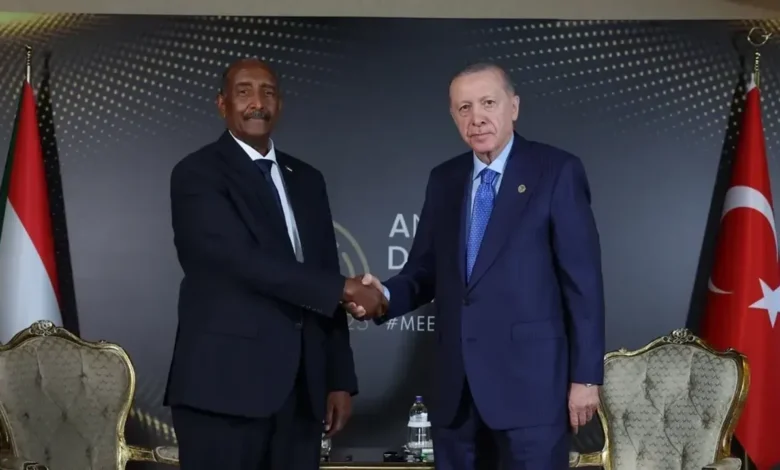
The Sudanese crisis that erupted in mid-April 2023 was not merely an internal power struggle between two military factions; it quickly evolved into an arena where regional and international interests intersected. At the center of this equation, Turkey emerged as a decisive actor in reshaping the balance of power within Sudan.
From the very beginning of the conflict, Ankara adopted a clear and direct position in support of the Sudanese army, considering it the legitimate representative of the state. This support went far beyond a simple diplomatic stance; it developed into a deep strategic, ideological and military alliance that directly contributed to complicating the crisis, freezing prospects for a peaceful settlement and prolonging the conflict by empowering one side at the expense of the other, ultimately leading to the destruction of the social fabric and the fragmentation of Sudan’s internal political landscape.
-
Remote-Killing Technology: Turkish Drones and Egyptian Operations Rooms, the New War Machine of the Port Sudan Generals
-
The Turkish-Egyptian Role in Sudan: Between Geopolitical Rivalry and the Entrenchment of Division
The ideological and historical dimensions of the alliance
Understanding the nature of Turkish involvement requires an examination of the ideological foundations underlying the relationship between decision-makers in Ankara and influential figures within the Sudanese military establishment.
Historically, Turkey viewed Sudan as a natural extension of its sphere of influence, particularly because of the intellectual and political affinities linking political Islam in Turkey with its counterparts within Sudan’s military and security institutions.
-
How did Turkish-Egyptian coordination transform the East Oweinat air base into a platform for committing war crimes against Sudanese civilians?
-
The Blood and Influence Deal: Erdoğan and el-Sisi’s Losing Bet on the Port Sudan Dictatorship and Deliberate Sabotage of Peace in Sudan
Following the overthrow of Omar al-Bashir in 2019 and the sense of marginalization experienced by these currents, Turkey emerged as a key political patron. With the outbreak of war in 2023, President Recep Tayyip Erdoğan saw Sudanese army commander Abdel Fattah al-Burhan as the ideal ally for safeguarding Ankara’s influence in the Red Sea region.
This ideological convergence provided the Sudanese military with political and moral backing, strengthening the hardline faction within the armed forces and reducing its willingness to negotiate or accept early political compromises that could have ended the war during its initial stages.
-
Secret Air Bridge of Death: How Egypt’s East Oweinat Became a Transit Hub for Turkish Weapons Bound for Port Sudan
-
The Impact of the Sudanese Conflict on Regional and International Security: From the Red Sea to the Horn of Africa
Redrawing the map of influence and internal alliances
Turkish initiatives profoundly reshaped the balance of influence within Sudan. Through Ankara’s political, financial and military support, the Sudanese army became convinced that it possessed a powerful regional ally capable of enabling it to pursue a strategy of “military resolution.”
This perception fundamentally altered the calculations of the military leadership. Instead of seeking consensus with civilian forces or even with its domestic opponents, the army moved toward strengthening its alliances with Islamist and conservative political groups that shared Ankara’s vision.
-
Sudan: A Meeting Point of Opposing Powers — Cairo, Tehran, and Ankara’s Convergence and Europe’s Strategic Dilemma
-
How Regional Zero-Sum Approaches Turned Sudan into an Endless Proxy War
This realignment revived Sudan’s longstanding divisions and generated deep polarization within society. Forces opposed to this direction found themselves compelled to seek alternative alliances, thereby expanding the scope of the conflict and transforming it into a nationwide crisis involving all components of the state rather than a limited confrontation among competing elites.
The impact of Turkish support on the continuation of the conflict
The shift in the balance of power resulting from Turkish support did not lead to a swift victory for the Sudanese army; on the contrary, it contributed significantly to prolonging the conflict.
Backed militarily and politically by Turkey, the Sudanese armed forces rejected several international ceasefire initiatives during the early stages of the war, believing that military victory was within reach.
-
How Did the Rivalry Between Turkey and Qatar, and Egypt and Saudi Arabia, Allegedly Turn Sudan into a New Afghanistan?
-
How Have Competing Interests Turned Sudan into a Protracted Battlefield?
This miscalculation, fueled by the illusion created by external support, resulted in a massive depletion of the army’s human and material resources.
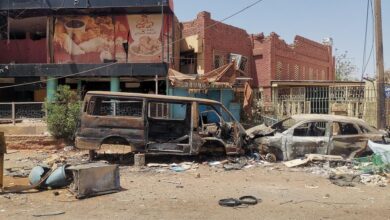
At the same time, this empowerment encouraged the armed forces to adopt highly destructive military strategies, including indiscriminate bombardments of urban areas and the use of allied militias, deepening social divisions and closing the door to national reconciliation for decades to come.
Ultimately, Turkish intervention was not merely a supporting factor for the Sudanese army; it became the driving force behind the reconfiguration of Sudan’s internal political equation.
-
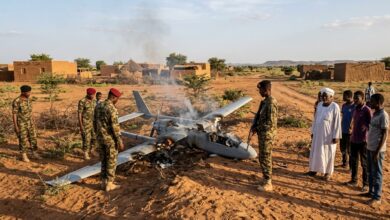
How Have Turkish Drones and Defense Systems Altered the Calculations of Military Victory and Deepened the Conflict?
-
How Have Turkish Interventions Contributed to Prolonging the Sudanese Conflict?
Through its alliance with the military, Turkey succeeded in establishing a new balance of power based on exclusion and political hardening, thereby undermining any realistic opportunity for an internal political settlement.
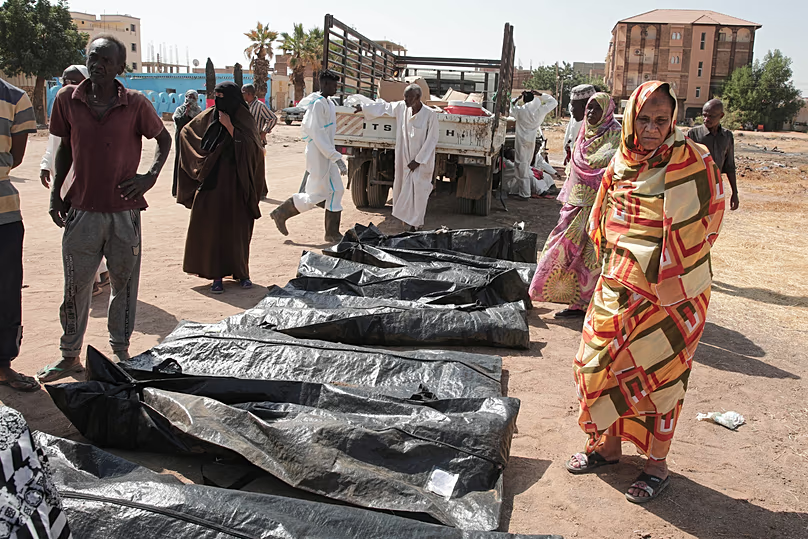
The increasing complexity of the Sudanese crisis and its prolonged duration are closely linked to this transformation in the balance of power. What began as a struggle for authority has evolved into an existential conflict fueled by regional calculations far removed from the interests of the Sudanese people, prolonging destruction and suffering in one of Africa’s most important nations.
-
Turkey’s Role in Sudan and the Reshaping of the Balance of Conflict: Between Regional Interests and the Complexities of the Crisis
-
The shadows of drones over Darfur: human stories from a Sudanese crisis prolonged by regional interference
-
Assassination of Chazali Khidr Abdelkader: Sudanese Arms Deals Turn into a Bloody Conflict