The Revolutionary Guard Prepares to Reap the Benefits of the U.S.-Iran Agreement
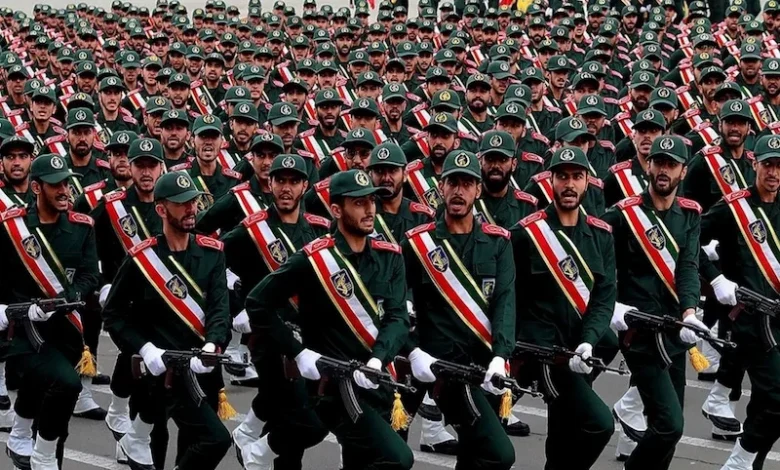
Iran’s Revolutionary Guard is positioned to capture a significant share of the financial gains that could result from sanctions relief, the resumption of oil exports, and the inflow of foreign capital.
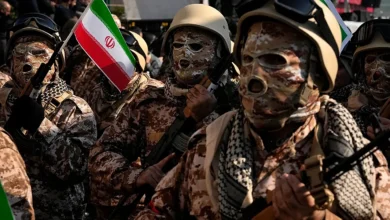
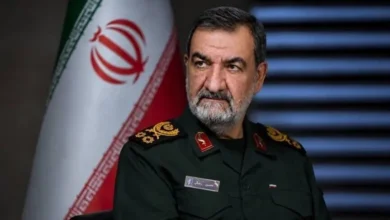
The Islamic Revolutionary Guard Corps (IRGC) is regarded as one of the primary beneficiaries of the agreement between Washington and Tehran. It is preparing to secure a substantial portion of the economic revenues expected from any easing of sanctions, increase in oil exports, or influx of foreign investment, potentially strengthening an organization that the United States and its Western allies designate as a terrorist organization.
For many years, the IRGC has expanded its economic influence despite sanctions by building an extensive network of commercial activities spanning oil, construction, shipping, telecommunications, and port management.
As Iran and the United States prepare to engage in discussions over an agreement that could pave the way for billions of dollars to enter the Iranian economy and facilitate its return to global markets, the IRGC is positioning itself as one of the largest beneficiaries of these developments.
Four senior Iranian sources revealed that the Revolutionary Guard is in a position to capture a significant share of the financial benefits that may result from the lifting of sanctions, the resumption of oil exports, and the inflow of foreign capital.
However, this central role could also become one of the main obstacles to reaching a comprehensive agreement. The deep integration of the IRGC into large sectors of Iran’s economy, combined with its designation as a terrorist organization, could complicate efforts to reintegrate the Iranian economy into the global financial system.
The Revolutionary Guard was founded by Iran’s late leader, Ayatollah Ruhollah Khomeini. Its influence expanded significantly under Supreme Leader Ali Khamenei, during whose tenure it broadened its political and military presence, spearheaded efforts to expand Iranian influence across the Middle East, and tightened its control over domestic affairs.
Since the outbreak of the war on February 28, the IRGC has strengthened its domestic influence, helped facilitate the appointment of Mojtaba Khamenei as the new Supreme Leader, and expressed support for the agreement ending the conflict.
A senior Iranian source described the Revolutionary Guard as the “real winner” of the war, noting that after ensuring the survival of the regime, it is now in a position to reap the rewards of any sanctions relief, particularly given its decades-long role in managing sanctions-evasion operations.
The temporary agreement announced last week provides exemptions for Iranian oil exports, while a broader future agreement could lead to the removal of most remaining sanctions and grant Tehran access to a reconstruction fund estimated at approximately $300 billion.
Another Iranian source stated that the IRGC does not publish financial data, but any economic recovery would inevitably expand its already vast financial influence due to its multi-billion-dollar commercial networks and extensive involvement in the oil, shipping, and construction sectors.
According to official data and public records, Khatam al-Anbiya, the engineering arm of the IRGC, oversees hundreds of companies involved in infrastructure and energy projects, while also operating in telecommunications, automotive manufacturing, tourism, and logistics services.
Because Iranian law requires foreign companies to establish partnerships with local firms, the extensive presence of entities linked to the Revolutionary Guard effectively makes them an almost unavoidable gateway for investors seeking access to Iran’s most profitable sectors.
As a result, Western companies returning to the Iranian market may find themselves dealing directly or indirectly with entities associated with the IRGC, exposing them to legal risks stemming from sanctions that continue to target the organization specifically.
Jeremy Paner, a former sanctions investigator at the U.S. Treasury Department and a current partner at the law firm Hughes Hubbard & Reed, stated that “the Revolutionary Guard controls the levers of the oil sector, and the legal implications of dealing with it cannot be ignored.”
He added that allowing Iranian oil exports to resume under the temporary agreement does not eliminate the legal risks facing American companies, given the IRGC’s continued presence behind much of Iran’s economic activity. Furthermore, the U.S. Justice Against Sponsors of Terrorism Act (JASTA) of 2016 allows victims of terrorist attacks to sue American companies proven to have cooperated with entities designated as terrorist organizations, including the IRGC.
Iranian sources indicated that even if efforts to reach a broader agreement fail and sanctions remain in place, the organization would continue to benefit from temporary oil-related exemptions while using its extensive experience in circumventing sanctions to further strengthen its grip on the economy.
The Revolutionary Guard’s economic rise accelerated with the sanctions imposed on Iran’s nuclear program in the early 2000s. During that period, it developed sophisticated networks to facilitate oil exports and manage shipping and trade operations through intermediaries and front companies.
However, this model faced increasing challenges after U.S. President Donald Trump launched the “maximum pressure” campaign following the withdrawal from the 2015 nuclear agreement and subsequently expanded sanctions during his current term.
A third Iranian source stated that the tightening of U.S. sanctions had narrowed opportunities for sanctions evasion and increased the operational costs of the informal networks upon which the Revolutionary Guard had relied for years.