The Killing of a Sunni Imam by Armed Assailants Deepens Divisions in Iran
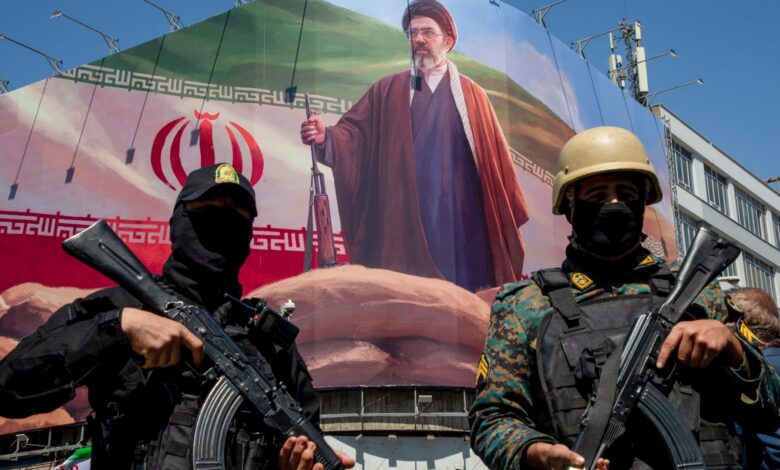
Attacks carried out by armed militants are exacerbating the crisis facing the Iranian regime amid an ongoing crackdown targeting religious and ethnic minorities.
Iranian state media, citing local authorities, reported that unidentified gunmen killed Sheikh Mohammad Anwar Rigi, the Sunni imam and preacher of a mosque in the border town of Mirjaveh in southeastern Iran on Monday, as the country experiences heightened divisions and tensions following the resumption of U.S. attacks.
-
U.S. Pressure Deepens Divisions Within Iran’s Decision-Making Circles
-
Leaked Report Shakes Iran: Public Anger Continues to Haunt the Regime
The Islamic Republic News Agency (IRNA) reported that the governor of Mirjaveh condemned the incident, describing it as a “terrorist attack.”
Officials stated that investigations are underway and urged residents to remain calm, saying that the attack was intended to undermine security and fuel sectarian divisions in Sistan and Baluchestan Province.
The province, one of Iran’s poorest regions and home to a large Sunni population from the Baluch ethnic community, has long witnessed recurring violence involving Islamist or ethnically motivated armed groups, security forces, and other actors aligned with the government in Tehran.
-
Mount Axe: Report Reveals Iranian Nuclear Activity Deep Underground
-
Continuous U.S. Strikes and Naval Blockade: A Week of Fire Against Iran
Religious and ethnic minorities in Iran have consistently accused the authorities of discrimination and restrictions on their religious, cultural, and political rights. Human rights organizations argue that these communities are subjected to systematic marginalization.
Sunni Muslims constitute one of Iran’s largest religious minorities and are concentrated primarily in the provinces of Sistan and Baluchestan, Kurdistan, Golestan, and Khuzestan. Human rights organizations accuse the Iranian authorities of excluding Sunnis from senior state positions. No Sunni figure has ever held the positions of Supreme Leader or President of the Republic, while their representation within the country’s political and security institutions remains limited.
-
U.S. Strikes Deep Inside Iran Target Military Infrastructure and Underground Weapons Depots
-
U.S. Pressure Deepens Divisions Within Iran’s Decision-Making Circles
Sunni groups also complain of restrictions on the construction of mosques and places of worship, particularly in major cities such as Tehran. They further report the prosecution of Sunni clerics and activists. Human rights reports also indicate a growing number of executions and harsh sentences imposed on members of the Sunni community, especially Baluch and Kurdish individuals, in cases that are often linked to national security charges.
Reported violations also affect ethnic minorities, most notably the Kurds, who are concentrated in western Iran. Kurdish activists have been arrested for their political or cultural activities, while the authorities have accused some of maintaining links with separatist groups. Human rights organizations state that security forces have used force against Kurdish protesters and have also targeted cross-border porters involved in transporting goods.
-
Iran Threatens to Close the Bab el-Mandeb Strait Through the Houthis
-
90 Minutes of Bombardment: United States Completes Its Latest Wave of Strikes Against Iran
Kurdish regions were among the main centers of unrest during the nationwide protests of 2022, which were marked by clashes, arrests, and fatalities.
Meanwhile, jihadist groups as well as Kurdish armed organizations continue to carry out attacks against members of Iran’s Islamic Revolutionary Guard Corps (IRGC).
-
The United States Conducts New 90-Minute Strikes on Iran
-
Iran’s Attacks Beyond Its Territorial Waters: Systematic Violations and Six Legal Options