Leaked Report Shakes Iran: Public Anger Continues to Haunt the Regime
A confidential report prepared for the Iranian presidency has raised an important question in Washington and among its allies: Does the growing public anger and widespread support for political change warrant a reassessment of the Iranian regime’s vulnerability and the possibility of regime change?
-
Iranian Attacks on the Gulf States and Jordan: Strong Defense Against a Failed Aggression
-
Infrastructure Comes Under Fire in the U.S.–Iran War
According to the classified report, entitled What Do Iranians Want?, only 9% of respondents support maintaining the current status quo. Meanwhile, 53% favor major or structural reforms, while more than 19% advocate a complete change of the political system.
As a result, nearly three-quarters of those surveyed support either profound structural reform or replacing the current regime. These findings may reinforce the view that Iran’s political crisis has moved beyond dissatisfaction with individual leaders or government policies and has become a crisis affecting the very foundations of the political system.
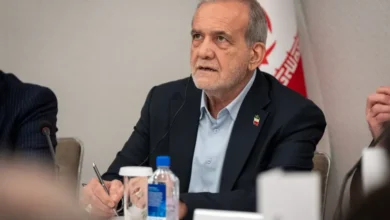
IranWire reported on July 13 that it had obtained a copy of the report, which was prepared by Ali Rabiei, social affairs adviser to Iranian President Masoud Pezeshkian and former government spokesperson.
The report is based on a public opinion survey conducted in May 2026 by the Ara Center for Public Opinion Research. According to IranWire, it circulated within Iranian state institutions throughout June.
-
U.S. Strikes Deep Inside Iran Target Military Infrastructure and Underground Weapons Depots
-
U.S. Pressure Deepens Divisions Within Iran’s Decision-Making Circles
A Call to Reassess the Situation
Meyad Maleki, a senior researcher at the Foundation for Defense of Democracies, told Fox News Digital that the report’s findings warrant a reassessment of the likelihood of political unrest inside Iran.
He stated, “If there is one flaw in this research, it is that it underestimates the depth of the Iranian people’s anger.”
According to Maleki, the most striking aspect of the report is that it was prepared for the Iranian president himself using polling conducted by institutions affiliated with the regime. Nevertheless, it revealed that public anger exceeds 63%—a level higher than the highest anger rating ever recorded by Gallup in any country—while 81% of the population struggles to secure adequate food, and the overwhelming majority of Iranians report feeling hopeless.
-
Iran Threatens to Close the Bab el-Mandeb Strait Through the Houthis
-
90 Minutes of Bombardment: United States Completes Its Latest Wave of Strikes Against Iran
Survey Limitations
Maleki cautioned against treating opinion polls conducted under authoritarian regimes as fully accurate measures of public sentiment, since respondents may fear expressing their genuine opinions.
He explained, “In a police state where expressing dissent can cost you your job, your freedom, or even your life, people inevitably resort to self-censorship. Therefore, these figures should be viewed as the minimum level of public dissatisfaction rather than its maximum.”
The report reviewed by IranWire does not provide a comprehensive explanation of the survey methodology. It does not specify how the sample was selected, the number of participants, or whether it accurately represents different regions and demographic groups.
Consequently, the findings cannot be independently verified or regarded as a definitive measure of Iranian public opinion. Nor do they prove that public dissatisfaction will necessarily evolve into an organized movement capable of overthrowing the regime.
-
Britain Joins the List: Countries That Have Designated Iran’s Islamic Revolutionary Guard Corps as a Terrorist Organization
-
Factional Rivalries Within the Iranian Regime Emerge Publicly During Khamenei’s Funeral
Anger, Frustration, and Economic Hardship
Despite these limitations, the report paints a picture of mounting social pressure within Iranian society.
Nearly 64% of respondents reported experiencing constant anger, representing an increase of approximately 12 percentage points compared with a government survey conducted in December 2025.
The report also found that:
- 50% feel hopeless.
- Around 48% suffer from sadness or depression.
- Nearly 45% live with constant fear or anxiety.
The Economy at the Heart of the Crisis
The report identifies the economic crisis as the primary driver of public anger.
More than 81% of respondents stated that they experience complete or partial difficulty obtaining sufficient food, while 75% reported being unable to afford healthcare expenses.
Additionally, 54% said their income is insufficient to cover household expenses, whereas only 8% indicated that they earn enough to save money.
-
From the Nuclear Issue to the Strait of Hormuz: Trump Reshapes the Confrontation with Iran as Escalation Knows No Limits
-
After More Than Four Months… How Did Iran Preserve Khamenei’s Body?
The Government Under Fire
Respondents placed greater responsibility for the crisis on domestic governance than on foreign sanctions.
- 46.9% identified government mismanagement as the principal cause of the economic crisis.
- 26.3% blamed corruption.
- Only 20.7% considered foreign sanctions to be the primary cause.
The report considers this finding particularly significant because it suggests that many Iranians do not regard external actors as chiefly responsible for their deteriorating living conditions.
A Crisis of Confidence
The report also reveals a profound crisis of trust in state institutions.
Approximately 60% of respondents expressed a lack of confidence in the country’s principal governmental institutions, while 61.2% rated officials’ handling of national crises negatively.
Levels of distrust toward the government, parliament, judiciary, and state broadcasting services all exceed 50%.
-
U.S.–Iran Agreement on a Mechanism to End the Lebanon War and Reopen the Strait of Hormuz
-
A Tour Inside a Hezbollah Tunnel Reveals Iranian Fingerprints: Drones with a 200-km Range and Eight Tons of Explosives
Communication Rather Than Reform
Despite the scale of public dissatisfaction, the report’s recommendations focus primarily on containing public discontent rather than addressing its underlying causes.
Ali Rabiei recommends that state institutions:
- improve public communication regarding the impact of sanctions;
- moderate official and religious rhetoric;
- present a more balanced image through state media;
- avoid policies that place the government in direct confrontation with society.
A subsequent analysis published by IranWire argued that the report treats Iran’s crisis primarily as a communication and image problem rather than a political and structural crisis, highlighting the absence of concrete proposals concerning institutional accountability, political openness, or comprehensive economic reform.
-
Entered into Force: The United States and Iran Sign the Memorandum of Understanding Electronically
-
U.S.-Iran Agreement: Switzerland Reveals Preliminary Talks on Implementation Mechanisms
Expanding Protests
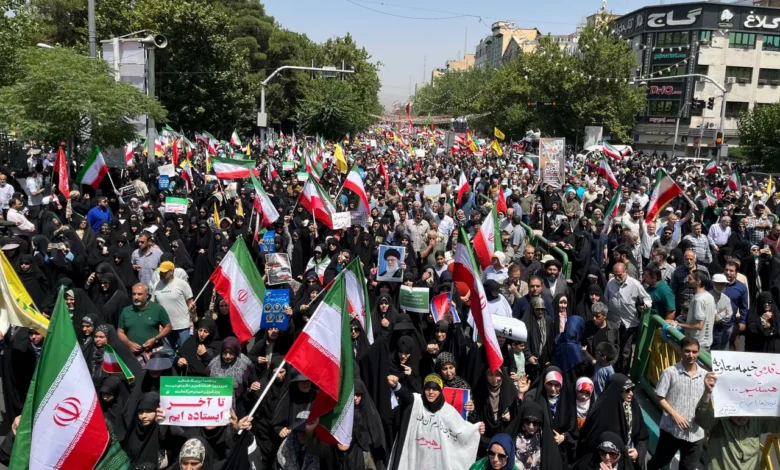
Maleki stated that the report’s findings are consistent with the expanding wave of protests across Iran.
According to him, demonstrations have spread from more than 80 cities in 2017 to over 200 cities across all 31 provinces this year, while labor strikes have reportedly quadrupled.
He added, “Iranians have moved from questioning the feasibility of another revolution to believing that there is no alternative, after reforms proved incapable of delivering genuine change.”
-
Six Challenges That Could Prevent the United States and Iran from Reaching a Final Agreement
-
Iranian compensation demands are being transformed into a massive privately funded investment vehicle
A Regime Prepared for Confrontation
Nevertheless, the report argues that one of the greatest obstacles to regime change is that Iran has spent decades building security institutions specifically designed to monitor, deter, and suppress opposition.
Maleki concluded, “What this regime does best is prevent and crush the next revolution.”
However, he insisted that renewed protests are inevitable, adding: “Public dissatisfaction will once again erupt into demonstrations. The question is not whether they will happen, but when they will occur—and whether anyone will stand alongside the Iranian people when that moment arrives.”
-
Behind the U.S.–Iran Agreement: Heated Discussions, Skepticism, and Pressure
-
No U.S. Withdrawal from the Region During Negotiations with Iran
-
Trump or Vance: Who Will Represent the United States at the Signing of the Agreement with Iran?