Mossad and CIA Hunt for Mojtaba Khamenei: Three Scenarios and a Possible Game
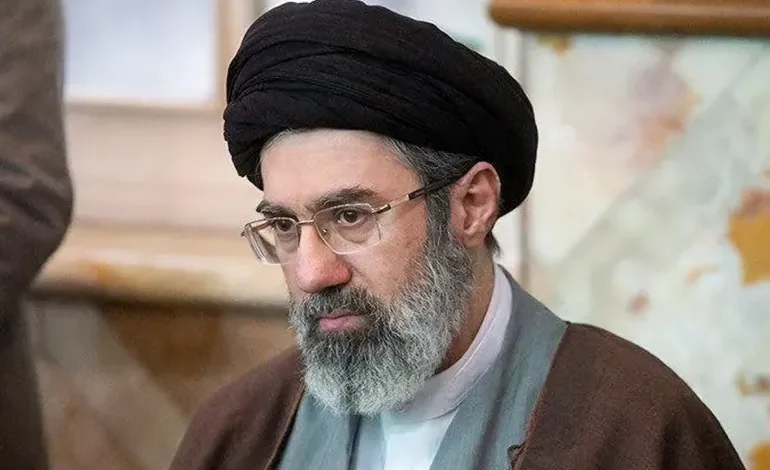
Mojtaba Khamenei has emerged as one of the Middle East’s most enigmatic figures since assuming the position of Iran’s Supreme Leader, succeeding his father, who was killed in an Israeli strike.
While official media outlets have continued to publish statements in his name, he has not appeared at any public event, not even at his father’s funeral. No authenticated photographs, video footage, or audio recordings of him have been released, prompting U.S. and Israeli intelligence agencies to intensify their efforts to determine his whereabouts and even establish whether he is still alive, according to the British newspaper The Times, citing former intelligence officials and experts.
-
New Message and Continued Absence: Mojtaba Khamenei Remains Out of Iran’s Public Spotlight
-
For the Second Consecutive Day, Mojtaba Khamenei’s Absence Overshadows Khamenei’s Funeral as Three of His Brothers Attend
According to the report, Mojtaba Khamenei’s disappearance has presented intelligence agencies with an unusual challenge.
With the belief that he stopped using phones, computers, and modern communications devices approximately five months ago, electronic surveillance operations have lost much of their effectiveness.
This has reportedly forced the U.S. Central Intelligence Agency (CIA) and Israel’s Mossad to return to traditional human intelligence methods, attempting to penetrate his inner circle and track intermediaries believed to be carrying messages to and from him.
-
Mojtaba Khamenei and His Father’s Funeral: The Reasons Behind His Absence
-
Mojtaba Khamenei Stalls Negotiations… Missing Approval and a Suspended Agreement
Some assessments suggest that messages may be transmitted in writing through a chain of intermediaries, ensuring that none of those involved knows the identity of either the sender or the ultimate recipient. The method is intended to reduce the likelihood of revealing his whereabouts.
Some former officials also believe that only two or three individuals within Iran’s Islamic Revolutionary Guard Corps have the ability to communicate with him directly, making access to him an exceptionally complex intelligence task.
Despite the intensity of the search, information about his whereabouts remains extremely limited.
-
Mojtaba Khamenei Calls for Unity Amid Domestic Anger and External Pressure
-
Mojtaba Khamenei: Uncertainty surrounds the fate of the absent Supreme Leader
The leading theories revolve around the possibility that he is hiding within a network of tunnels beneath the capital, Tehran, or inside a fortified military facility near the city of Qom. However, these scenarios remain intelligence assessments that have not been confirmed by independent evidence or publicly available information.
Some former intelligence officials have gone further, suggesting that Mojtaba Khamenei may have been killed or seriously wounded in the strike that killed his father, and that the Islamic Revolutionary Guard Corps is continuing to issue statements in his name in order to preserve the cohesion and legitimacy of the regime during the war.
There is, however, no verified information supporting this theory, nor have any official indications emerged either confirming or disproving it.
-
Mojtaba Khamenei’s silence unsettles Tehran: the Leader’s absence weighs on negotiations
-
Iran between absence and presence: no proof of life for Mojtaba Khamenei
The report adds that Mossad is primarily focused on two questions that it considers key to understanding the situation inside Iran: Is Mojtaba Khamenei still alive? And, if so, where is he?
Former intelligence officials believe that the answers to these two questions could reveal significant information about the nature of the decision-making process within the Iranian regime, although they would not necessarily lead to an immediate change in the course of the conflict.
Another theory that has circulated is that individuals resembling Mojtaba Khamenei may be used to mislead surveillance operations. However, the report emphasizes that this possibility is not supported by confirmed evidence and remains within the realm of speculation circulating in intelligence circles.
-
Mojtaba Khamenei’s Survival of Assassination Attempt Redraws Iran’s Leadership Map
-
Who is Mojtaba Khamenei, before whom Iranian leaders bow?
The report, meanwhile, quotes Iranian President Masoud Pezeshkian as saying that he met with Mojtaba Khamenei for two and a half hours and found him to be in good health. However, a former Mossad official questioned this account, arguing that it does not constitute verifiable evidence, particularly in the absence of any public appearance or video recording documenting the meeting.
The report notes that Israeli intelligence services have a human intelligence network inside Iran that is considered more developed than its U.S. counterpart. However, former officials stress that penetrating the inner circle surrounding the Supreme Leader remains one of the most difficult intelligence missions, given the stringent security measures protecting the regime’s leadership.
-
Factional Rivalries Within the Iranian Regime Emerge Publicly During Khamenei’s Funeral
-
Public Farewell to Khamenei Showcases Support for Iran’s Supreme Leader System
According to the report, the mystery concerns not only Mojtaba Khamenei’s whereabouts but also the extent of his actual authority.
If military command and strategic decisions are, in practice, controlled by the Islamic Revolutionary Guard Corps, then determining the Supreme Leader’s location—or even targeting him—may not produce a fundamental change in the structure of Iranian power. Instead, it could open the door to new political arrangements whose consequences would be difficult to predict, the report concludes.
-
After More Than Four Months… How Did Iran Preserve Khamenei’s Body?
-
Tehran: One Hand Waves the Banner of Revenge for Khamenei While the Other Remains Extended Toward Negotiations
-
Minutes That Shook Iran: Live Broadcast Suddenly Cut Off After Secret Messages Attributed to Khamenei