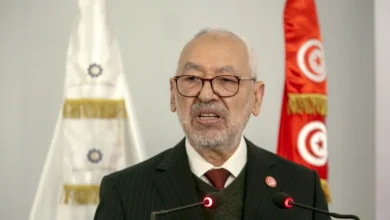
Ghannouchi’s Hunger Strike: Tunisia’s Muslim Brotherhood Seeks a Political Victimhood Narrative Behind Bars
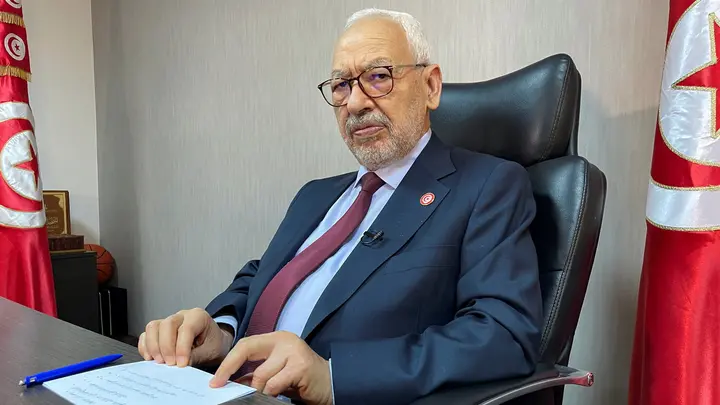
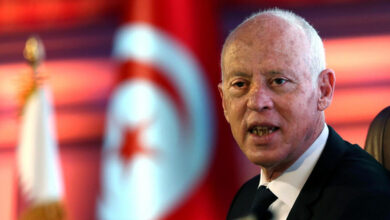
As usual, Tunisian Muslim Brotherhood leader Rached Ghannouchi is seizing every opportunity to attract attention after those around him gradually disappeared from the scene since the beginning of the accountability process targeting the organization.
Ghannouchi’s defense team announced in a statement on Monday that Ennahdha Movement leader Rached Ghannouchi, 85, had begun an open-ended hunger strike and stopped taking his medication, “in protest against the total isolation imposed on him at the hospital where he is being held.”
-
New rulings against Rached Ghannouchi and three Ennahdha leaders
-
Rached Ghannouchi’s message to his supporters from prison: a mobilization without resonance
The defense team said he had “entered an extreme phase of protest twelve days after being transferred to the hospital.”
Tunisia’s prison administration had previously stated in a communiqué issued last month that it had taken “all necessary measures” to ensure appropriate living conditions and healthcare inside prisons. It also denied reports that the health of some prisoners had deteriorated because of high temperatures or that their families and lawyers had been prevented from visiting them.
The administration confirmed that prisoners receive medical care inside prisons, while cases requiring specialized treatment are transferred to public hospitals.
Ghannouchi, who has been imprisoned since April 19, 2023, faces ten cases, including charges related to conspiring against state security, espionage, political assassinations, the Muslim Brotherhood’s secret apparatus, sending terrorists to conflict zones, and money laundering.
-
Rached Ghannouchi Rejects Remote Trial Appearance: Conspiracy 2 Case Shakes the Muslim Brotherhood in Tunisia
-
Tunisia: Rached Ghannouchi refuses to appear before the judiciary in a money laundering case
A Muslim Brotherhood Maneuver
Tunisian political activist Khaled Bel-Taher, for his part, said that the Muslim Brotherhood organization was seeking to attract attention and gain media and human-rights solidarity, describing the hunger strike as a means of protest and moral pressure.
Bel-Taher said that “Ennahdha is seeking, by portraying the strike as the result of brutal and inhumane treatment, to corner the authorities over alleged human-rights violations.”
He described the strike as “a classic political maneuver used by the Muslim Brotherhood when the legal path becomes blocked,” explaining that after Rached Ghannouchi was sentenced to life imprisonment, his only remaining option was to exert pressure for his release and the release of other Muslim Brotherhood prisoners.
-
The Spoiled Son of Rached Ghannouchi… Who is the Tunisian Brotherhood member Seifeddine Makhlouf ?
-
Tunisia asks Interpol to arrest and hand over son of Rached Ghannouchi
He also noted that Ghannouchi had previously been sentenced to death during the rule of former President Habib Bourguiba in the mid-1980s, but was released as part of a political deal when former President Zine El Abidine Ben Ali came to power in 1987. He was arrested again in the early 1990s and subsequently left the country under another political arrangement.
Political analyst Ziad Al-Qasmi, meanwhile, said that the hunger strike was intended to pressure the current Tunisian administration into releasing Ghannouchi on humanitarian and medical grounds.
He said that announcing the strike at this particular time was primarily aimed at creating “political propaganda” for his release after heavy sentences had been handed down against him.
-
Tunisia: Rached Ghannouchi was brought back to court as a suspect
-
Rached Ghannouchi to appear before the Tunisian Justice next Monday
He added that the Muslim Brotherhood, as usual, was employing a victimhood narrative in an effort to mobilize its popular base and shape public opinion, following the movement’s declining political presence on the Tunisian street and the imposition of severe sentences on its leaders, including life imprisonment.
He explained that “Ghannouchi is relying on the same maneuvers he has used in the past to exert pressure for his release.”
In June, a Tunisian court sentenced Rached Ghannouchi to life imprisonment plus an additional 30 years in prison in the case concerning the Muslim Brotherhood’s secret apparatus.
Tunisian authorities arrested Ghannouchi in 2023, while the combined sentences handed down against him in several cases, including the case involving “conspiracy against state security,” now exceed 40 years in prison.
-
Rached Ghannouchi and 33 Ennahdha leaders officially charged with terrorism – Details
-
Tunisian parliament leader Rached Ghannouchi summoned for questioning
-
Rached Ghannouchi and Rafik Abdessalem before the judicial and financial pole – Tunisia