U.S. Sanctions Strike at Funding Channels: Mahmoud al-Ebary Targeted by Treasury as Muslim Brotherhood and Hamas Networks Come Under Scrutiny
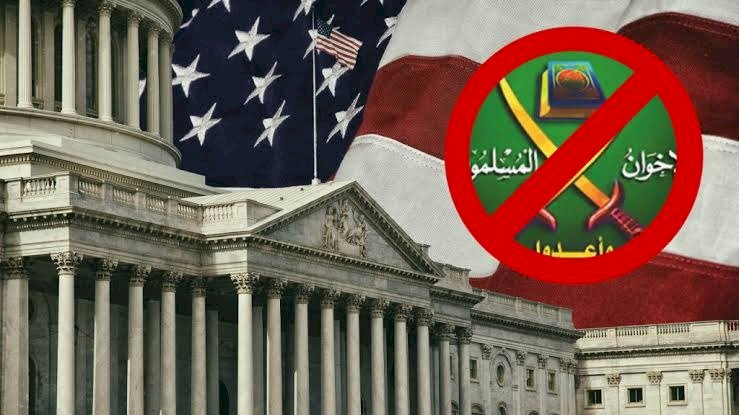
In a new escalation targeting funding networks linked to the Muslim Brotherhood and Hamas, the U.S. Department of the Treasury has designated Muslim Brotherhood figure Mahmoud al-Ebary under its sanctions regime, alongside three individuals and three entities. The measure illustrates the expanding scope of the U.S. crackdown, which is no longer focused solely on prominent leaders and well-known figures, but also on the broader financial infrastructure through which funds move across borders.
-
Following Mahmoud Al-Ebary’s Designation: How Do the Repercussions of U.S. Sanctions Reach European Companies?
-
Mahmoud Al-Ebary: From the International Organization’s Man in the Shadows to the U.S. Sanctions List
The U.S. sanctions have not been limited to specific individuals. They have also targeted charitable organizations, commercial companies, money-exchange networks, and financial service providers that Washington accuses of using charitable and commercial activities as a cover to collect and transfer funds for entities linked to Hamas.
According to the U.S. Department of the Treasury, Mahmoud al-Ebary serves as secretary-general of the General Secretariat of the Muslim Brotherhood. Washington accuses him of participating in fundraising campaigns on behalf of organizations previously placed on U.S. sanctions lists because of their links to Hamas, as well as coordinating fundraising and money-transfer operations with entities affiliated with the Brotherhood’s international organization.
-
Expert on extremist groups: U.S. sanctions against Mahmoud El-Ibiary reveal the expanding Muslim Brotherhood-Hamas financing network
-
Expert on extremist groups: U.S. sanctions against Mahmoud El-Ibiary reveal the expanding Muslim Brotherhood-Hamas financing network
The measures included the Indonesian company Togah Bulah Global, which the U.S. Treasury said also operates under the name Seven Spikes Global. Washington accused the company of raising funds and generating revenue for Hamas’s military wing.
The sanctions also targeted the Maad Palestine charitable association in the Gaza Strip. Washington says the organization initially operated under the guise of providing assistance to civilians before, according to U.S. allegations, being used by Hamas to provide funding for military purposes.
-
The Muslim Brotherhood Under U.S. Scrutiny in Europe: Mahmoud El-Ebary
-
The Muslim Brotherhood before the U.S. Congress: broader oversight of networks and financing
The crackdown has also extended to a money-exchange and financial-services network in Turkey, which the United States accused of transferring hundreds of thousands of dollars to Hamas. The move reflects a clear U.S. policy direction toward targeting financial intermediaries that Washington considers part of the system used to move funds outside traditional channels.
The nature of the sanctions reveals a shift in U.S. enforcement tools. The campaign is no longer limited to pursuing political or military leaders; it now targets the entire funding chain, from the collection of money to its transfer, including charitable fronts, companies, and financial intermediaries, as well as entities that Washington accuses of benefiting from these flows.
-
After U.S. Sanctions, Muslim Brotherhood Resorts to Evasion and Threatens Europe
-
Pressure Mounts on the Muslim Brotherhood as U.S. Judge Upholds Florida’s Terrorist Designation of CAIR
The U.S. Treasury Department says charities, companies, and money-exchange networks can be used to conceal the ultimate beneficiary of funds and redirect them through multiple countries. This has prompted Washington to broaden the scope of its sanctions to encompass multiple links within these networks.
U.S. Treasury Secretary Scott Bessent said the administration of President Donald Trump would pursue those it describes as terrorists and their financiers, whether they operate under the cover of charitable organizations, companies, or clandestine financial networks. He stressed that supporters of Hamas would face sanctions and accountability.
-
The U.S. Senate reviews the Muslim Brotherhood file: an upcoming hearing to tighten the designation
-
Linking the Muslim Brotherhood to ISIS and Al-Qaeda: a U.S. shift targeting the foundational root of terrorism
Ibrahim Rabie, a researcher specializing in extremist groups, considers the designation of Mahmoud al-Ebary an important development in the way Washington is addressing funding networks linked to the Muslim Brotherhood and Hamas.
Rabie said the decision does not target an isolated individual, but instead reveals U.S. efforts to trace cross-border financial and organizational networks. He noted that the sanctions target a range of fronts and intermediary links on which these networks allegedly rely to raise funds, transfer money, and conceal financial trails.
-
Escalation of the U.S. Confrontation with the Muslim Brotherhood: Accelerated Legislative and Judicial Moves
-
Classifying the Muslim Brotherhood as a Terrorist Organization: A U.S. Move Targeting International Pursuit
He explained that targeting a Muslim Brotherhood leader alongside charitable and commercial entities and financial networks operating in different countries reflects a U.S. attempt to connect organizational activity with funding channels, rather than treating each case separately.
Rabie stressed that targeting these links places direct pressure on the financial infrastructure on which the networks in question rely, particularly because the sanctions are no longer focused solely on decision-makers but extend to institutions, intermediaries, and channels that may facilitate the movement of funds.
-
Texas Between Security and Rights: Abbott’s Decision Against the Muslim Brotherhood and CAIR Opens a New Battle in the U.S.
-
Denial of Lineage: The Shadow of a Ban Haunts the Muslim Brotherhood in the U.S. and Europe
He noted that, according to U.S. assessments, the threat posed by these networks lies in their ability to operate across multiple countries and exploit charitable and commercial activities as well as financial transfers, making it more difficult to trace the origin of funds and identify their ultimate beneficiaries.
He added that the sanctions also carry a broader message to institutions and entities dealing with these networks: Washington is moving toward expanding the scope of financial enforcement, and the targeting could extend to any link that it believes contributes to the continued flow of funds.
-
The Muslim Brotherhood and the specter of designation: a senior U.S. official calls for a decisive step
-
The Muslim Brotherhood Threatens U.S. Security… a Shocking Article in Newsweek
According to Rabie, placing al-Ebary on the sanctions list also puts pressure on Muslim Brotherhood leaders based outside Egypt, amid increasing U.S. scrutiny of the financial and organizational ties connecting certain leaders to regional and international networks.
U.S. sanctions impose the freezing of assets and interests subject to U.S. jurisdiction, along with restrictions on transactions by U.S. persons and institutions with designated individuals and entities.
-
U.S. Congress Moves Closer to Designating Muslim Brotherhood as Terrorist Organization
-
The Muslim Brotherhood in the U.S. Under Pressure… What’s Happening?
The latest sanctions therefore go beyond simply adding new names to a list. They constitute an instrument aimed directly at the funding channels themselves, as part of a U.S. effort to dismantle networks that Washington says link charitable, commercial, and financial activities to the financing of Hamas, while placing the financial infrastructure associated with the Muslim Brotherhood under greater scrutiny and pressure in the period ahead.
-
Following Mahmoud Al-Ebary’s Designation: How Do the Repercussions of U.S. Sanctions Reach European Companies?
-
Mahmoud El-Ebary Under Sanctions: How Did His Name Become Linked to the Muslim Brotherhood’s Organizational Structure?
-
The United States and Political Islam: A New Strategy to Pursue the Muslim Brotherhood