Washington Tightens the Maritime Noose Around Iranian Ports
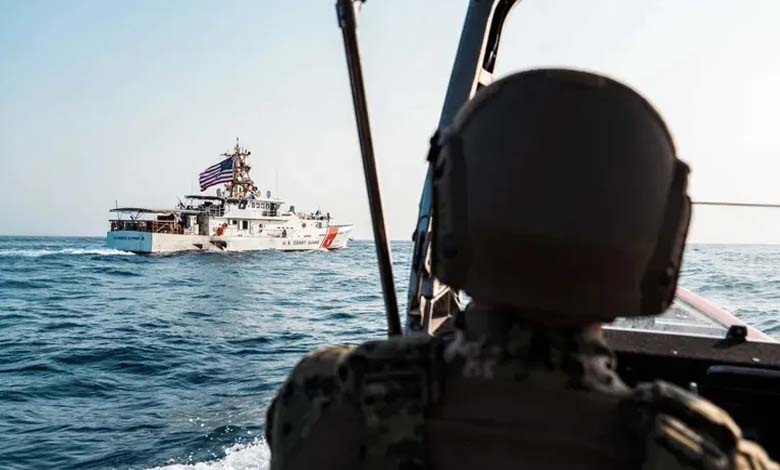
U.S. forces have intercepted eight oil tankers linked to Iran since the start of the blockade imposed on Iranian ports.
The U.S. military stated that it has succeeded in tightening its maritime blockade around Iran, resulting in an almost complete paralysis of commercial shipping to and from its ports. The Wall Street Journal revealed that U.S. forces have intercepted eight oil tankers linked to Iran since the beginning of the blockade on Iranian ports. This development is expected to affect the course of negotiations by serving as a major pressure tool, as well as impacting Iran’s domestic situation, where the economic crisis is likely to worsen, placing additional strain on the government and fueling public anger.
-
On the eve of the Muscat talks, five milestones paved the way for Iran and Washington’s return to negotiations
-
Will Washington and Moscow strike a grand bargain: Iran in exchange for Ukraine?
In a statement posted on the platform “X,” Brad Cooper, commander of the United States Central Command, said late Tuesday that the maritime blockade operations had been fully implemented, confirming that U.S. forces had established dominance in the region.
He noted that these measures had produced rapid results, with maritime commercial activity linked to Iran being completely paralyzed in less than 36 hours.
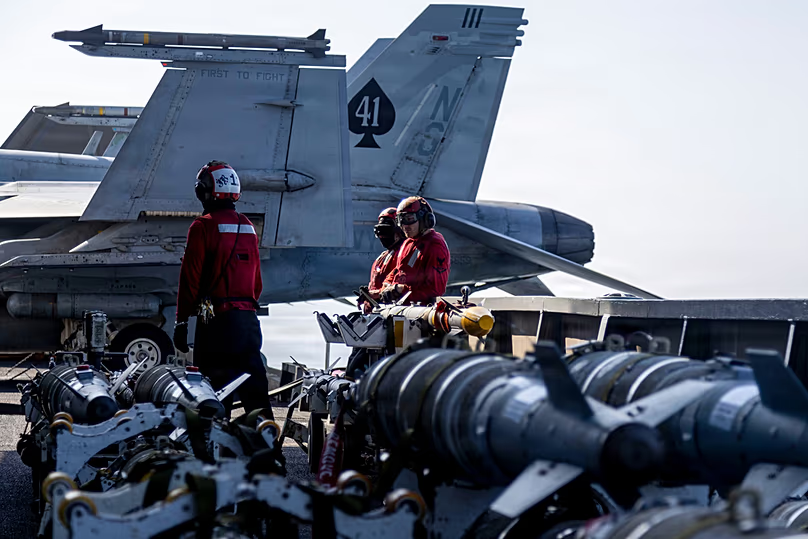
In another statement, the Central Command indicated that the operation involved naval destroyers equipped with guided missiles as part of a broad military deployment in the region. It emphasized that the blockade measures apply to all vessels without exception, whether heading to or departing from Iranian ports, regardless of nationality.
-
Russia and China back Iran’s new leader as Washington and Tel Aviv issue threats
-
Bomb Diplomacy: The Douhet Strategy and Washington’s Options on Iran
This U.S. move is likely to deepen Tehran’s economic crisis, provoking anger among a population already suffering from difficult economic conditions exacerbated by war, currency depreciation, and declining purchasing power. Targeting the vital artery of oil exports—the backbone of Iran’s economy—represents a significant challenge. Observers believe Washington has managed to reverse the Strait of Hormuz equation, removing this leverage from Iran and placing Tehran in a position of containment rather than control over maritime traffic.
Shipping data showed that the oil tanker Rich Star, under U.S. sanctions, returned on Wednesday to the Strait of Hormuz after leaving the Gulf the previous day, having failed to breach the U.S. blockade imposed on vessels docking at Iranian ports.
-
Nuclear Talks: Iran Rejects Washington’s Proposal and Prepares an Alternative
-
Khamenei, Iran’s Illness and the Obstacle to Any Agreement with Washington
U.S. President Donald Trump announced the blockade on Sunday after peace talks held in Islamabad between the United States and Iran earlier in the week failed to produce an agreement.
The Chinese-owned vessel was among at least eight ships that passed through the waterway on Tuesday, the first day of the U.S. blockade.
A U.S. official stated that a U.S. destroyer intercepted two oil tankers on Tuesday that were attempting to leave the Iranian port of Chabahar on the Gulf of Oman.
Rich Star and its owner, Shanghai Xuanrun Shipping, were sanctioned by the United States for dealings with Iran.
-
Washington Tests Military Capabilities Amid Escalation Between Israel and Iran
-
Washington rules out Iran and its proxies’ involvement in expanding the war
According to Kpler data, Rich Star is a medium-sized tanker carrying about 250,000 barrels of methanol. Data from the London Stock Exchange Group showed that another vessel under U.S. sanctions, the very large crude carrier Alicia, was expected to enter the Gulf through the strait on Wednesday. Kpler data indicated that the empty tanker, capable of carrying two million barrels of oil, was heading to Iraq to load cargo on Thursday. The blockade has increased uncertainty for shipping companies, oil firms, and insurers amid war-related risks.
Industry sources reported Tuesday that traffic still represented only a small fraction of the more than 130 daily crossings recorded before the outbreak of the war launched by the United States and Israel against Iran on February 28.
-
Washington sends messages to Iran and Hezbollah via Turkey… Details
-
Washington doubts the seriousness of forming a naval alliance comprising Iran and Gulf states