U.S. investigations reveal the pathways of a cross-border arms network suspected of being linked to the conflict in Sudan
Amid the escalation of armed conflicts in several regions around the world, the issue of cross-border arms networks has once again come to the forefront of international debate following the announcement by judicial authorities in the State of California of the arrest of Iranian citizen Shamim Mafi, amid accusations related to her role as an intermediary in a major arms deal believed to have been intended for parties in Sudan, with a value exceeding seventy million dollars.
Details of the case, as published by the prosecutor’s office, reveal the existence of a complex network that extends beyond the borders of a single state and operates through multiple financial and commercial channels with the aim of facilitating the transfer of sensitive military equipment, including Mohajer-6 drones, as well as large quantities of various types of ammunition. Investigations indicate that these operations were conducted through intermediaries using seemingly legitimate companies that were, in fact, exploited as fronts to channel illicit transactions.
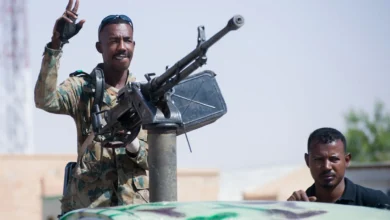
This case carries particular significance given the context in which it arises, as Sudan has long experienced security and political instability, making the country fertile ground for the influx of weapons from multiple sources. In this setting, drones have become one of the most prominent tools of modern conflict due to their ability to conduct precise, long-range operations without the need for direct involvement of conventional forces.
Security reports indicate that the proliferation of this type of weaponry in conflict zones has contributed to changing the rules of military engagement, with warring parties increasingly relying on technology rather than direct confrontation, thereby increasing the level of complexity in conflict management.
U.S. investigations into the case began after abnormal financial movements linked to a network of bank accounts and commercial companies were detected, before inquiries revealed connections between these movements and suspected arms transactions. As the investigation progressed, Shamim Mafi’s identity was established as one of the key elements in coordinating between the various parties.
While no official statements have been issued by Iran or Sudan regarding these accusations, the case has attracted significant international attention, particularly amid growing concerns about the proliferation of unofficial arms networks operating outside international legal frameworks.
Experts believe that one of the primary challenges in such cases lies in the complex nature of these networks, which rely on financial encryption and multiple layers of intermediaries, making it difficult to trace financial flows or identify the ultimate beneficiaries. Moreover, the use of modern technologies in logistical operations further complicates oversight mechanisms.
This case once again underscores that the issue of arms exports is no longer confined to official relations between states, but now encompasses non-governmental networks operating in the shadows, taking advantage of legal and regulatory gaps in the international system.