Washington Warns Ethiopia and Eritrea Against Igniting the Horn of Africa
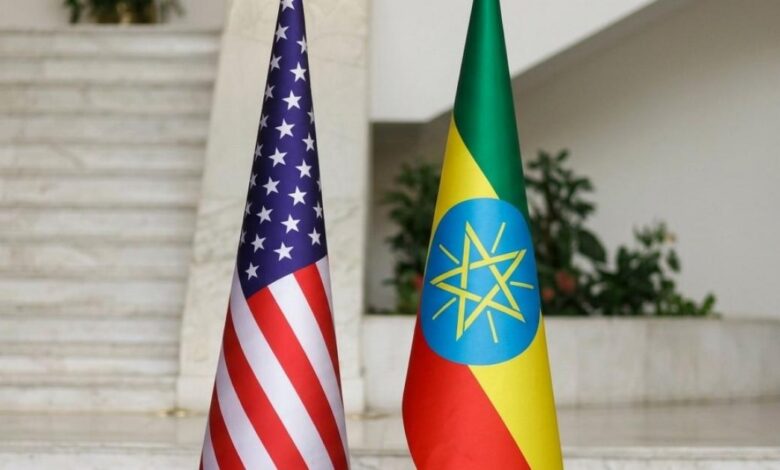
Current developments risk creating a chain of interconnected conflicts and a broader crisis over access to the Red Sea.
Washington has urged Ethiopia and Eritrea to exercise restraint and return to dialogue, warning that escalating tensions between the two countries could lead to a new conflict whose consequences the Horn of Africa, already struggling with overlapping security and humanitarian crises, cannot afford.
US State Department spokesperson Tommy Pigott said that the outbreak of conflict between the two countries would threaten existing US cooperation with both Ethiopia and Eritrea on issues of shared concern. He called on the two governments to respect the sovereignty and territorial integrity of their neighbours, exercise maximum restraint and resume dialogue and cooperation within the framework of the 2018 peace agreement between Addis Ababa and Asmara.
The State Department spokesperson emphasised that peace achieved through dialogue offered the only path towards lasting security, economic growth and prosperity in the region.
The situation has become increasingly dangerous following the resumption of fighting in Ethiopia’s northern Tigray region, where federal forces and their allies are confronting a coalition led by the Tigray People’s Liberation Front.
Recent developments indicate that pro-government forces are advancing towards Mekelle, the regional capital, after capturing the town of Melazat, located approximately 20 kilometres from the city. Other reports suggest that the fighting has spread to additional areas.
This latest round of hostilities is the most serious since the war that engulfed Tigray between 2020 and 2022 and caused a major humanitarian crisis. The renewed fighting also carries broader regional implications because of Tigray’s proximity to Eritrea, Asmara’s historical involvement in the conflict and Ethiopia’s allegations that Eritrea, Sudan and Egypt are supporting the government’s opponents. All three countries deny the accusations.
Signs that the conflict may be expanding are growing. Reports have indicated that explosions heard in Addis Ababa were linked to drone attacks, while the authorities have imposed restrictions on drone flights over the capital.
If attacks in Addis Ababa are confirmed, this would indicate a significant change in both the nature of the confrontation and the capabilities of groups opposing the government.
The sensitivity surrounding relations between Ethiopia and Eritrea stems from a long history of war and hostility. The two countries fought a bloody border conflict between 1998 and 2000.
Although the 2018 peace agreement led to the normalisation of relations, the reconciliation process failed to resolve the security and geopolitical disputes that have continued to generate tension.
One of the most important points of contention is Ethiopia’s access to the Red Sea. Landlocked since Eritrea gained independence in 1993, Ethiopia views maritime access as a matter closely connected to its national security and economic interests.
Asmara, however, regards Ethiopia’s demands with deep suspicion, fearing that calls for access to the sea could develop into pressure on Eritrean territory or the port of Assab. This disagreement has contributed to deepening mistrust between the two countries.
The US warning suggests that a direct confrontation between Ethiopia and Eritrea would not necessarily remain confined within their borders. The region is already facing war in Sudan, tensions over the waters of the Nile and the Grand Ethiopian Renaissance Dam, as well as intensifying regional and international competition over the Red Sea, its ports and its shipping routes.
Current developments raise the prospect of a chain of interconnected conflicts involving the internal war in Ethiopia’s Tigray region, direct tensions with Eritrea, allegations of Egyptian and Sudanese interference and a broader crisis surrounding access to the Red Sea.
According to Reuters, the overlap between these issues increases the risk that the fighting in Tigray could develop into a wider regional conflict.
The US position is consistent with the African Union’s call for all parties to exercise maximum restraint and return to diplomatic channels and dialogue. These efforts are intended to prevent the crisis from moving beyond political estrangement and internal warfare into an open regional confrontation.