The Earthquake of Labor Protests: Total Paralysis Hits Schools in Khartoum and Kassala as the Movement Spreads to New States
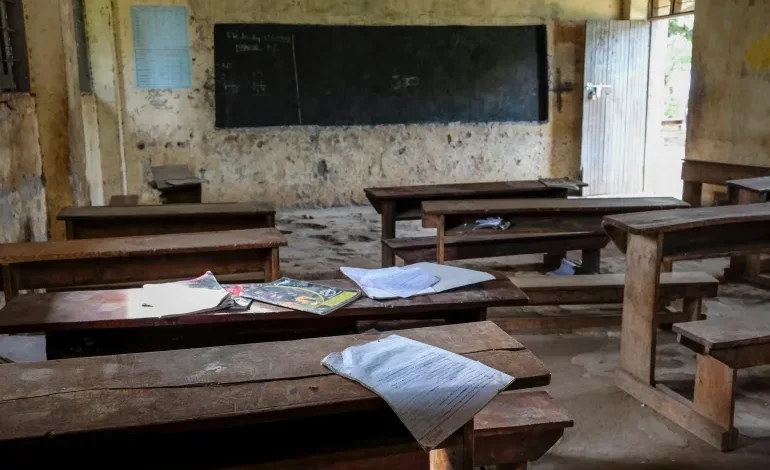
Sudan’s education sector has entered a critical phase from which a resolution appears difficult to foresee in the near future. Teachers’ committees and educational associations in Khartoum and Kassala State have announced that the comprehensive open-ended strike has entered a new week, with participation rates reaching 100 percent in most public schools and several private educational institutions. This large-scale protest movement is no longer merely a temporary sectoral action; it has evolved into a major labor and social upheaval that threatens to undermine what remains of the country’s public service structure, amid continued silence and a lack of response from the relevant authorities.
-
The Education Crisis in Sudan: Between Funding Imbalances and Public Administration Challenges
-
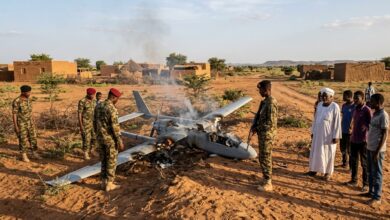
Field reports accuse the Sudanese army of carrying out a drone attack against civilians in Kutum amid calls for an international investigation
Complete Paralysis in the Capital and Eastern Sudan
In Khartoum, schools and educational institutions appear entirely deserted. Doors remain closed, classrooms stand empty, and schoolyards that were once full of activity have become silent spaces reflecting the scale of the crisis. Teachers who spoke to field correspondents stated that the decision to strike came only after all opportunities for dialogue had been exhausted and discussions with the existing authorities had reached a deadlock.
In Kassala State, located in eastern Sudan, the situation is similar. Education workers have united in a coordinated movement and issued joint statements asserting that continuing the strike has become the only remaining option for securing their rights after teachers found themselves facing increasingly difficult economic conditions.
-
The Sudanese army’s bombardment in Kutum opens an investigative inquiry into the targeting of a wedding ceremony and allegations of a catastrophic error in North Darfur
-
Forced Deportation Campaigns Against Sudanese Refugees in Egypt
Expansion of the Movement and Unification of the Labor Front
One of the most significant aspects of this mobilization is that the discontent is no longer confined to Khartoum and Kassala. According to recent field reports, the protests have rapidly spread to other states that were historically regarded as relatively stable and less prone to labor unrest.
In Al Jazirah State, several labor organizations officially announced their participation in the strike in solidarity with their colleagues and as an affirmation of their shared concerns and objectives. In the Red Sea State, particularly in Port Sudan, teachers organized large protest gatherings in front of local government offices, carrying slogans calling for greater fairness and support.
-
Civil administration in Sudan: is it the only way out of the spiral of collapse?
-
Civility as a National Necessity… Sudan Between Collapse and Reconstruction
The Northern State has likewise joined the movement. Various localities and educational centers have witnessed a complete suspension of teaching activities, while solidarity statements have described teachers’ demands as “legitimate, fair, and not open to compromise.”
Shaping Public Opinion and Growing Popular Support
Observers of Sudanese affairs believe that this strike has succeeded in revitalizing public debate and drawing nationwide attention to an unprecedented degree. Parents and guardians, despite their considerable concern for their children’s academic future, have shown significant understanding toward the teachers’ actions.
-
Sudan between the ruins of war and the rebuilding of the state: a last-minute race to save the civil administration
-
Sudan between chaos and the beginning of a state: why institutional civil administration has become the true battle for survival
The economic crisis affects all segments of society, and many citizens now view teachers’ dignity and financial stability as essential prerequisites for the existence of a functional and effective education system. This broad public support has transformed the issue of wages into a matter of national public concern.
As a result, discussions have moved beyond institutional circles and spread across social media platforms, marketplaces, and public gatherings. Increasing numbers of voices are calling for an immediate response to the demands put forward by teachers’ committees in order to prevent the movement from expanding into other vital public service sectors, including healthcare, electricity, and water services.
-
Institutional Civil Administration: The Path to Rebuilding Sudan and Ensuring Economic Sustainability
-
Port Sudan between political paralysis and human rights violations: an analytical reading
-
Cracks within the Port Sudan Authority: Governmental failure and violations against childhood