What happened in Al-Jazirah State: an extensive investigation documents “atrocious crimes” by the Sudanese army
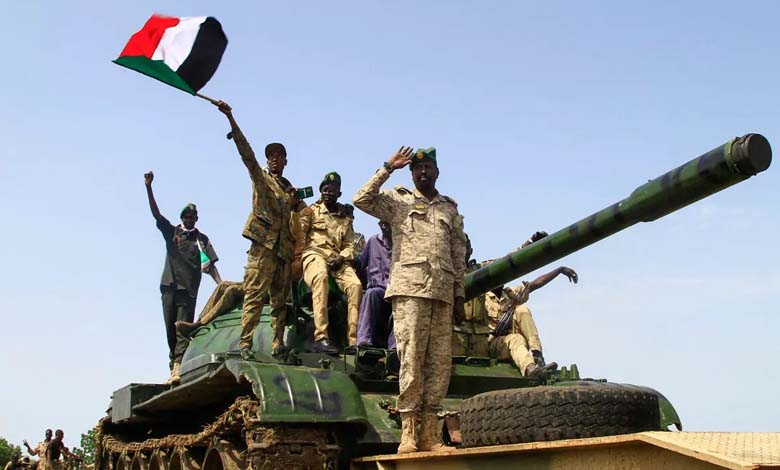
Visual evidence, video footage, survivor testimonies and satellite imagery paint a harrowing picture of crimes committed by the Sudanese army and militias allied with it.
This is the conclusion of a wide-ranging joint investigative report published on Tuesday by CNN and the investigative journalism organization Lighthouse Reports, examining events in Sudan’s Al-Jazirah State.
The American network notes that while allegations against the Rapid Support Forces have dominated international coverage, violations committed by the Sudanese Armed Forces under army commander Abdel Fattah al-Burhan, along with their allies from the Muslim Brotherhood, its affiliated networks and allied militias, have remained largely overlooked, until the investigation exposed part of these atrocities.
-
The Sudanese Army in El-Fasher: When the Guardian Becomes Executioner
-
The Sudanese Army and the Islamic Movement: An Alliance Crumbling in the Age of Political Bargains
An organized campaign targeting non-Arab communities
The investigation found that the Sudanese Armed Forces and allied militias carried out an ethnically motivated campaign of violence targeting non-Arab communities, particularly the “kanabi”, black agricultural workers many of whom originate from the Nuba Mountains and from western and southern Sudan.
Evidence gathered by CNN shows a recurring pattern of extrajudicial killings, field executions and systematic disposal of bodies across dozens of villages throughout Al-Jazirah State.
-
Between Deception and Failure: How the Sudanese Army Manufactures Illusory Victories
-
Report: The Sudanese Army’s Media Disinformation… Manufacturing Illusory Victories to Conceal Battlefield Losses
Visual evidence: bodies in irrigation canals and mass graves
The investigation documented disturbing videos showing bodies thrown into irrigation canals, some stripped of clothing, others with their hands bound. Additional images reveal victims buried in mass graves, while entire agricultural communities were set ablaze.
According to consistent testimonies, anyone suspected of belonging to non-Arab groups was killed immediately, without investigation or trial.
High-level coordination
Informed sources, including current security officials, told CNN that the campaign was not the result of random acts or “individual violations”, but was coordinated at senior levels within the state.
These sources point to the involvement of elements from Sudan’s General Intelligence Service in coordinating attacks in Al-Jazirah State, and one source stated that Abdel Fattah al-Burhan was informed of the details of the killings.
-
The Rise of the Sudanese Army’s Disinformation Narrative: Fabricated Operations and Inflated Illusory Victories
-
Between Sudanese Army Statements and Rapid Support Forces Denials: What Really Happened in Nyala?
Wad Madani: recapture of the city and the onset of massacres
In January 2025, the Sudanese Armed Forces advanced to retake the city of Wad Madani from the Rapid Support Forces. As they approached, a series of atrocities began to emerge.
Videos verified by CNN show army units stopping in the village of Kraybi, where young civilians were detained, assaulted and accused of belonging to the Rapid Support Forces.
The “Police Bridge”: from battlefield to execution site
At an intersection known as the “Police Bridge”, CNN reconstructed events using several videos filmed over multiple days.
-
The Sudanese Army’s Defeat in El-Fasher… A Defeat of Repression, Not Just a Battlefield Loss
-
Power and Influence Struggles: Infighting Rocks Sudanese Army Alliances
Initial footage shows violent clashes and an ambush targeting Rapid Support Forces fighters as they fled Wad Madani. Subsequent scenes are more disturbing: bodies scattered across the street, some wearing Rapid Support Forces uniforms, others in civilian clothes.
One injured, unarmed man is seen lying on the ground surrounded by soldiers, before being shot seconds later.
Dozens of civilians executed in cold blood
The following day, after the army regained full control of the area, a courtyard near the Police Bridge became the scene of another massacre.
The bodies of at least fifty young men were found, all civilians and unarmed, some lined up against a wall with clear gunshot wounds to the head.
-
With a Major Arms Deal for the Sudanese Army.. Brotherhood Leader Salah Gosh Returns from the Shadows
-
Sudanese Army Soldiers and Islamist Militias Accused of Looting Homes and Assaulting Civilians
One fighter claimed the victims were “foreigners”, a justification reflecting the ethnic dimension of the attack, even though executing unarmed civilians or prisoners constitutes a war crime under international humanitarian law.
Testimonies from within the intelligence services
The investigation identified a whistleblower from the upper ranks of Sudan’s General Intelligence Service, who spoke on condition of anonymity.
He confirmed that those killed near the Police Bridge were buried in mass graves, with civilians interred alongside Rapid Support Forces fighters.
Satellite images analyzed by CNN in cooperation with the Humanitarian Research Lab at Yale School of Public Health supported this account, revealing five recently disturbed soil patches near the bridge site.
-
Investigative Report: Is the Sudanese Army Leading a Silent Campaign of Ethnic Cleansing in the West?
-
Political Blackmail and Islamist Dominance over the Sudanese Army: No to War, Yes to Revolution
Disposal of bodies in irrigation canals
Methods of disposing of victims were not limited to mass burial.
A second intelligence whistleblower stated that some individuals accused of cooperating with the Rapid Support Forces were executed and then thrown into irrigation canals.
In the village of Bayka, located about four miles away, videos documented at least eight bodies trapped within the same canal system just one week after the army regained control of Wad Madani.
A recurring pattern across dozens of villages
The investigation concluded that what occurred along the Wad Madani road was not an isolated incident, but part of a broader campaign affecting at least thirty-nine villages in Al-Jazirah State.
The campaign particularly targeted the kanabi, who are often described by militias allied with the army as “Sudanese blacks”, language that constitutes explicit racial incitement.
-
Sudanese Army Under Fire: Allegations of Civilian Abuses and Obstruction of Humanitarian Aid Amid International Calls to End the War
-
Sudanese Army Issues New Decision Banning Recruitment Operations for Allied Armed Movements
Survivor testimonies: “They will leave no one alive”
One survivor told CNN: “They do not want any black people here. They said they want to kill everyone and leave no one alive.”
He added that killings were carried out by gunshots to the chest or back, noting that irrigation canals were bringing “one or two bodies every few days”.
UN characterization: ethnic cleansing
A member of a United Nations fact-finding mission described the military campaign in Al-Jazirah State as “targeted extermination on an ethnic basis”, noting that some cases amount to “ethnic cleansing”, which constitutes a war crime.
-
Escalation of Tensions Between Sudanese Army Leaders and Islamist Militias: What Are the Causes?
-
Crisis of Trust between the Sudanese Army and Its Militias… What Lies Behind the Recruitment Freeze Decision?
Lack of accountability
In January, the Sudanese Armed Forces limited their response to condemning what they termed “individual violations” and announced the opening of an investigation.
To date, no clear results have been made public and no party has been held accountable, leaving justice out of reach for the victims of Al-Jazirah State.
Rahab Al-Mubarak, a member of the executive office of Emergency Lawyers said that many of the crimes committed by militias allied with the Sudanese army in Al-Jazirah State were driven by ethnic and political motives, carried out in full view and with the knowledge of military leaders.
-
Khartoum: Liberation or Genocide? Sudanese Army Accused of War Crimes
-
The Muslim Brotherhood’s Congratulations to the Sudanese Army… A Move That Reveals the Group’s Role in Fueling the Conflict
She pointed out that residents of the kanabi in Al-Jazirah State, mostly originating from Darfur, were subjected to serious violations during the army’s recapture of the region, on clearly racial grounds.
She further stated that the Sudan Shield forces, allied with the army and led by Abu Aqla Keikel, engaged in violence, killings and abuse against kanabi residents, accusing them of serving as social support bases for the Rapid Support Forces.
Many civilians were also subjected to serious abuses by the Al-Baraa ibn Malik militias affiliated with the Muslim Brotherhood, aimed at settling political scores under the pretext of collaboration with the Rapid Support Forces during their control of Al-Jazirah State.
According to Al-Mubarak, the Sudanese army itself acknowledged the existence of crimes in Al-Jazirah State, yet refused to allow fact-finding missions access to the area, particularly after reports emerged alleging the use of chemical weapons in the region.
-
Sudanese Army’s Threats to its Neighbors: An Internal Distraction Signaling Regional Dangers
-
Arrests, Executions, and Violations… What Is Happening Inside Sudanese Army Prisons
-
The Sudanese Army and the Use of Chemical Weapons: Recent War Violations and Humanitarian Impact
-
Sudanese Army Violations Against Civilians: War Crimes Threatening the Country’s Future