The Cost of Dependence on Iran: How Has Hezbollah’s Rhetoric Become a Burden on Lebanon?
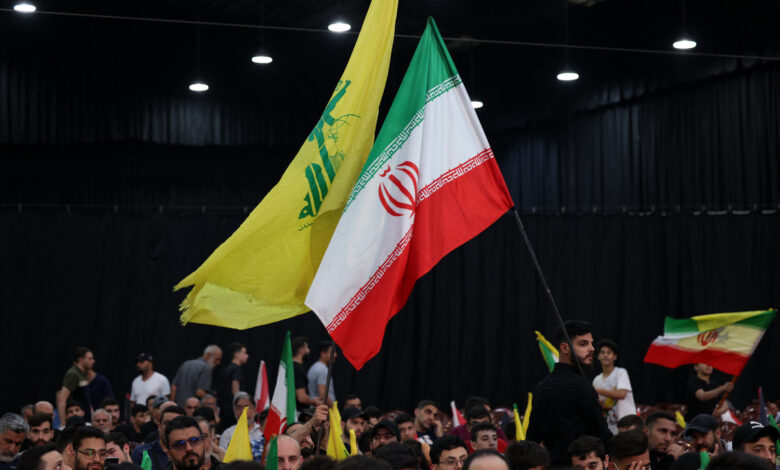
Through its secretary-general, Naim Qassem, the Hezbollah militia continues to escalate its rhetoric against the Lebanese state despite the losses it has suffered, including the deaths of leaders, diminished military capabilities and the loss of revenue sources. This reflects a widening gap between its statements and battlefield realities, as the movement continues to follow orders from Iran’s Islamic Revolutionary Guard Corps, disregarding the suffering this course has brought upon Lebanon.
Experts believe the militia is increasingly cornered both domestically and internationally. They argue that Qassem’s rhetoric ignores shifts in the balance of power as he continues to refuse to acknowledge Hezbollah’s military defeat. Meanwhile, growing tensions with Nabih Berri and the rejection of state decisions reveal a crisis extending beyond the confrontation with Israel.
The current situation suggests that the movement’s options are narrowing: accept a settlement ending its retention of weapons, or continue an escalation that compounds its losses and exposes Lebanon to further destruction and collapse.
Cornered at Home and Abroad
Charles Jabbour, head of the Lebanese Forces party’s media and communications department, said the Lebanese state remains unwilling to enforce its decisions through force. According to him, the authorities still regard the confrontation as one between Iran, acting through its Lebanese proxy Hezbollah, and Israel.
Jabbour said the Lebanese state sees two possible outcomes: a devastating war that eliminates Hezbollah’s military power, or the group’s surrender following a possible agreement between the United States and Iran.
He added that if Hezbollah fails to recognise its position of extreme weakness and defeat, and that surrendering its weapons would limit its losses, it must accept responsibility before its support base, which continues to suffer repeated displacement because of the ongoing war. According to Jabbour, the Lebanese state believes the movement must bear that responsibility if it refuses to hand over its arsenal.
He stressed that the state must assert its sovereignty, enforce its decisions and implement its Constitution. In his view, either enforcing those decisions through force or allowing Israel to eliminate Hezbollah’s military power would be less costly than allowing the war to continue, which he described as the most damaging outcome for everyone.
Jabbour argued that Hezbollah must recognise that it is cornered domestically and internationally and has been defeated militarily. He said Israel’s new military doctrine would not relent until the movement’s special military status had been ended. In his assessment, the era of established rules of engagement is over, as is the era of settlements allowing Hezbollah to retain its weapons. He accused the movement of failing to recognise these changes and instead seeking to drag all of Lebanon into the conflict.
He also accused Qassem of continuing to speak in terms detached from reality and engaging, in his words, in “lies, falsehoods and hypocrisy”. He rejected Qassem’s claim that what he calls the “resistance” is legitimised by the Taif Agreement. Jabbour argued that Hezbollah remains attached to weapons that have brought nothing but destruction, and that its insistence stems from its decisions being made in Iran.
Concluding his remarks, Jabbour said Hezbollah’s determination to retain its arsenal forces its own support base and Lebanon as a whole to pay the price. He described the coming weeks as decisive: either Israel would settle the situation soon, with Israeli elections concluded and US midterm elections due to follow, or the waiting would continue for another few weeks.
Defiance of the State
Political analyst Hadi Mourad, meanwhile, said the Lebanese state’s efforts would not end Hezbollah’s defiance because the authorities do not want to sever their relationship with the movement. In his view, this explains the tone repeatedly adopted by its secretary-general.
Mourad recalled that Parliament Speaker Nabih Berri had recently described his relationship with Hezbollah as one marked by reproach and growing distance, no longer resembling what it once was. The analyst argued that Qassem’s statement contained messages directed more at Berri than at the state.
Mourad said Berri had offered the international community a form of solution concerning the “Shiite community”, but that Qassem had clashed with him the previous day. He interpreted this as confirmation that Hezbollah could pursue no course other than “wars, bloodshed and killing”.
He argued that only pressure on Iran could alter the course pursued by Qassem and Hezbollah, which he described as the Revolutionary Guards’ proxy in Lebanon. In his assessment, Qassem’s statement constitutes rebellion and disobedience towards the state, as well as defiance of the Judicial Council’s decision and the government’s decision to refer the explosives shipment case to that court, despite all the losses and damage the movement has sustained.